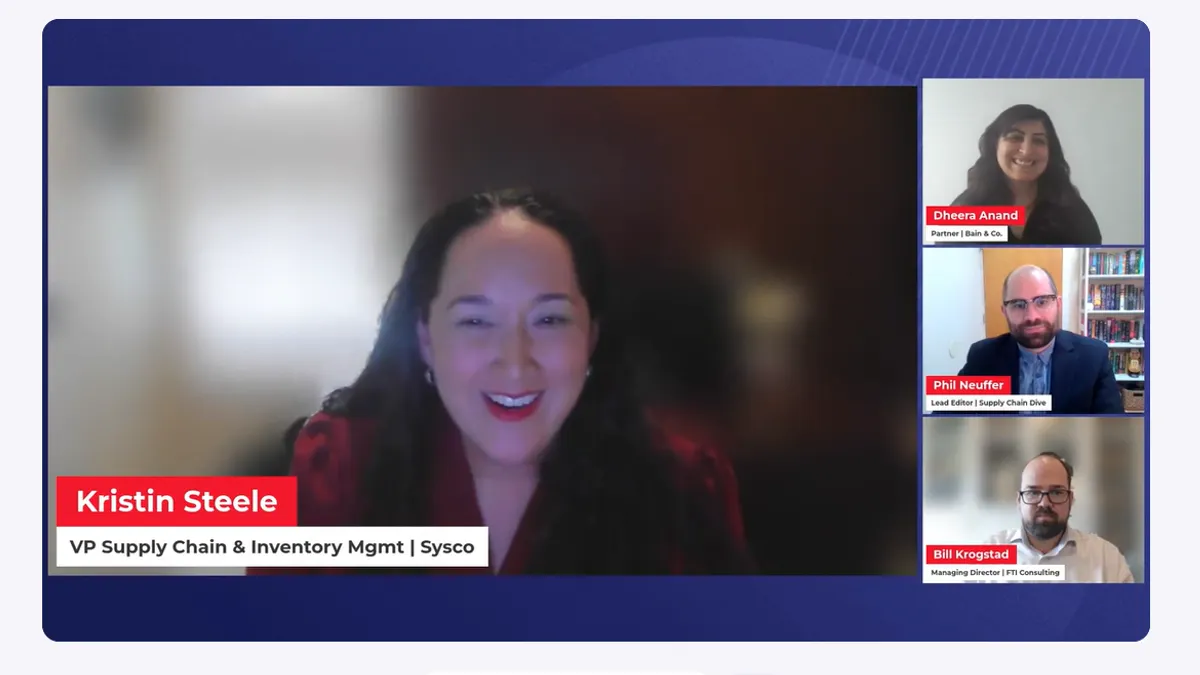
Editor’s note: This story highlights takeaways from a Sept. 23 event hosted by Restaurant Dive and Supply Chain Dive. Register here to watch the replay on demand.
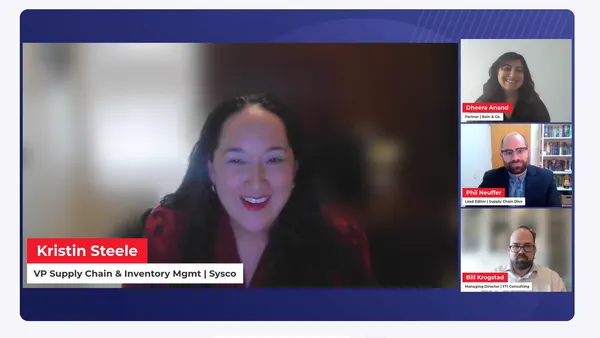
Restaurants can mitigate higher logistics fuel costs by looking at delivery frequencies and drop size, Bill Krogstad, managing director at FTI Consulting, said during a virtual event panel hosted by Restaurant Dive and Supply Chain Dive.
Shippers are navigating several logistics hurdles this year, including higher fuel and diesel costs as oil supply remains strained due to disruptions in the Strait of Hormuz. Gasoline prices were at $4.47 per gallon, up $1.35 year over year as of Sept. 29, according to data from the Energy Information Administration. Diesel, on the other hand, was $6.38 per gallon during the same timeframe, up $2.63 YoY.
“If you can move a store from a restaurant from five deliveries a week to four, you're obviously going to get some fuel savings right there,” Krogstad said.
Doing so can help gain a better understanding of where trade-offs can take place when it comes to storage space and delivery frequency.
"Really looking at your route optimization, making sure you're getting as many restaurants on a truck that will fill that truck [and] make sense logistically I think is critical to reducing your fuel expenses."
Consolidating freight or less-than-truckload services can be especially helpful for smaller companies that may not have a shipment size large enough to fill a freight truck. It can help lower the entry cost, but that can also add more stops and longer transit times.
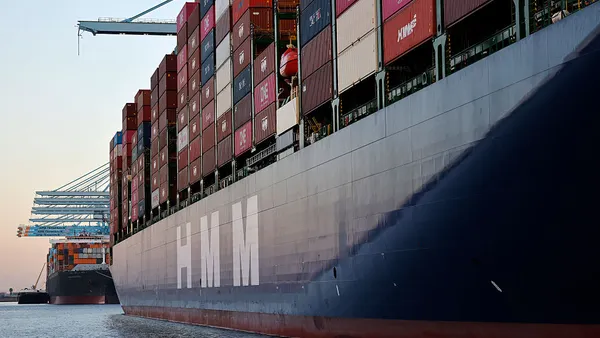
Shippers and restaurants have also been impacted by fuel surcharges implemented by ocean carriers and parcel carriers looking to offset rising costs. In turn, restaurants may be able to review freight contracts to see if there are possibilities for savings, Krogstad said.
Some of these fuel surcharges have been negotiated years ago, Krogstad said, and haven't been relooked at. Therefore, it’s important to make sure those contracts “still make sense” and are up to date.
Restaurants can also segment delivery frequencies, drop sizes, among other things, and better tailor it to one's network, Dheera Anand, a partner at Bain & Company, said. This can mean segmenting SKUs by volume, geography and service level needs.
This is in addition to improved truck and distributor center utilization, efficient routing, and better mileage on routes, Anand said.
There has also been an increased focus on “early warning systems,” or increased visibility and exception management, Anand said.
“[I]f you can anticipate a late shipment or a capacity constraint a little bit sooner, you have more options to reroute, to transfer at potentially a lower cost than you do when it's happening right in the moment,” she said.
Early warnings also make room for scenario planning.
“Fuel costs can cause a lot of volatility and it can change your economics on sourcing, locations, delivery, cadence and your network configurations pretty dramatically,” Anand said.
Being able to anticipate and plan for such scenarios can help teams get a better idea of what the cost-to-serve economics will look like.