Dive Brief:
- Major delivery providers' efforts to pass elevated fuel costs onto shippers are paying off, according to recent earnings calls.
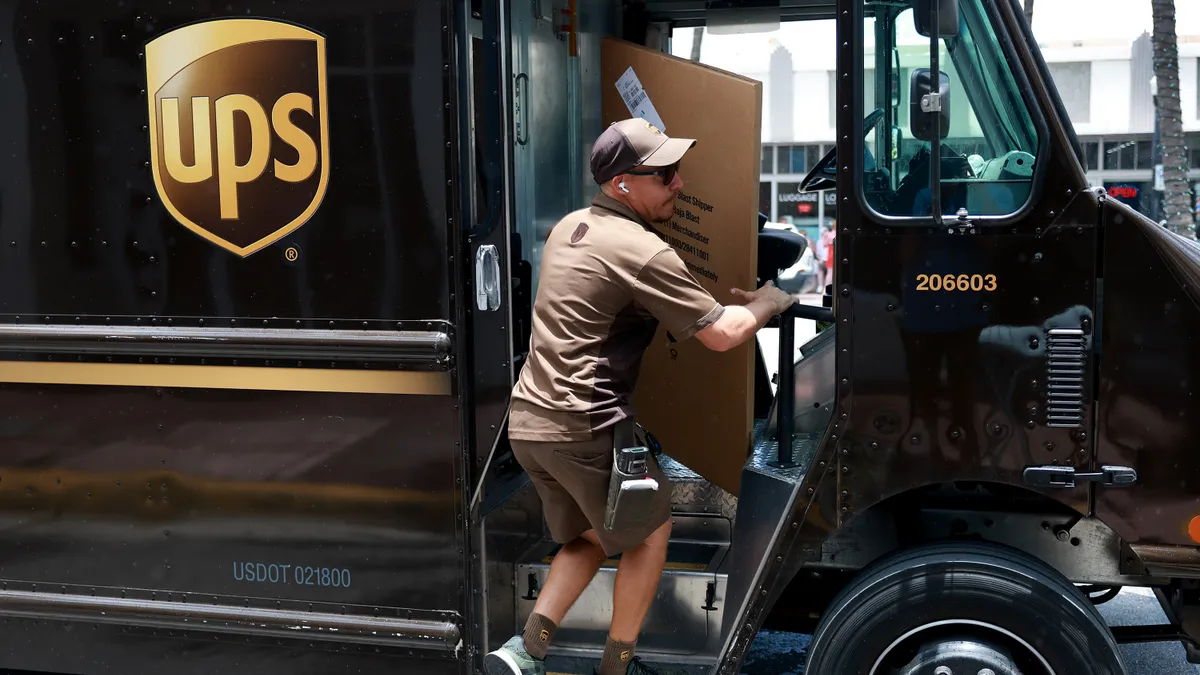
- UPS' fuel costs increased by 60.4% in Q2. However, the increases generated more revenue as well, since UPS passes fuel costs onto shippers via surcharges. The combination of higher expenses and revenue meant the impact to UPS' profit was minimal, EVP and CFO Brian Dykes said in an earnings call last week.
- Amazon has partially offset higher fuel costs through a 3.5% fuel and logistics surcharge for Fulfillment by Amazon services, which began in April, SVP and CFO Brian Olsavsky said on an earnings call Thursday. The fee also helped blunt higher linehaul transportation rates spurred by driver capacity limitations, Olsavsky said.
Dive Insight:
Surcharges designed to minimize the impact of fuel price fluctuations, primarily tied to the Iran war, are working as intended for top parcel carriers, resulting in elevated prices for shippers. The net fuel surcharge per package among ground parcel shipments increased 40% YoY in Q2, driven by the conflict and Strait of Hormuz disruptions, according to the TD Cowen/AFS Freight Index.
Beyond Amazon and UPS, FedEx has also leveraged fuel surcharges to reduce the sting of higher expenses.
For the quarter that ended May 31, FedEx's core Federal Express segment posted a 14% year-over-year revenue jump, including a 5-percentage-point benefit tied to fuel price-driven surcharge revenue, EVP and Chief Customer Officer Brie Carere said on a June earnings call. However, fuel surcharges didn't materially increase operating income due to higher expenses, as fuel costs increased 70% YoY for the Federal Express segment.
In the 2026 calendar year, FedEx expects YoY revenue growth of about 11%, with about 3 percentage points tied to "assumed fuel price-driven surcharge benefit," Carere said. So far, FedEx hasn't seen shipper demand affected by higher fuel fees, she added.
"From a demand perspective, I was concerned a quarter ago that we maybe would see some demand destruction," Carere said. "That has not at all been the case."
Shippers do have the ability to negotiate for price relief from fuel surcharges in their parcel shipping contracts. There are more opportunities to secure discounts on that front compared to historical levels as fuel becomes a larger portion of shippers' transportation spending, Mingshu Bates, AFS Logistics chief analytics officer and president of parcel, said in a July interview with Supply Chain Dive.
"You have to push, but it's definitely easier to get some relief from the carriers on fuel," Bates said.