Same-day delivery options are growing in 2026 as retailers seek to expand their shipping toolkits to meet customer demand.
So far this year, FedEx announced its SameDay Local service utilizing OneRail, Amazon launched one-hour and three-hour deliveries and Walmart-owned Sam's Club debuted its new one-hour offering. Additionally, Dollar General expanded its rural same-day service and DoorDash revealed a fresh wave of on-demand delivery partnerships featuring Foot Locker, Urban Outfitters and more.
Some of these programs have touted early success. For example, Sam's Club said it fulfilled nearly 65,000 one-hour deliveries in less than three weeks after launching the capability. And the initial response to FedEx SameDay Local has been "way beyond expectations," with both large retailers and smaller businesses displaying interest, Jason Brenner, SVP of FedEx's digital portfolio, told Supply Chain Dive.
Whether these programs' early momentum can be sustained remains to be seen. Additional charges tacked on to same-day shipments are commonplace, which can be a tough sell in an increasingly price-conscious era for consumers.
But several factors are positioning same-day delivery services for long-term success, providers say, including precision and reliability, operational improvements and the emergence of non-store-based distribution options.
Reasons to launch same-day delivery
Consumer demand for delivery options that fit any scenario is driving retailers to implement same-day shipping among their portfolio of offerings, experts told Supply Chain Dive.
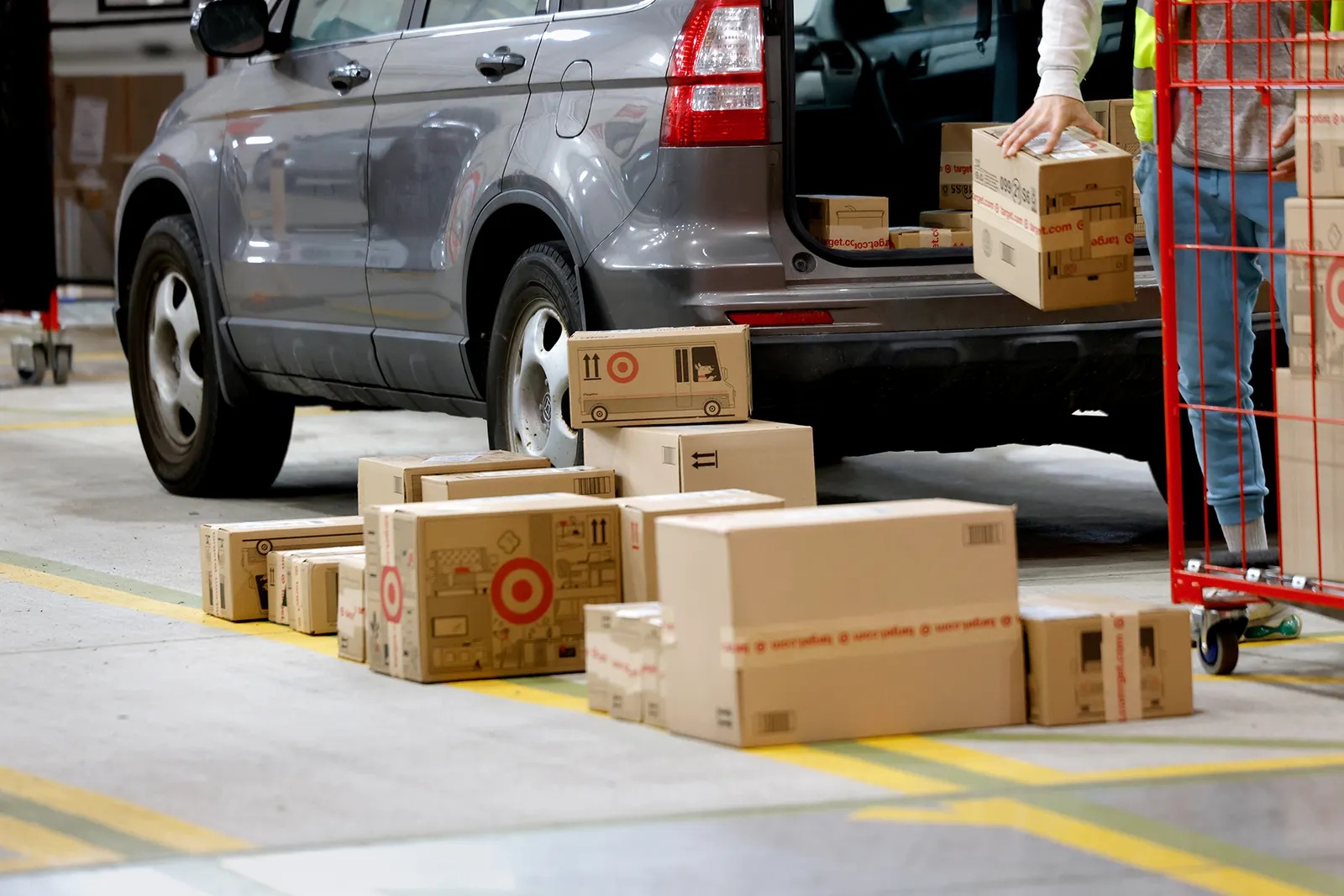
For Shipt, grocery orders are the primary way customers engage with same-day delivery, according to Kamau Witherspoon, CEO of the Target-owned same-day delivery provider. But eventually, many of those customers start ordering other items for same-day delivery as well.
"Once they get into the ecosystem and they have experienced the convenience that we offer through delivering groceries, we see them expanding into other categories," Witherspoon said.
Delivery within hours can be particularly appealing to consumers who want something quickly, like medicine while battling a cold, ingredients for their next meal or household goods they need to restock. Those categories have been key contributors to demand for Amazon and Sam's Club's fast shipping services.
Same-day delivery can also be an appealing option for customers wanting a more precise arrival time than the broader time ranges multi-day shipping services have historically offered, according to experts. This could include when customers want to ensure they are home for arrival, such as for delivery of higher-value and bulkier items like a television or furniture.
"We've always believed that visibility and being able to deliver within an expected window or on time from an ETA is almost as important, if not more important, than speed," Dennis Moon, COO of Roadie, a UPS-owned same-day delivery provider, said. "And we talk to our customers about that all the time, and they agree."
Roadie's volume has continued to increase amid these trends, Moon said, and other same-day delivery operators are reporting similar results. Amazon delivered nearly 70% more items the same day they were ordered in 2025 than the year before. Meanwhile, DoorDash reported that it attracted more new consumers to its U.S. grocery and retail categories in Q4 2025 than in any previous quarter, with unit economics in both categories expected to turn positive in the second half of this year.
Implementing same-day delivery: Obstacles, tips
For retailers looking to launch or grow their own same-day delivery options, adequate demand is only part of the equation.
Large-scale retailers like Walmart can run successful fast shipping programs because they have a wide range of products available at many stores close to end customers, making delivery from those locations more cost-efficient, according to John McClymont, principal of supply chain consultancy Operational Innovations.
"That's one thing most people won't have — that infrastructure when it comes to a retail level," he said.
Operational strains can compound as delivery times become shorter. Therefore, retailers pushing fast delivery must ensure the time store employees spend prepping orders doesn't constrain in-store operations or the customer experience, McClymont said. Otherwise, investments need to be made within stores to better handle high order volumes at speed.
"There's definitely a friction point where the orders become too high, that it starts taking too much away from your existing staff," McClymont added.
Improved inventory positioning and more effective utilization of in-store space for online orders are helping retailers execute same-day delivery more effectively, according to Roadie's Moon. However, faster shipping options don’t always have to be linked to a retail store and add to employees' workloads.
"That's one thing most people won't have — that infrastructure when it comes to a retail level."

John McClymont
Principal at supply chain consultancy Operational Innovations
For example, FedEx SameDay Local also offers delivery from micro fulfillment centers, FedEx’s Brenner said. Similarly, last year, DoorDash launched DashMart Fulfillment Services, through which the company handles stocking, packing, fulfillment and delivery for retailers through its network of DashMart locations. And Roadie's RoadieXD service utilizes cross-docks for same-day delivery.
"We can't expect every customer, every retailer, to have 30,000 SKUs in a single location," Moon said. "But what if we could give that opportunity, that you get same-day delivery on 30,000 SKUs, it just comes from a different distribution point?"
No matter which distribution site fulfills a same-day delivery, constant communication between the retailer and delivery provider is critical to ensuring small operational hurdles don't cascade into larger issues, according to Moon. He also advised retailers to display their fast shipping options more prominently during the order process, so shoppers don't default to competitors like Amazon with a built-in reputation for speedy delivery.
"We need to work with them on getting that out in the front, and that's been a bit of a challenge," Moon said.