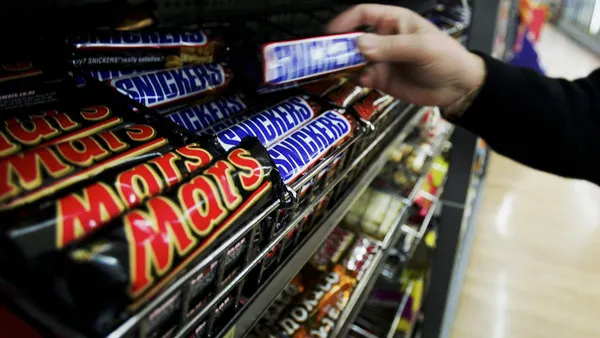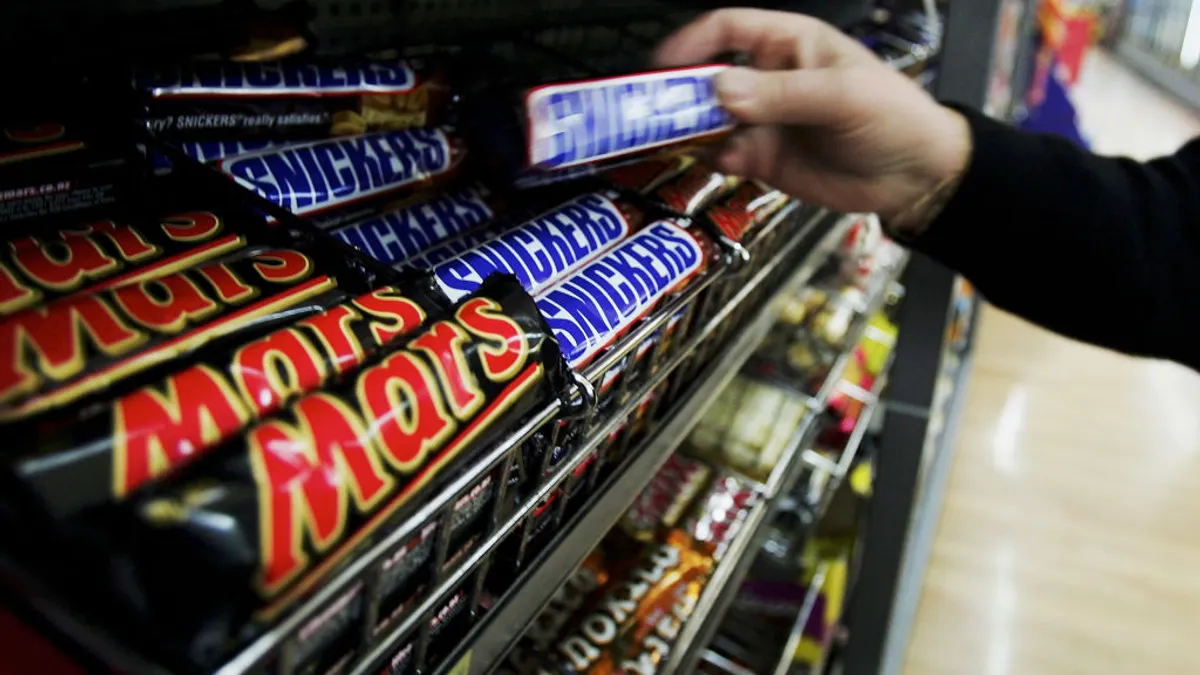
Mars fell short of its goal to source 100% of its cocoa from farms participating in its responsible sourcing program, according to an annual sustainability update released Sept. 17.
Through Mars’ Responsibly Sourced Cocoa program, suppliers procured a volume equal to 98% of the cocoa and cocoa ingredients needed for Mars-branded products in 2025, up from 81% the year before, the food and pet care manufacturer said. The program requires suppliers to obtain cocoa from land not deforested or converted from another natural ecosystem, the report said.
"While our progress in 2025 fell slightly short of our 100% targets for the 2025 goals, we are proud of our progress in these areas, particularly given the significant volatility in global cocoa markets this past year," the company's Cocoa for Generations Progress Report stated.
Last year's volatility stemmed from a global cocoa shortage that dramatically raised costs to a high of $10,710 per metric ton in January 2025, prompting food companies to increase chocolate prices. The production challenges led Mars to license CRISPR gene-editing technology to breed a cocoa plant more resistant to climate change and disease, which were pressuring chocolate production.
Mars works with suppliers in many countries to try to achieve its sustainability goals. In 2025, the company launched its first climate-smart agriculture program with suppliers in the Dominican Republic, Ecuador and Peru, the report said. The program helped 430 farmers improve long-term resilience in cocoa growing while enhancing soil health and crop yields.
Also in Latin America, Mars released Cocoascan, an artificial intelligence-powered tool to help farmers detect and mitigate three infectious diseases: Witches Broom, Frosty Pod and Black Pod, the report said.
In Indonesia, Mars and its suppliers helped educate farmers on modern growing techniques to increase cocoa production. The company also worked with the Indonesia National Research and Innovation Agency to release two cocoa clones aimed at increasing yields in Indonesia and Brazil, according to the report.
Mars has released an annual progress report since 2018, when it pledged to spend $1 billion over 10 years to improve the sustainability of its cocoa supply chain.