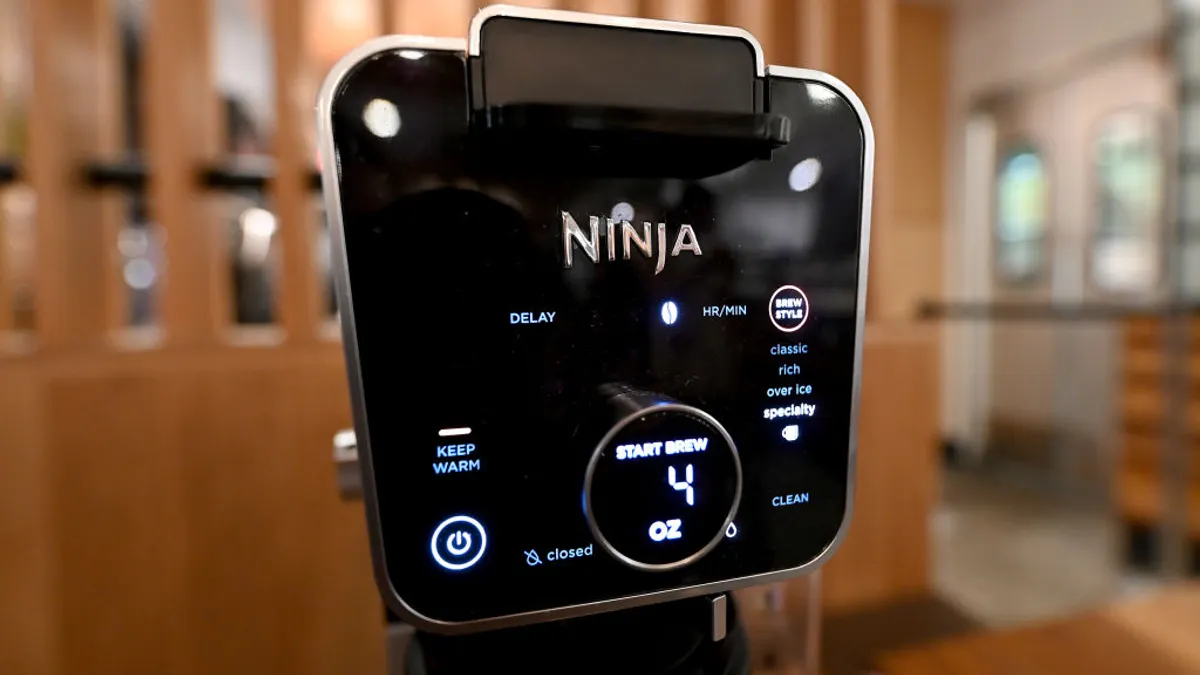
SharkNinja can shift production to and from China because import tariffs on products made in and outside the country are now similar for about 66% of the company's business, CEO Mark Barrocas said on a May 6 earnings call.
The household appliance manufacturer dual sources most of its SKUs from inside and outside of China, and it sources all of its top SKUs from more than one factory, Barrocas told analysts. As a result, the company can shift orders between plants and regions based on tariff and pricing dynamics.
"There may be a factory that is pushing us more on price, and we've had to move some of that production to another factory that is willing to not push on price, but wants more volume," Barrocas said.
Tariffs presented a “sizable headwind” to SharkNinja in Q1 2026, CFO Adam Quigley said. The company reported that tariffs contributed to a 10‑basis‑point decline in gross margin from a year earlier, as the quarter reflected a full period of higher duties compared to minimal tariffs a year earlier.
SharkNinja has worked to mitigate tariffs through pricing, product modifications, and negotiations with suppliers and factory partners to manage tariff impacts. A year ago, Barrocas told investors that SharkNinja was shifting manufacturing for much of its product lineup from China to countries in Southeast Asia.
The company's current outlook for the fiscal year assumes the baseline tariffs for China, Vietnam, Indonesia, Thailand, Malaysia and Cambodia remain at 10%, Quigley said. Under that assumption, SharkNinja projects double‑digit net sales growth and higher adjusted earnings for 2026. The outlook does not yet include potential tariff refund benefits.
On the raw material side, the duration of the war in Iran is unknown, so oil prices may fluctuate, possibly affecting resins and other commodities, Quigley said. As a result, potential increases in resin and other input costs could partly offset the benefits of tariff mitigation and other cost‑saving efforts.