Dive Brief:
- Del Monte Corp., formerly known as Fresh Del Monte Produce, expects cost pressures of about $40 million to $45 million due to developments in the Middle East driving higher energy, shipping and commodity costs, SVP and CFO Monica Vicente, said in a May earnings call.
- Challenges are primarily related to ocean freight, and include bunker fuel, war-related surcharges, inland transportation, fertilizer and packaging costs that are “consistent with recent elevated oil and fuel price trends” that will hit in Q2, Vicente said.
- Middle East-related disruptions have also pressured North America and Europe markets for bananas, the CFO said. "At the same time, per unit costs are higher, driven by lower production from Costa Rica and the disease management efforts on our own farms. Fertilizer inflation has added further pressure."
Dive Insight:
Tensions in the Middle East have impacted ocean shipping, placing pressure on fuel prices and ocean spot rates. In turn, some shippers have faced freight related pressures, including Burlington, Macy's and American Eagle, according to separate earnings calls.
However, recovery in the ocean market nears as the U.S. and Iran recently reached an agreement to reopen the Strait of Hormuz. But a full recovery for ocean shipping isn't expected until mid-September 2026.
The Middle East conflict has brought forward challenges across key input fundamentals such as food production, energy, fertilizers, packaging and transportation, CEO Mohammad Abu-Ghazaleh said in the call.
Still, Del Monte has included in their earnings the impact from Middle East tensions, regardless of how the situation evolves, Abu-Ghazaleh told analysts.
"There is no part of agriculture that is not energy dependent from inputs to packaging to transportation. As a result, movements in energy costs do not remain isolated. They cascade through the entire system,” he said.
Abu-Ghazaleh said the impact is more pronounced in the company's fresh business given its production cycles and input intensity. Other areas are affected differently based on their supply chain structures, he said.
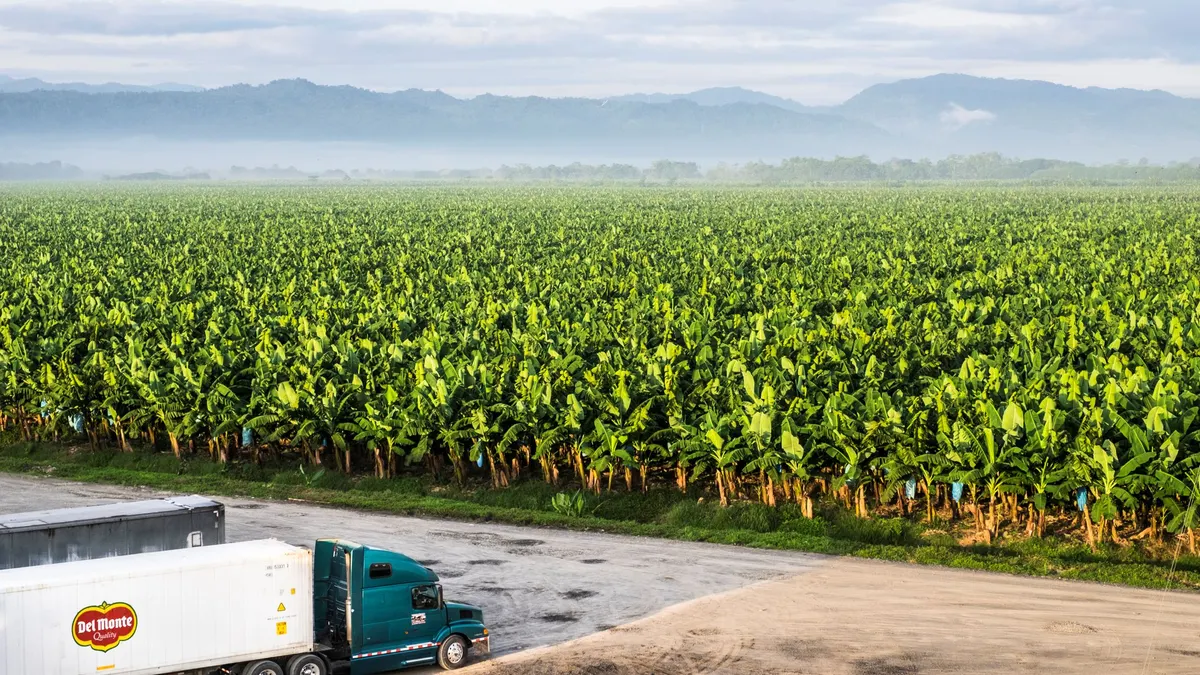
“Agriculture does not operate in real time. The timing of impact varies meaningfully by category,” Abu-Ghazaleh said. “In crops like pineapples, for instance, where production cycles extend to approximately 18 months, the inputs being deployed today will be reflected in cost and pricing later this year. Bananas by contrast, move more quickly through the system and therefore, respond more immediately to changes in input costs.”
Del Monte is optimistic that its global footprint, diversified sourcing and integrated supply chain will enable the company to adjust and respond accordingly across markets, the CEO said.
"We have navigated complex operating environments before, and we will continue to do so with clear focus on execution, cost management and operational efficiency," Abu-Ghazaleh said.