Dive Brief:
- Asia to U.S. East Coast rate are at a “new high” this week, according to Freightos’ weekly update from Aug. 11. Spot rates are at $9,144 per forty-foot equivalent unit, up 1% week over week.
- Spot rates from Asia to the U.S. West Coast are at $6,826 per forty-foot equivalent unit, up 11% week over week, according to Freightos.
- “This resilience is taking most observers by surprise,” Freightos said. Transpacific rates were moving in tandem with Asia to Europe prices since the early peak season started but in recent weeks that has changed. West Coast prices possibly fell due to more capacity additions than volumes drops were made, Freightos said.
Source: Freightos
Dive Insight:
The anticipated early peak season appears to be lingering, with sustained import volumes through this month and ocean shipping spot rates increasing this week, according to Freightos and a National Retail Federation press release.
Ports have yet to report their import cargo volumes processed for the month of July but are projected to be 2.21 million TEUs for the month, per the Global Port Tracker by the NRF and Hackett Associates. August is forecast at 2.22 million TEUs, before imports begin to drop in September to 2.16 million TEUs.
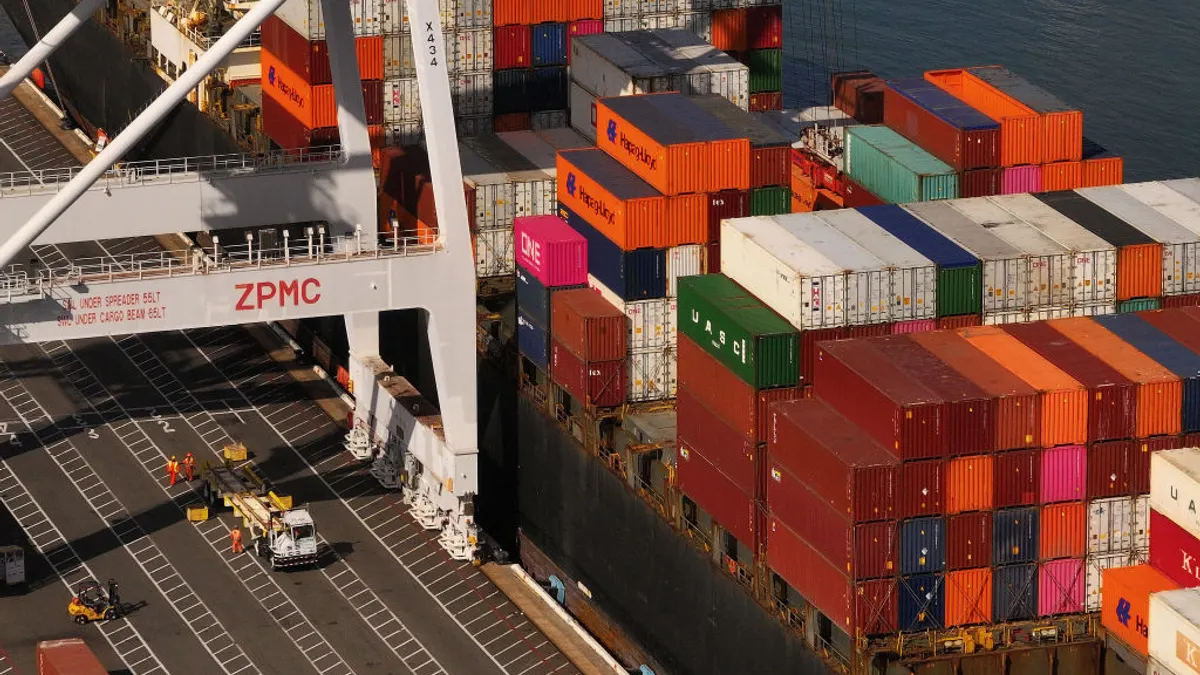
Ports have been and remain busy this summer with a spread over peak season, per the release. May appears to be the ports’ busiest month, with imports totaling 2.24 million TEUs.
Peak season started early as shippers frontloaded cargo ahead of the anticipated expiration of Section 122 tariffs on July 24. “One round of tariffs has been replaced with another,” NRF VP for Supply Chain and Customs Policy Jonathan Gold said in a press release, referring to Section 301 tariffs impacting 99% of U.S. imports that took effect immediately after the previous duties expired.
Freightos hypothesized that the sustained volumes through August may reflect shippers who extended their ordering when a tariff hike didn’t materialize.
Shippers have made strategic moves to be in stock for the upcoming back-to-school season while managing tariffs, rising fuel costs and global uncertainty.
“Retailers know how to adapt to shifting situations and are well prepared to meet consumers’ demand for affordability and choice,” Gold said.
Editor's note: This story was first published in our Logistics Weekly newsletter. Sign up here.