Steel and aluminum producers seeking to qualify for reduced Section 232 tariffs must navigate an intensive record-keeping process to demonstrate ongoing compliance, trade lawyers said.
Last month, the Commerce Department introduced a process for Canada and Mexico steel and aluminum makers that feed the U.S. auto and truck industry's supply chain to cut the current 50% tariff in half. Qualifying for the 25% rate requires producers to commit to building or expanding their primary metal production in the U.S.
Metal producers have to commit to specific capacity‑expansion projects and submit extensive certified documentation on those projects, according to a Federal Register document. They must then meet milestones set and monitored by the Commerce Department and provide regular, detailed reports showing how shipments tie back to the approved projects.
If the Commerce Department determines the supplier has fallen short of the requirements, the agency can revoke the reduced tariff and require full payment. Hence, ongoing documentation and traceability are critical to proving continued compliance, trade lawyers told Supply Chain Dive.
Meticulous record-keeping is essential because the program is in its early stages and still needs to be fleshed out, Daniel Pickard, international trade and national security practice lead at Buchanan Ingersoll & Rooney, said.
"There's obviously going to be a significant amount of discretion at the Department of Commerce in regard to the implementation of this," Pickard said.
Qualifying facilities
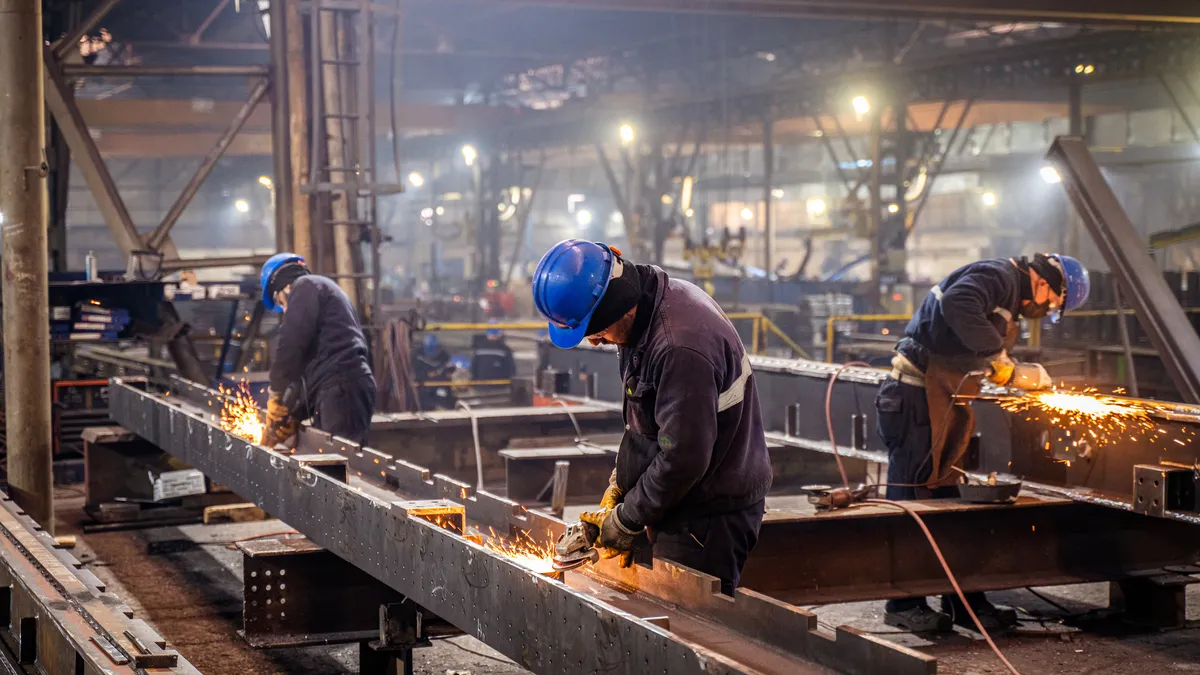
The Commerce Department does not define the types of facilities producers must build or expand to qualify for the tariff reduction. However, eligible facilities could include mills, smelters, electric arc furnaces used to melt scrap steel or casting lines that shape molten metal into semi-finished products, according to Micah Burbanks-Ivey, an associate in Holland & Knight's public policy and regulation group.
"Suppliers should expect the government to evaluate milestones the same way lenders’ investment and project managers would evaluate whether a major industrial project is progressing."

Micah Burbanks-Ivey
Associate in Holland & Knight’s public policy and regulation group
Companies can also use qualifying production in Canada and Mexico, Burbanks-Ivey said, noting those with integrated supply chains across the two countries and the U.S. have a strong opportunity to lower tariffs.
Once projects are chosen, producers must show they are financially, contractually and operationally committed to expanding production capacity in a verifiable, enforceable way, Burbanks-Ivey said. Binding commitments can include capital expenditure plans, executed construction or equipment contracts, and related financing agreements.
Proving ongoing compliance
Another critical element is setting and meeting milestones — such as buying land, starting construction and installing equipment — that demonstrate progress in building U.S. steel and aluminum capacity, trade lawyers said.
"Suppliers should expect the government to evaluate milestones the same way lenders’ investment and project managers would evaluate whether a major industrial project is progressing," Burbanks-Ivey said.
Maintaining the reduced 25% tariff will require end-to-end tracing of steel and aluminum production, showing where metals are melted and poured or smelted and cast in North America, trade lawyers said.
"All your records have to be backed up by your actual accounting records — cost of goods, cost of your inventory, accounting journal entries," Robert Leo, a partner and customs lawyer at Meeks, Sheppard, Leo & Pillsbury, said. "All that has to be proper, so that customs can follow the trail, and then your own accountant can follow the trail."
A reputable customs broker experienced in steel and aluminum imports is also critical, Leo said. A competent broker will retain and transmit to customs the documents and data needed to file and support an entry.
“If there are discrepancies, you need to know about it ahead of time, rather than after customs questions something.”
Robert Leo
Partner and customs lawyer at Meeks, Sheppard, Leo & Pillsbury
The broker’s files must also align with the producer’s accounting records, so regular reconciliation is critical, Leo said. "If there are discrepancies, you need to know about it ahead of time, rather than after customs questions something."
Producers must also document how much U.S. capacity will increase, as the tariff is tied to projected annual output, Pickard said. "You want to make sure that all of your increased capacity numbers are bulletproof."
Ultimately, the program’s success will be measured by how much it increases U.S. steel and aluminum capacity, Pickard said. To achieve that, the program must set conditions strong enough to convince producers to invest in new U.S. facilities.
"If there's uncertainty or there's a concern that the risk exposure is greater than the potential proceeds, then it probably won't get off the ground," Pickard said.