Dive Brief:
- UPS has established radio-frequency identification labeling capabilities for shipments at 315 upstream customer locations, CEO Carol Tomé said on a Q3 earnings call Tuesday.
- Adding an RFID label early on in a package's shipping journey boosts visibility for shippers while benefiting UPS "because it reduces the amount of confusion over missed pickups and that sort of thing," Tomé said. Technology products distributor Ingram Micro and a high-end jeweler are among the shippers that have tapped into this capability.
- The initiative is currently serving 3 million packages at customer locations daily — up from the 2.2 million per day reported in July — and that is expected to grow further to 6 million packages a day in 2027, Tomé added.
Dive Insight:
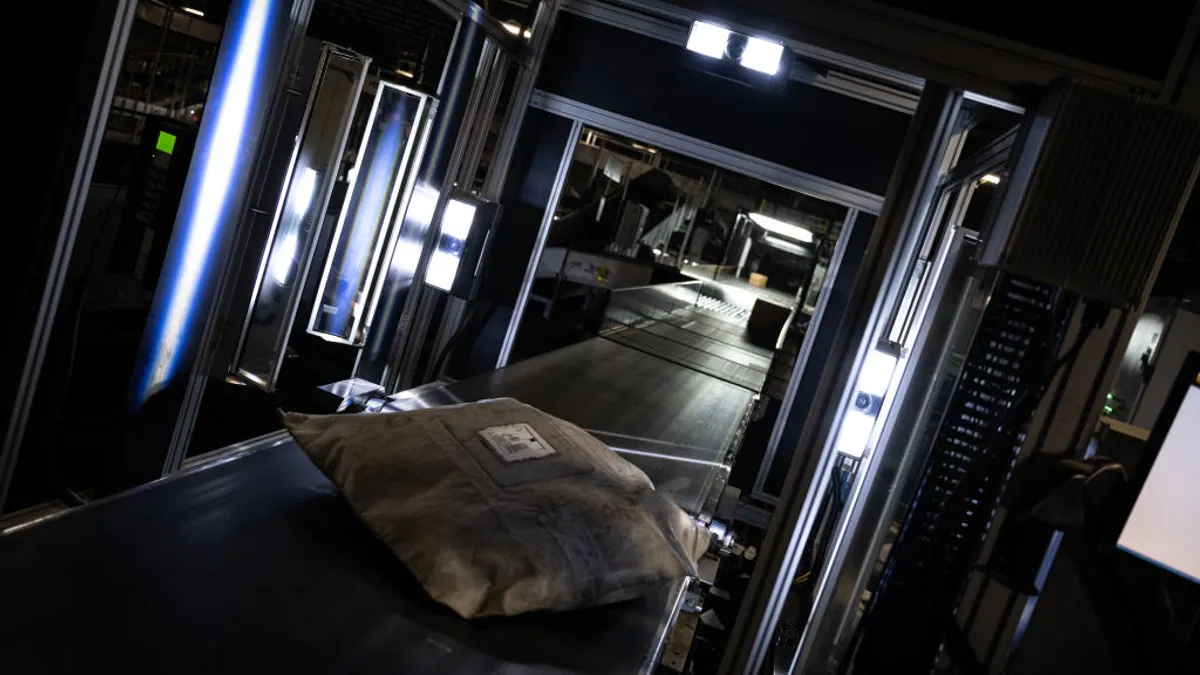
RFID technology is growing in prevalence throughout UPS' operations, helping the company eliminate billions of manual package scans while boosting productivity. For packages with RFID labels printed at a customer location, UPS vehicles provide an automated scan at pickup, giving the shipper improved visibility earlier on in the transportation process.
Beyond customer locations, UPS also places RFID labels on packages dropped off at The UPS Store locations. The company projects to deliver more than 4 billion RFID-enabled packages by the end of 2026, according to Tomé.
UPS executives have said that RFID labeling will help the carrier win more commercial business. For example, large U.S. enterprise retailers are drawn to RFID offerings “because they have inbound visibility to what’s hitting their docks, and it allows them then to spread their workforce and how they inbound that volume,” Matt Guffey, EVP and chief U.S. domestic officer, said during a January 2025 earnings call.
The RFID expansion is one example of UPS' efforts to increase the presence of automation within its network, according to Tomé. Nearly 70% of all UPS packages will flow through an automated process in Q4, up from 66.5% at the end of 2025.
"As we head into peak, our network is more automated, more efficient and better positioned than ever to handle the holiday surge," Tomé said.