Dive Brief:
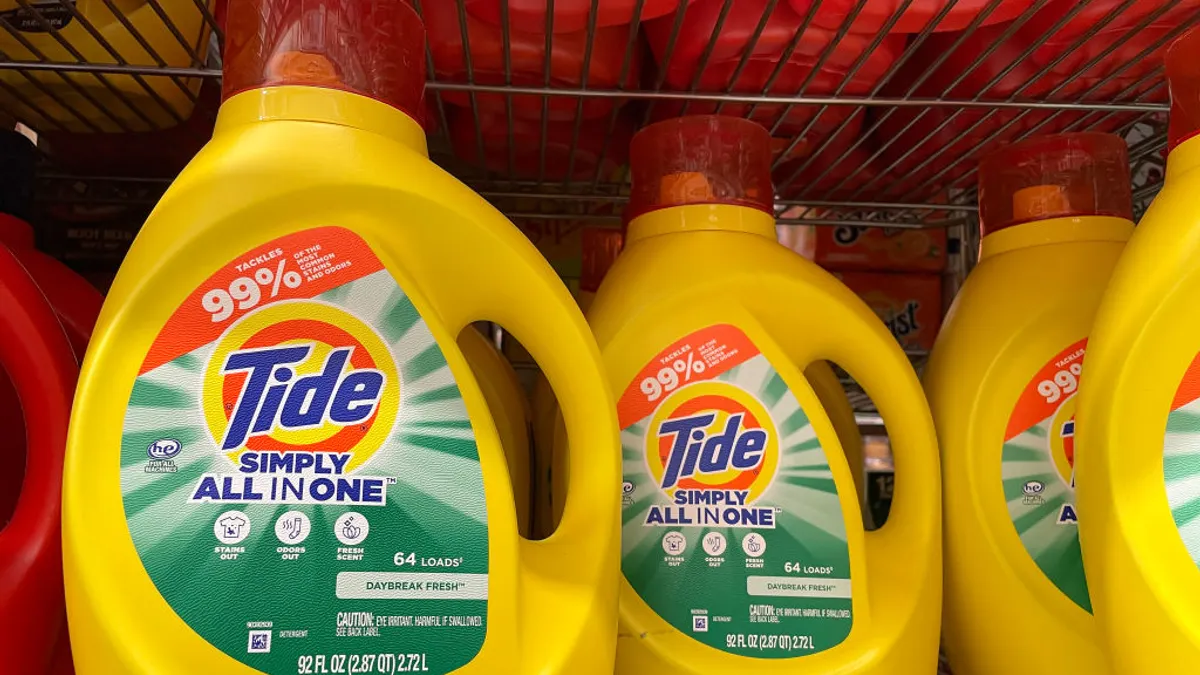
- Procter & Gamble expects a $150 million after-tax drag this fiscal year ending June 30 as higher oil-related costs and shipping disruptions from the Iran war raise supply expenses, CFO Andre Schulten said in an April 24 earnings call.
- To blunt the impact, P&G plans to reformulate products, diversify its supply base and look at short-term productivity levers it could pull, he said.
- "We see some suppliers just not being able to supply at all. We see some manufacturing facilities that have been compromised by the war," Schulten said. "And so it's not just the oil price, it's also the availability of product and input costs."
Dive Insight:
The Iran war's disruption of the flow of oil through the Middle East has raised supply costs for companies across many industry sectors, including automotive, CPG and food and beverage.
In April, household maintenance product manufacturer WD-40 reported paying more for certain petroleum-based specialty chemicals. Meanwhile, french-fry maker Lamb Weston is bracing for volume headwinds and higher volatility in some commodities, such as packaging and fuel.
Schulten told investors the war’s impact went beyond just higher commodity costs to include increased expenses for inputs to suppliers’ production systems.
For P&G, sourcing changes driven by cost or availability were pushing it onto less efficient routes for getting materials, resulting in higher transportation costs, longer lead times and elevated inventories, Schulten said.
When materials are not available, the company is reformulating into alternative inputs that often carry upcharges to avoid diluting product performance, Schulten said.
He added that higher diesel prices are also raising finished product logistics and transportation costs.
Schulten told investors that if Brent crude oil averaged around $100 per barrel, the annual cost impact would be $1 billion after tax, versus a pre-Iran war oil price in the mid-$60s.
“As you know, $1 billion after tax is nothing to sneeze at from a headwind standpoint,” Schulten said. “And we have a lot of work to do to work through the supply chain side and the cost side.”