Dive Brief:
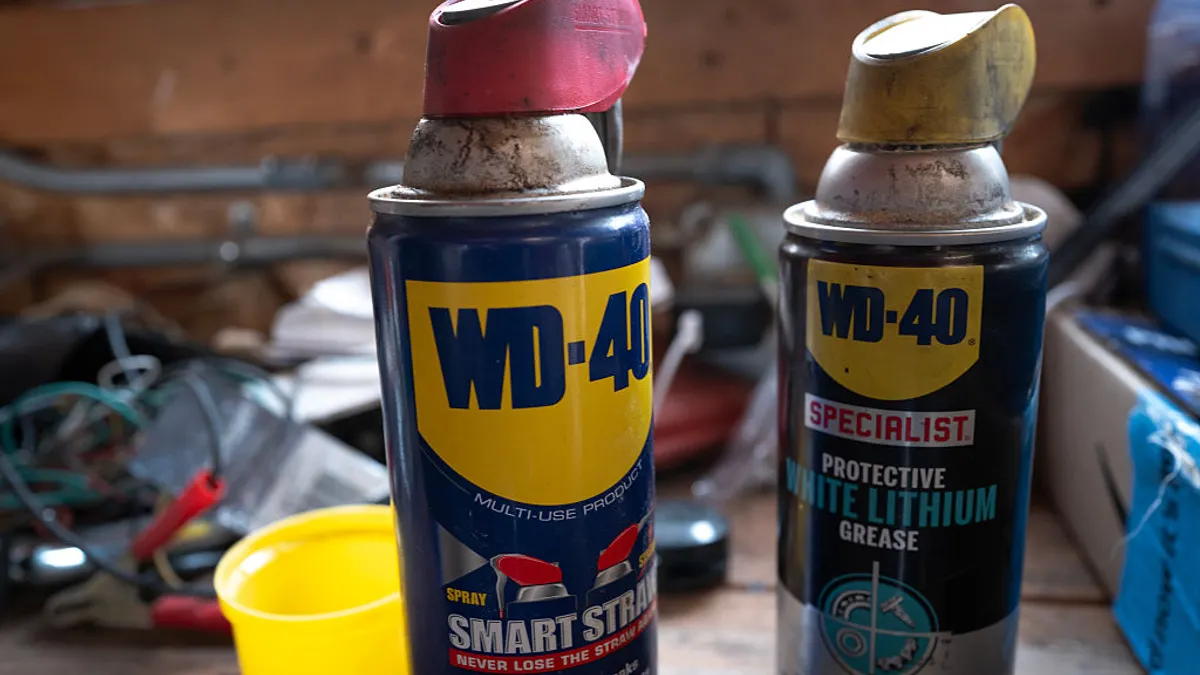
- WD-40 reported rising costs for certain petroleum-based specialty chemicals, a trend CFO Sara Hyzer told investors last week was partly due to recent geopolitical developments in the Middle East.
- The impact of higher raw material costs typically takes 90 to 120 days to appear in the company's cost of products sold, Hyzer said on an April 9 earnings call, citing WD-40’s production cadence and inventory life cycles as factors for the lag.
- "We do not expect that our gross margin will be significantly impacted until the fourth quarter of fiscal year 2026 based on current inventory levels," Hyzer said. "The duration of this conflict and its impact on our raw materials will drive our decisions around mitigation efforts, which we are currently assessing."
Dive Insight:
Continued disruption at the Strait of Hormuz due to the Iran war has reduced the oil supply passing through the narrow sea passage to a trickle. As a result, global oil prices have surged, potentially impacting companies like WD-40, which uses petroleum-derived ingredients in many of its products.
For WD-40, direct exposure to the conflict is limited to about 3% of the company's global sales for fiscal year 2025, which ended last August, CEO and President Steven Brass said in the call. The company's Middle East presence includes one manufacturing partner and third-party distributors that also handle sales.
Despite added cost pressures, WD-40 expects to achieve its fiscal 2026 guidance for net sales growth of 5% to 9% year over year, based in part on crude oil prices ranging between $95 and $115 per barrel, Hyzer said. Earlier guidance assumed a $65 to $85-per-barrel range.
The Iran war’s ripple effects have begun to spread across several spokes in supply chains. French fry maker Lamb Weston reported earlier this month that it expected international volumes to decline in the second half of the fiscal year ending May 31, in part due to the evolving Middle East conflict.
The company also said it was bracing for increased commodity volatility, including for packaging and fuel, if the conflict persists. However, the war’s full impact would depend on its length and severity, Lamb Weston President and CEO Mike Smith said.
The war has also upended packaging supply chains and raised costs across the CPG industry, which is still contending with uncertainty from tariffs imposed by the Trump administration.
In addition, delivery costs are rising as escalating fuel costs prompt higher surcharges and rates from FedEx, UPS and other parcel carriers. Meanwhile, shippers are considering more three-month air-cargo agreements over annual contracts in the face of the uncertainty caused by the war.