MESQUITE, Texas — What FedEx CEO Raj Subramaniam has called "one of the biggest industrial transformations in recent history" is in full swing inside one of the carrier’s facilities serving customers in East Texas.
At the facility in the Dallas suburb of Mesquite, FedEx package handlers and delivery drivers work in tandem to advance the parcel shipping giant's neverending pursuit: delivering shipments of all kinds — from tires to GLP-1 medications — to businesses and residents on time.
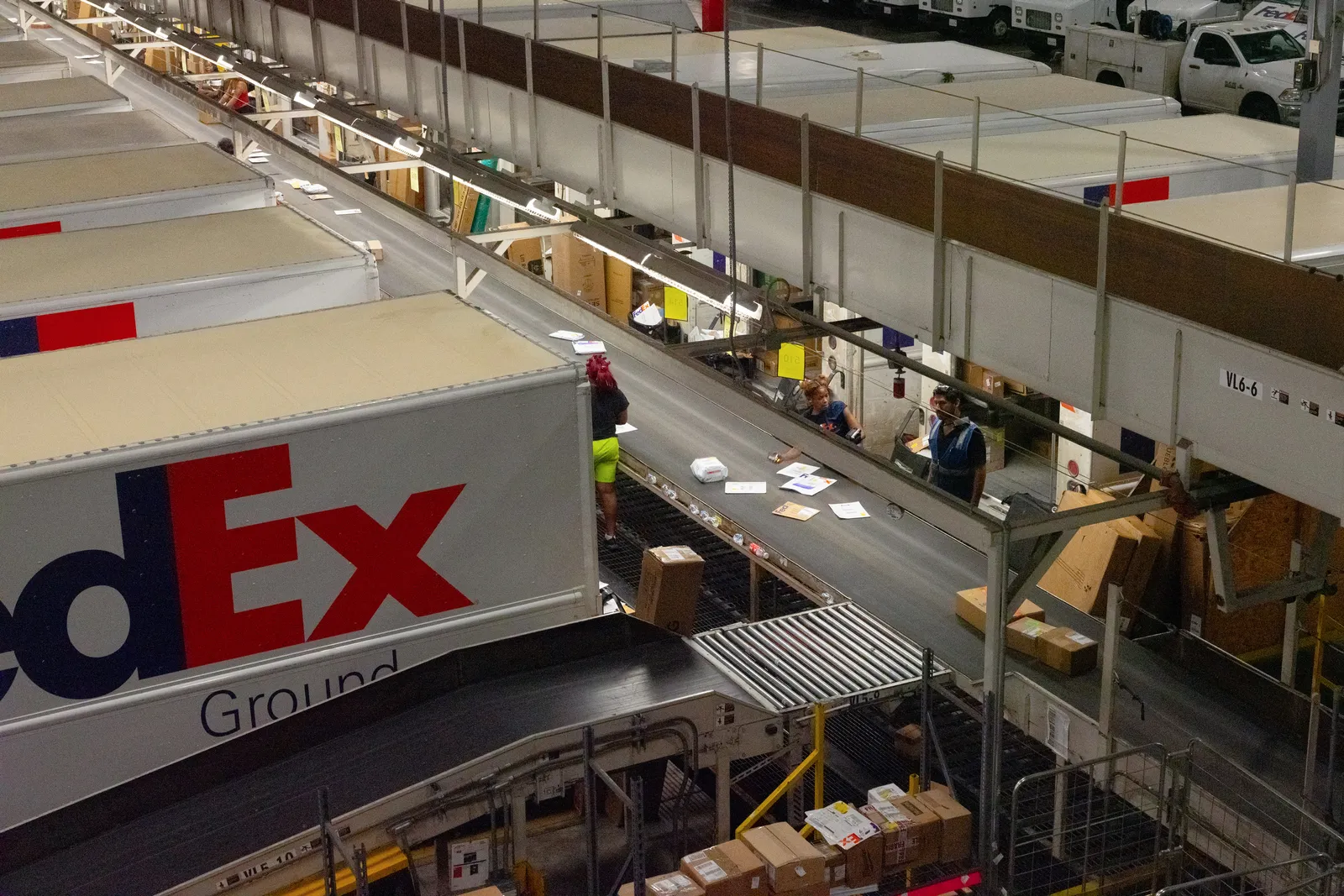
Inside this facility is an entirely new approach for how volume flows through the company's network. Both expedited and less-urgent shipments are moving together within the building and onto delivery vans, rather than in separate locations and distinct vehicles.
Breaking down this longstanding operational wall is the core focus of FedEx Network 2.0, a long-term overhaul changing everything from FedEx's facility footprint to the package pickup experience. Industry experts interviewed by Supply Chain Dive say this change is an overdue one for FedEx's separate networks, and could pay off in the long run by reducing expenses and simplifying the shipper experience.
"It was a must-do, in my opinion," Mark Waverek, managing partner at PlaidMark Management Consulting Services, said. Before Network 2.0, "there was too much redundancy and too much overlapping costs," he added.
The carrier has made adjustments in Mesquite and hundreds of other stations to carry out the plan. During a tour of the facility, FedEx leaders lifted the curtain on how the combination has transformed longstanding practices, changed the shipper experience and positioned the company for the future.
One truck, one neighborhood
Network 2.0's goal is to combine FedEx's historically separate Express and Ground networks in markets throughout the U.S. and Canada, helping optimize operations, drive $2 billion in savings and improve the company’s competitive positioning versus rivals like UPS. By the end of this year, Network 2.0 will be 62% done, with full completion slated for 2027, Subramaniam said during a Citi conference in September.
Advancing Network 2.0 has required eliminating company siloes. The Express network began operations in 1973, and FedEx acquired Ground's predecessor RPS in 1998. Keeping the operations separate allowed them to build new capabilities quickly and focus on different customer needs: Fast, time-definite delivery for Express utilizing aircraft and economical, and day-definite delivery for Ground leaning on surface transportation, executive Richard Smith explained in a 2022 investors meeting.
However, as the two growing networks overlapped more and more, FedEx saw an incentive to streamline operations across the company, Smith, FedEx's international COO and airline CEO, said at the time.
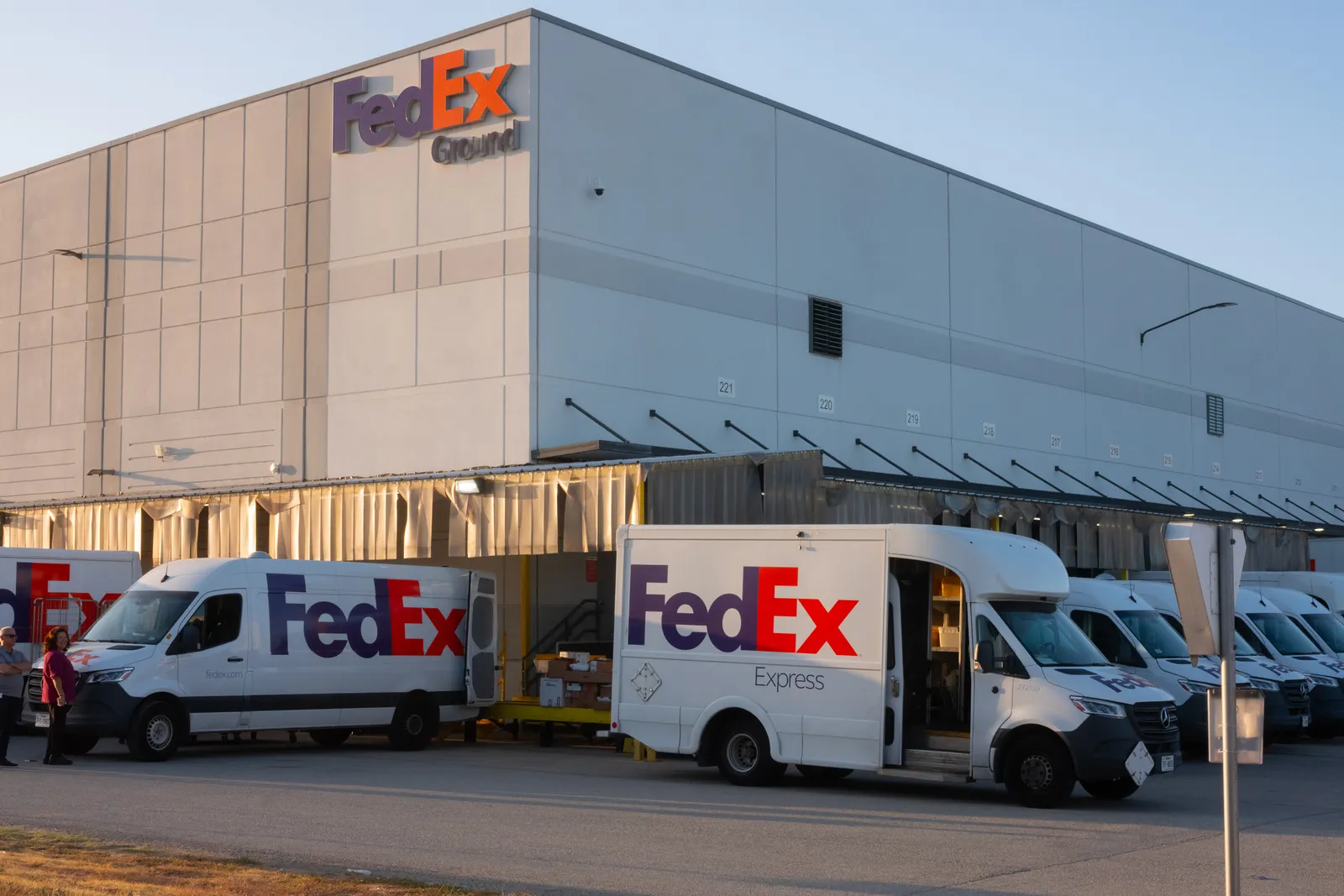
Inside the Mesquite facility, Johnne Moore, district managing director for FedEx's East Texas operations, gave a more straightforward explanation of Network 2.0's vision: Avoid multiple FedEx trucks delivering in the same area at the same time.
"At one point we were Ground, Home Delivery and Express, and now it's just Federal Express, right?" Moore told Supply Chain Dive. "And you see one truck in one neighborhood instead of three trucks, one neighborhood, and it took a lot of confusion away from the customer as well."
FedEx has closed hundreds of stations to fulfill its ambition of removing overlapping facilities and delivery routes from its network, impacting thousands of employees in the process. The company has also consolidated its different operating companies into one organization to facilitate the overhaul. Four facilities in Moore's district closed amid the overhaul, and affected employees either relocated or accepted severance packages.
Throughout the initiative, the logistics giant has had to ensure the transition efforts don’t disrupt on-time delivery reliability. That's a common risk for wide-ranging logistics network revamps, as evidenced by the U.S. Postal Service’s ongoing Delivering for America overhaul.
For FedEx's plan, bringing two separate service levels into the same network means balancing a wider range of delivery expectations in one operation. Some shipments can be delivered at the end of the day to meet their commitment time, but others can't wait, sometimes requiring completion as early as 8 a.m.
Rival UPS' network already juggles time-definite and day-definite shipments in one integrated network. But for FedEx, it's a new endeavor, and one that adds another layer of stress to day-to-day operations, Jeremy Tancredi, a partner in West Monroe’s operations excellence practice, said.
"It's simpler for the customer, but it's much more complicated for you," Tancredi, a former UPS industrial engineer, said in an interview.
Making room for Express
For a company that moves nearly 18 million shipments per day, executing Network 2.0 without disrupting daily package flows has called for close collaboration throughout the transition process, according to Moore.
"The surface and the air [teams], we work hand-in-hand together and make the transition flawless for the customer," Moore said. "That was the biggest thing to ensure that we didn't have an impact on the customer."
Avoiding service-related hangups also requires successful execution at the local level. Moore said his district —which features 20 facilities and covers roughly a third of Texas — was one of the first to fully move to the new operating model.
"I raised my hand to be the first to stand up," he said. "My team thought I was crazy, but I said, 'As we are going to set a standard, it's going to help others get better as they stand up, too.'"
Moore's district started with combinations in smaller areas before turning its attention to the Mesquite facility. At first, Moore said he was nervous given the amount of volume the facility handles. It has the capacity to handle around 100,000 packages every weekday.

Transforming the Mesquite facility to support a combined network called for enabling Express packages to flow through the historically Ground-focused location. The site completed the transition last September, Keith Belt, senior manager of surface operations for Mesquite, said.
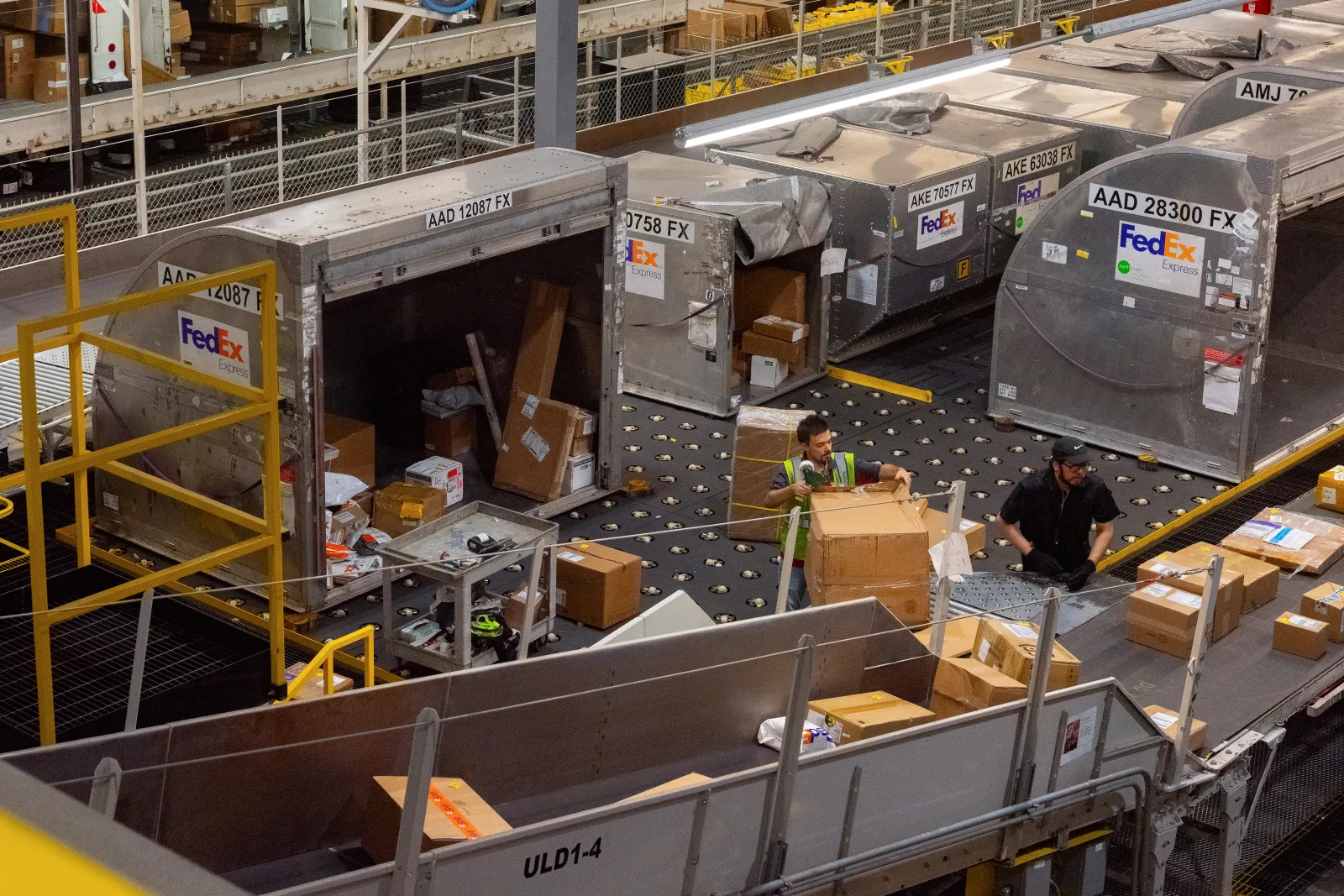
To support the change, the facility installed a caster deck system to move air cargo pallets arriving from nearby airports, a mainstay for Express shipments relying on FedEx's aircraft for fast transportation, according to Belt. Additionally, the system features two conveyor belts, each of which is able to handle about 3,000 parcels an hour.
Expedited services are popular among healthcare shippers, a high-priority customer segment for FedEx, who often require their shipments to stay cold to prevent spoilage. The Mesquite facility added a refrigerator to keep healthcare products like GLP-1s cold during storage, according to Belt. However, the ultimate goal is for those shipments to quickly flow in and out of the facilities, given their time-sensitive nature.
FedEx isn't done making improvements to the building yet, according to Belt. The carrier is looking to increase the facility's capacity, particularly on the weekends, as more shippers look to offer customers delivery seven days a week. The Mesquite facility averages about 60,000 deliveries every weekday, while weekend volume ranges from 10,000 to 30,000 deliveries, Belt said.
Reaching customers under Network 2.0
How Mesquite-area customers receive their FedEx packages has undergone changes since the Network 2.0 strategy was embedded within the facility.
Historically, couriers directly employed by FedEx handle packages delivered through expedited service like First Overnight and Priority Overnight, while contracted providers focus on day-definite ground volume. At the Mesquite facility, contracted service providers are now also delivering some of the time-definite volume, which are geared toward shipments that must reach their destination by a specific time in the morning.
This presents a new wrinkle in service providers' delivery routes. Now, they have to consider which packages need to be delivered at a specific time as opposed to only needing to make sure all packages are dropped off at some point during the day. Service providers simulated and adjusted their routes to account for the more time-sensitive volume ahead of implementation, Moore said.
Service providers also have to ensure any expedited package pickups they make on their routes are brought to the Mesquite facility by 6:55 p.m. during the week so they have enough time to be loaded on a departing plane, according to Belt.
"I think the contractor has been known for being efficient, and now they've demonstrated that with meeting time commits," he said.
Other FedEx facilities across the country are also working with service providers to get them up to speed on the requirements for expedited packages. Handling a mix of time-definite and day-definite deliveries can introduce logistical hurdles without the proper adjustments, according to Tony DiNitto, founder of the consultancy Route Tycoon and a former Ground contractor. For example, a service provider could start a delivery route on the west side of town but have a package destined for the east side of town that must be delivered that morning.
"It can't be delivered later on whenever he's naturally there later on in the afternoon," DiNitto said.
Still, service providers appear to be handling the new time requirements effectively without much issue across FedEx's network, according to DiNitto, although he stressed that experiences can vary throughout the carrier's sprawling operations. Typically, service providers hire additional employees and acquire more trucks to ensure every package can be feasibly delivered on time without overburdening individual drivers. While this can add to operating costs, any disruption to customers appears to be minimal, DiNitto added.
"I think it created a lot of unknown, but I don't think it created a lot of service issues," he said.
For example, during the quarter covering the December 2025 holiday shipping rush, FedEx's service to customers improved even with volume increasing, executives said earlier this year. ShipMatrix reported that FedEx posted a 95.3% on-time delivery rate last December, up from 91.8% in December 2024.
Employees, technology key in Network 2.0's future
FedEx's Network 2.0 is being rolled out in tandem with other upgrades and pilots throughout the company's footprint, from new robotics technology to RFID sensors.
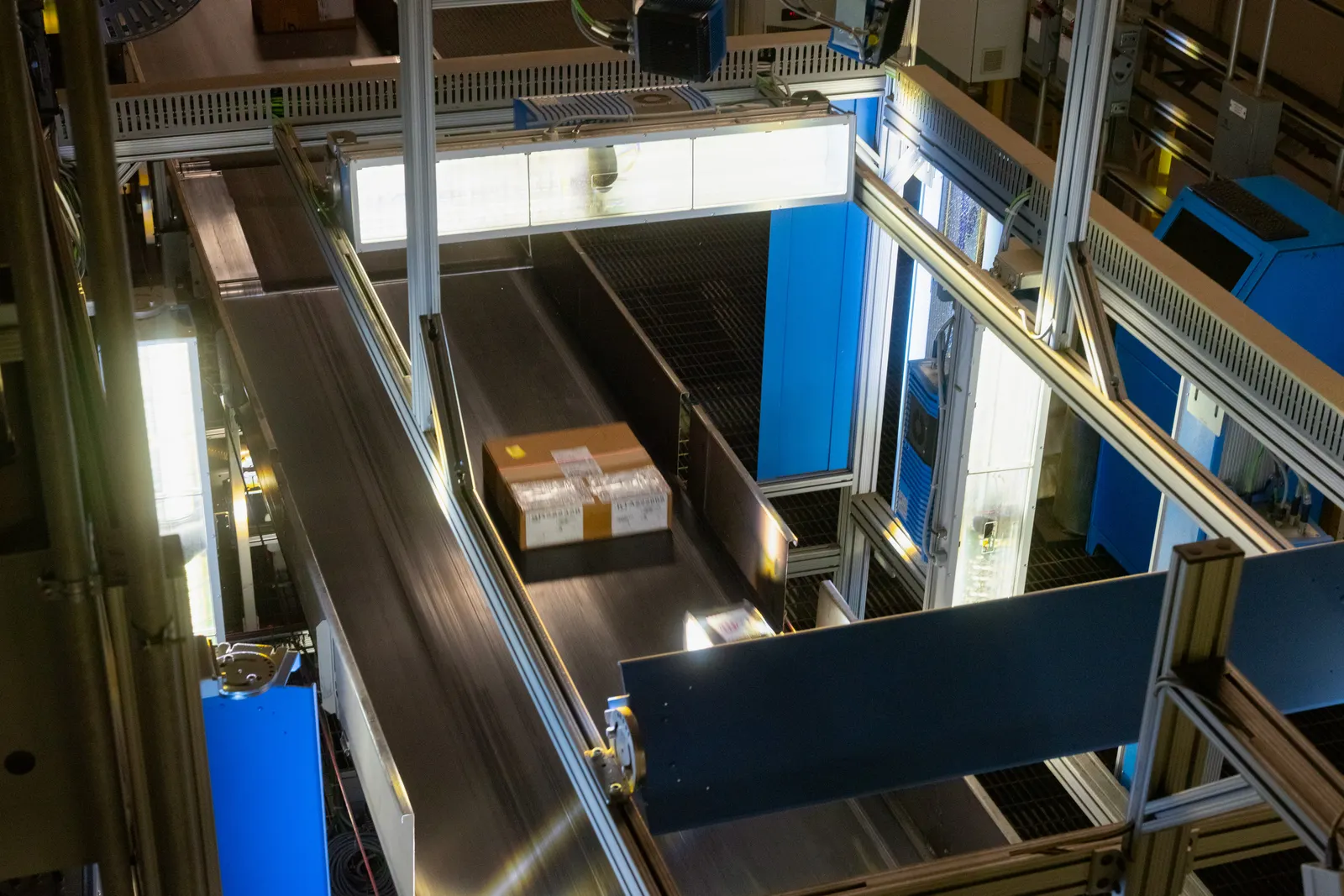
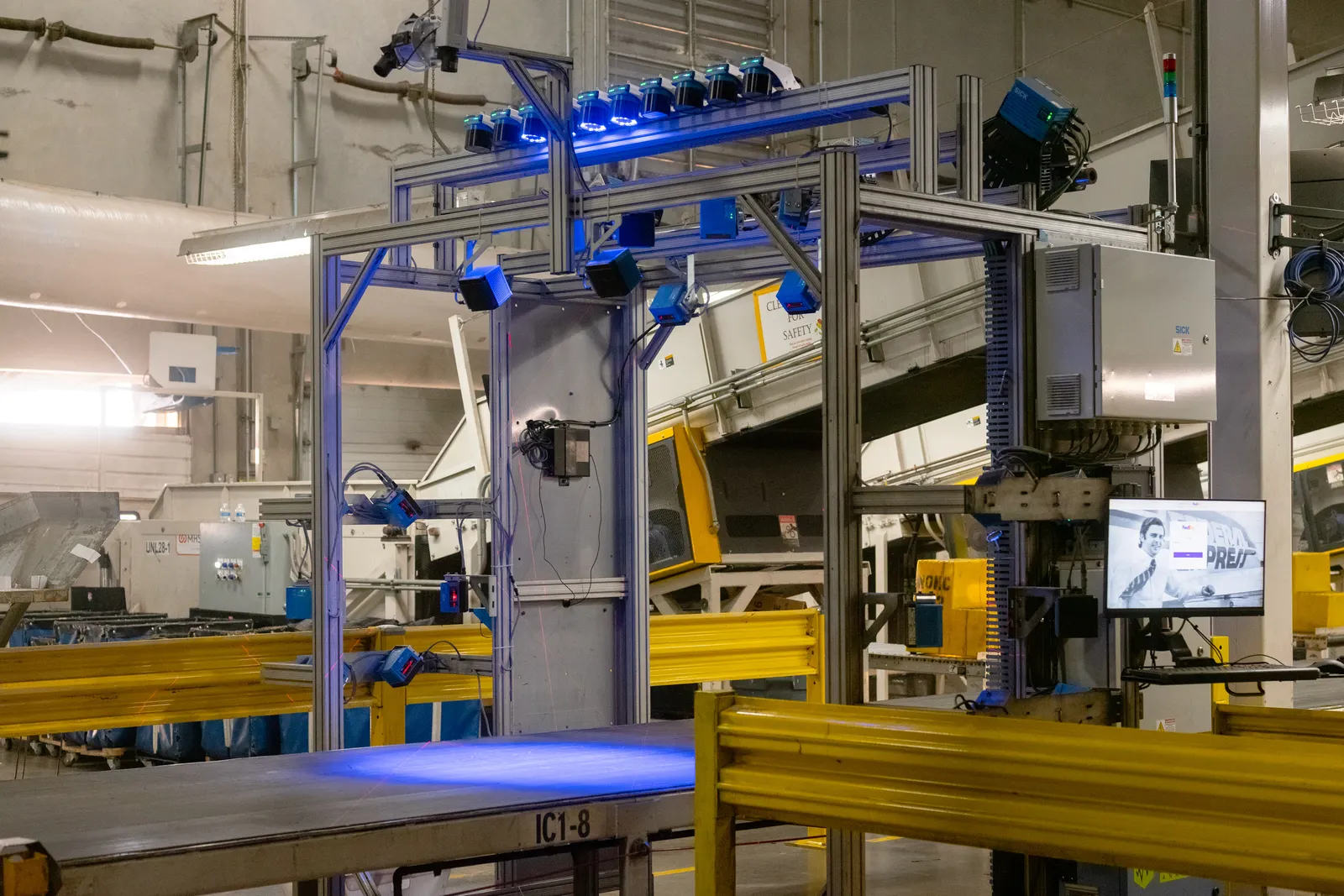
The Mesquite facility features two sortation systems that can each handle up to 7,500 packages an hour. It also has a six-sided scanning tunnel, allowing package barcodes to be scanned without the need for employee intervention. The site will also add automated labeling technology to assist with route identification for smaller packages later this year.
More automated capabilities like those featured in Mesquite have become "a necessity" in logistics networks, according to West Monroe’s Tancredi. Carriers lean on new technology to boost efficiency while still being able to serve growing demand.
"If I'm going to continue to grow and meet scale, I'm going to have to look at additional ways to do that that doesn't rely on just the manual labor aspect of it," he said.
Despite the presence of automation, the Mesquite site still relies on a large workforce, employing over 800 package handlers. In addition to loading trucks, many workers help sort bulky and oversized items like large TVs and furniture. These "nonconveyable" packages make up roughly 10% to 15% of the facility's volume, Moore said, as the site’s routes cover many neighborhoods that are becoming more comfortable ordering larger items online.
Evolving technologies and consumer habits are a few of the changes FedEx employees have had to keep up with in the midst of Network 2.0. But Moore said the transformation is also presenting new opportunities in his district "for employees who really want to be with the company and learn."
"I told my team it's one of the most challenging things we did, but it was one of the most rewarding things," Moore said of Network 2.0.