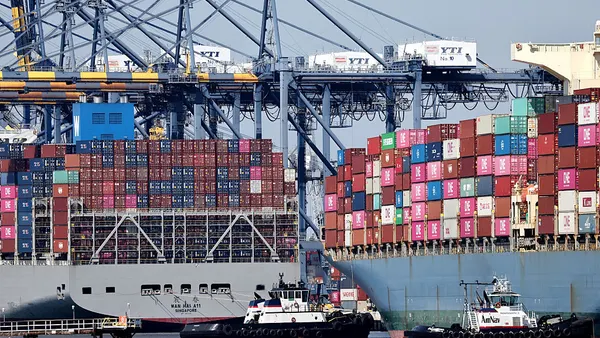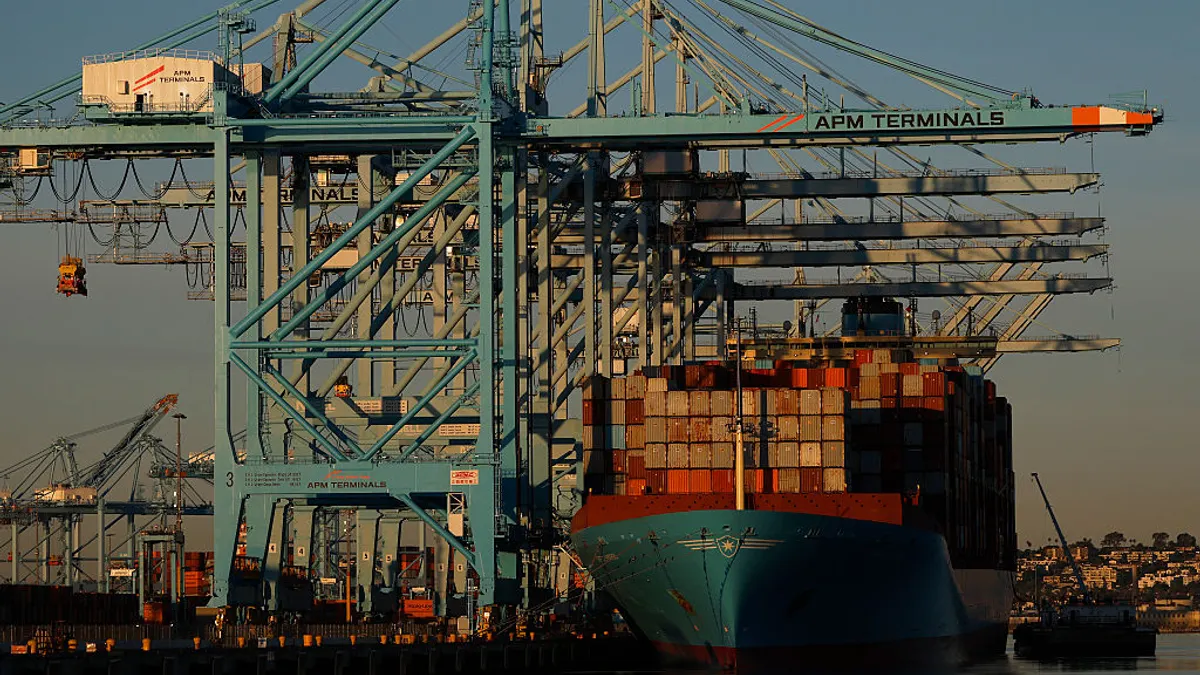
The Federal Maritime Commission has evolved to be more proactive and become a better industry resource after pandemic-driven challenges — including port congestion, vessel delays and increasing surcharges — prompted a high number of shipper complaints.
The Ocean Shipping Reform Act of 2022 granted the agency broader powers to go beyond the four corners of the United States in relation to the movement of cargo, Chairman Laura DiBella told Supply Chain Dive in an April interview.
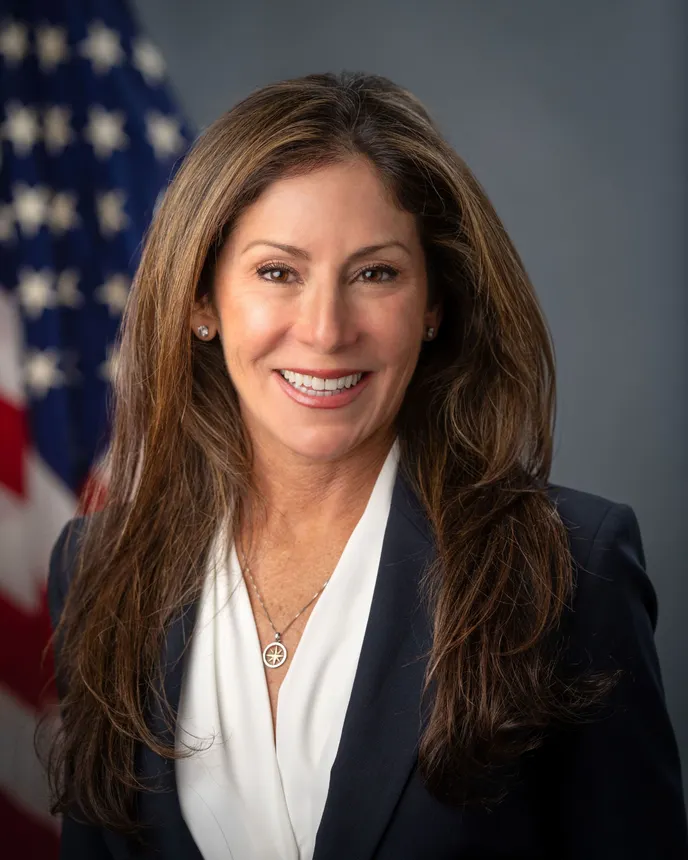
Through OSRA, the FMC redefined terminology and standards on what actions ocean carriers were prohibited in engaging. The law also added $6 million to the FMC's annual budget to help boost enforcement as a larger staff could help process more shipper complaints.
The FMC aims to get ahead of issues, opting to go “where the puck is going, rather than being reactive to certain issues that have occured,” the chairman said.
“More than anything, we are a resource where we are not this punitive entity that's just out to enforce fines,” she said.
At its core, the FMC aims to be a resource for shippers through the end-to-end shipping process, DiBella said in the interview. Here are three ways DiBella envisions the agency will support shippers in navigating an ever-changing ocean shipping market.
1. Shippers should use the agency as a resource
During the pandemic, shippers made several complaints to the FMC about unfair shipping practices done by carriers. While many of the complaints were made after cargo was already shipped, DiBella recommends shippers to ask the FMC questions before they ship, which could help lower the number of complaints received.
“Come to us with questions before you ship. There's a wealth of information to help guide you in making the right decisions,” DiBella said.
For instance, shippers have claimed that carriers have sometimes refused cargo space as a reoccurring issue. Specifically, there was a point in time where agriculture exporters had containers left behind as carriers prioritized shipping empty containers to Asia due to a period of high demand for foreign goods.
To address this, the FMC published a final ruling that made two clear distinctions when determining if a violation from a carrier has occurred pertaining to the refusal to accommodate cargo space.
Shipper complaints against ocean carriers increased in 2022 after OSRA was enacted and the FMC received over 175 complaints for review. As a result, the FMC waived or refunded over $1 million in shipping charges as the agency ramped up enforcement.
“Pick up the phone or, you know, send an email to our team and let us help you. They want to help you. [D]on't just think of us after the fact. Think of us beforehand,” DiBella said.
2. The 7 chokepoint study will help ease cargo flow
Maritime chokepoints can also pose a threat to cargo flows.
Most recently, the FMC began investigating maritime chokepoints in an effort to determine if transit constraints are creating poor ocean shipping conditions. The seven chokepoints being studied include the Northern Sea Passage, English Channel, Malacca Strait, Singapore Strait, Strait of Gibraltar, Panama Canal and Suez Canal.
The investigation aims to gather feedback on state control, what type of governance is involved and whether any nefarious or terror activity is occurring. The agency will eventually synthesize all the information collected and put it into a concise report, DiBella said.
“It's just a phenomena that is becoming more and more relevant by the day," DiBella said. The chairman said that a chokepoint can be weaponized or cause a lot of problems with supply chains, which, "lends to why we have taken a broader reach,” she said.
Chokepoints have caused issues in the past, such as when the container ship Ever Given ran aground in the Suez Canal, critically disrupting global trade flows. Over 300 ships were waiting to pass the waterway, and even after the Ever Given was freed days later, there were still hundreds of container ships backlogged.
“The way I see us is we're kind of the catch-all,” said DiBella. The report will ultimately be used not only by the FMC, but also by some of its partners in the United States, such as the State Department, Homeland Security, and the National Security Council.
However, the study likely won’t be done for a while as the ocean shipping industry continues to grapple with market turbulence, per the chairman.
“In light of recent events. I imagine things might take a little bit longer,” DiBella said. “I don't see this coming to a close this year.”
3. Making surcharges fair and clear to shippers
Carrier surcharges are nothing new when it comes to navigating geopolitical turmoil, and one of the FMC's focus areas has been to examine how carriers decide to implement fees to ensure they comply with OSRA.
Some examples include the pandemic-driven surcharges that were a primary complaint from shippers. The Red Sea crisis that began in 2023 also drove more shipper complaints, which prompted the FMC to review the transparency of those fees.
Most recently, the agency said in a March press release it was monitoring surcharges stemming from the conflict along the Strait of Hormuz.
The ocean industry has also been grappling with the Iran war which started in late February. While experts say it’s not a pandemic-level disruption, it's still a cause for concern. For instance, the closure of the Strait of Hormuz, which is a major waterway for global oil transport, has caused fuel prices to spike.
Ocean carriers are implementing fuel surcharges as a way to combat rising costs. Some carriers, such as MSC, CMA CGM, and Hapag-Lloyd, requested that the FMC waive the required 30-day notice to implement these surcharges. However, the FMC denied the request, according to multiple FMC filings dated March 23.
The agency rejected the request unanimously for a variety of reasons, primarily citing that the FMC didn’t have enough information to support or defend reasons to grant permission, DiBella said.
The FMC is monitoring the impact the current conflict is having on shipping conditions and will ensure that rates, charges and rules don't violate OSRA, the agency said.
Surcharges are a shock that are going to be absorbed by everyone involved, DiBella said, “but the shipper is taking it on the chin big time.”
Editor's note: This story was first published in our Logistics Weekly newsletter. Sign up here.