Dive Brief:
- The Iran war is so far “a concern, but it's not a worry” in terms of impacts to the Port of Los Angeles, Executive Director Gene Seroka said during a media briefing on Monday.
- Seroka said the port is staying ahead of potential impacts by talking to other overseas ports to determine if a build-up of cargo at their terminals due to ripple effects from the conflict could impede products coming across Transpacific routes.
- Currently, there don’t seem to be any disruptions at the port due to the Middle East conflict, Seroka said, echoing sentiments he shared during a media briefing last month. He also said that April volumes are tracking for a solid start to the second quarter as retailers replenish seasonal goods, such as spring and summer fashion items.
Dive Insight:
Transpacific trade remains stable despite tensions in the Middle East disrupting other seaports, Seroka said.
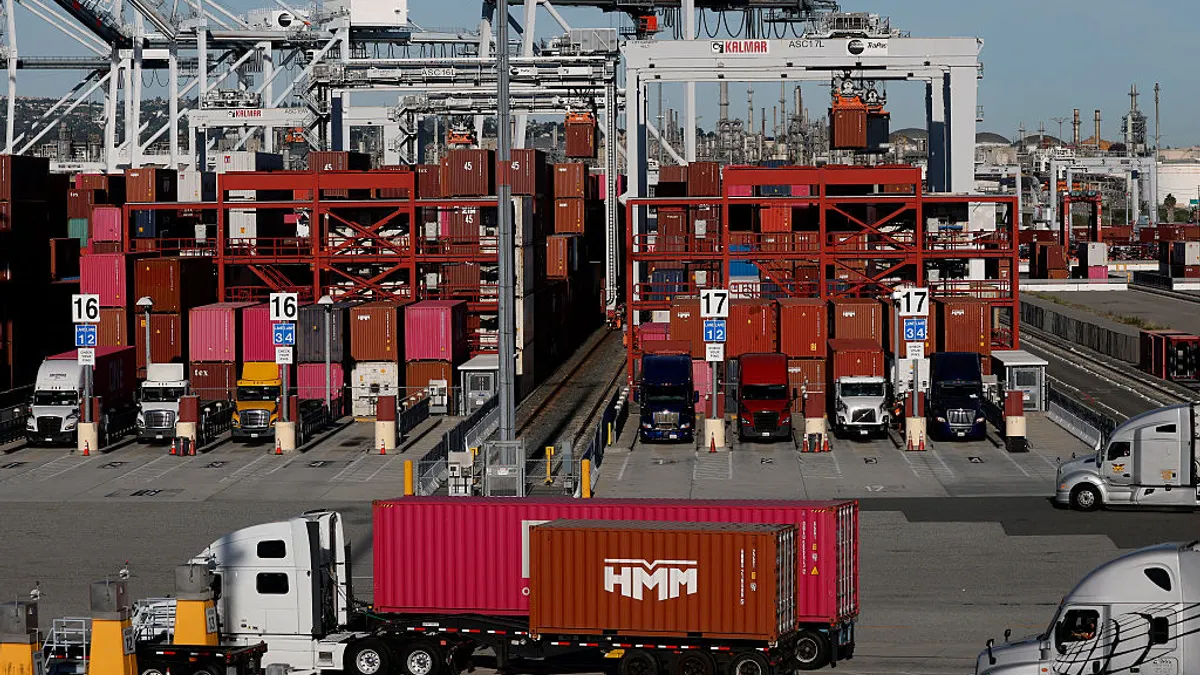
The Port of Los Angeles processed 752,520 TEUs in March, down 3% compared with the same month a year ago when importers frontloaded cargo ahead of new tariff announcements from the Trump administration.
Data from the Port Optimizer, the port’s information portal, signals there will be an uptick in business in April, with volumes for the month estimated to reach the 800,000 TEU range.
Although the Iran war has not yet had a major impact on the Port of Los Angeles, oil trade volatility has continued as the Strait of Hormuz remains disrupted due to the conflict. After a two-week ceasefire announced last week, recent negotiations between U.S. and Iran officials during the weekend stalled.
Such talks are facing a series of hiccups as Iran and the U.S. have different methods of negotiating, according to Dr. Jerrold Green, senior fellow at the UCLA Burkle Center for International Relations.
“There's an oil and fire quality between the Iranians and Washington,” Green said during the Port of Los Angeles media briefing Monday.
“Washington likes to do things quickly. There's a sort of real estate mentality in terms of negotiating and doing deals,” Green said. In contrast, Iran prefers a more “protracted” approach, Green added.
It has been more than 40 days since the war started, during which more than 4,500 ships on average have not been able to pass the Strait of Hormuz, Seroka said.
“It's going to take months to untangle the supply chain web, if we even get to a point where we can,” he said.