Dive Brief:
- FedEx has completed its Network 2.0 overhaul in Dallas, San Francisco, Phoenix and Washington D.C., advancing the company's efforts to combine its historically separate Ground and Express networks, President and CEO Raj Subramaniam said on an earnings call Wednesday.
- The carrier is entering the peak holiday shipping season with 65% of its eligible volume flowing through roughly 630 stations optimized to support Network 2.0, Subramaniam said. That's up from the 45% of eligible volume and nearly 490 optimized stations FedEx had at the end of June.
- As it has for the past two years, FedEx is pausing Network 2.0 implementation efforts during the peak season. After the holiday rush, FedEx will pursue implementing Network 2.0 in Los Angeles, Oklahoma City and Charlotte, North Carolina, Subramaniam said.
Dive Insight:
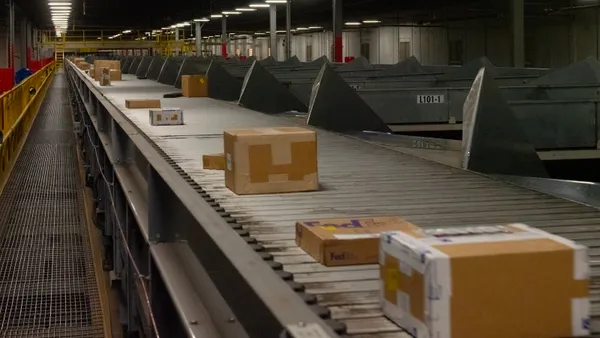
FedEx is steadily breaking down the operational silos that have long separated the shipping processes for its expedited and less-urgent packages through Network 2.0, with the initiative slated to wrap up in 2027. Those parcels now flow together in markets like Dallas after the company instituted facility adjustments and delivery tweaks, an undertaking that calls for collaboration between FedEx's surface and air transportation teams to limit customer hangups.
Network 2.0 is expected to save FedEx a cumulative $2 billion in costs by the end of next year, according to Subramaniam, as the initiative slashes overlapping driver routes and unnecessary facilities for the consolidated network. So far, the company has shuttered more than 260 stations as part of the initiative, with an overall goal of over 475 stations closed.
"Combined with our effective commercial strategy, this network optimization is leading to tighter capacity utilization across our surface network," Subramaniam said.
FedEx is benefiting from Network 2.0-related cost savings as the company grapples with increased expenses elsewhere. The carrier encountered a $100-million year-over-year headwind in Q3 tied to its recently ratified labor contract for pilots. Meanwhile, the company's U.S. segment encountered higher purchased transportation rates for over-the-road linehaul services, which interim CFO Claude Russ attributed primarily "to the broader tightening in the labor market for truck drivers from recent regulatory changes."
Additionally, higher fuel prices squeezed FedEx's U.S. adjusted operating margin. However, the company blunts the impact of elevated costs through its fuel surcharge, which adjusts weekly to keep up with price fluctuations.
"We now expect 12% full-year revenue growth, including approximately 4 percentage points for fuel price-driven surcharge revenue," EVP and Chief Customer Officer Brie Carere said on the call.