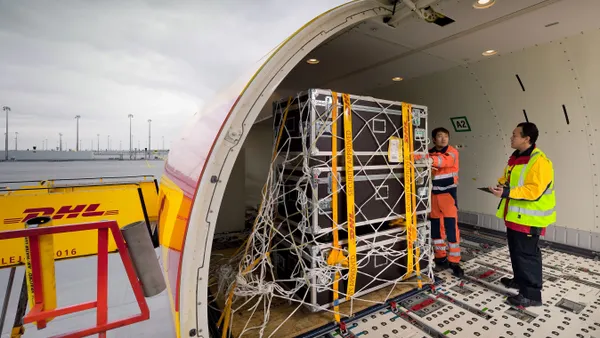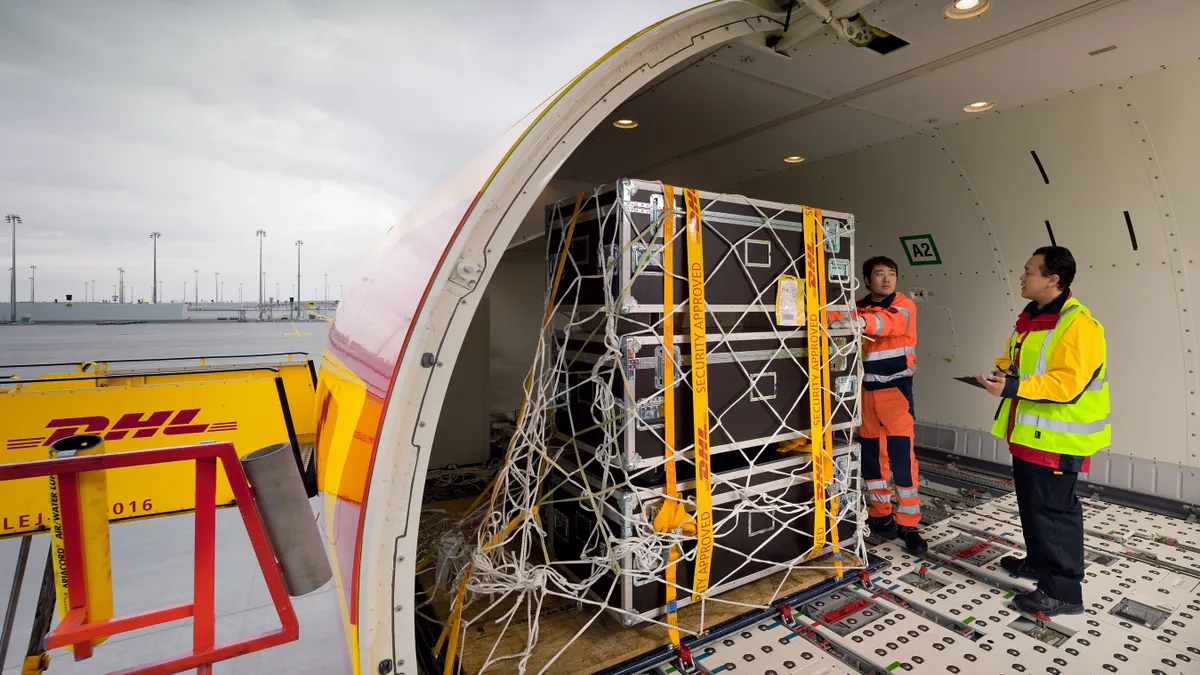
DHL Express launched a standardized, scheduled express air freight service for heavyweight cargo, according to a Sept. 9 press release.
Heavy Weight Express can move most shipments in one to three business days, depending on the origin, destination and shipment characteristics, Laurice Bancroft, SVP of network operations for DHL Express Americas, told Supply Chain Dive. The service accommodates shipments up to 2,200 pounds per piece, or 6,000 pounds per shipment, and is available across DHL Express's international network, which includes more than 220 countries and territories.
DHL Express manages the shipments from pickup through final delivery using its air and ground infrastructure network, which includes an aircraft fleet, hubs, gateways, customs operations, last-mile delivery, as well as commercial air and ground transportation partners, per Bancroft. In turn, DHL aims to provide delivery consistency, stable capacity and globally consistent handling standards.
“This integrated model gives DHL greater control over the shipment journey and helps provide predictable transit times and capacity, even during periods of disruption or constrained air capacity,” Bancroft said.
Shippers are given “one upfront quote,” eliminating possible fees that may arise throughout the shipping process, Bancroft said. Meanwhile, in-house customs can help reduce delays, while end-to-end tracking enables full visibility throughout transport.
“This helps businesses reduce delays, accelerate program launches, lower inventory risk, and minimize costly downtime,” the SVP of network operations said.
DHL is also introducing dedicated Heavy Weight Priority Desks around the world, which are specialized teams that aim to proactively track shipments, identify exceptions early, intervene in real time and communicate with customers to ensure shipments continue moving, Bancroft said. Each heavyweight shipment receives “dedicated case ownership” through these specific teams.
The Heavy Weight Express service caters to numerous sectors, including technology, automotive manufacturing, engineering and machinery, life sciences, pharmaceuticals, and oil, gas and energy, per the press release. Use cases include companies looking to avoid production downtime, manage program and product launches with strict timelines, optimize working capital by reducing inventory buffers, and stabilize multisite supply chains.