Dive Brief:
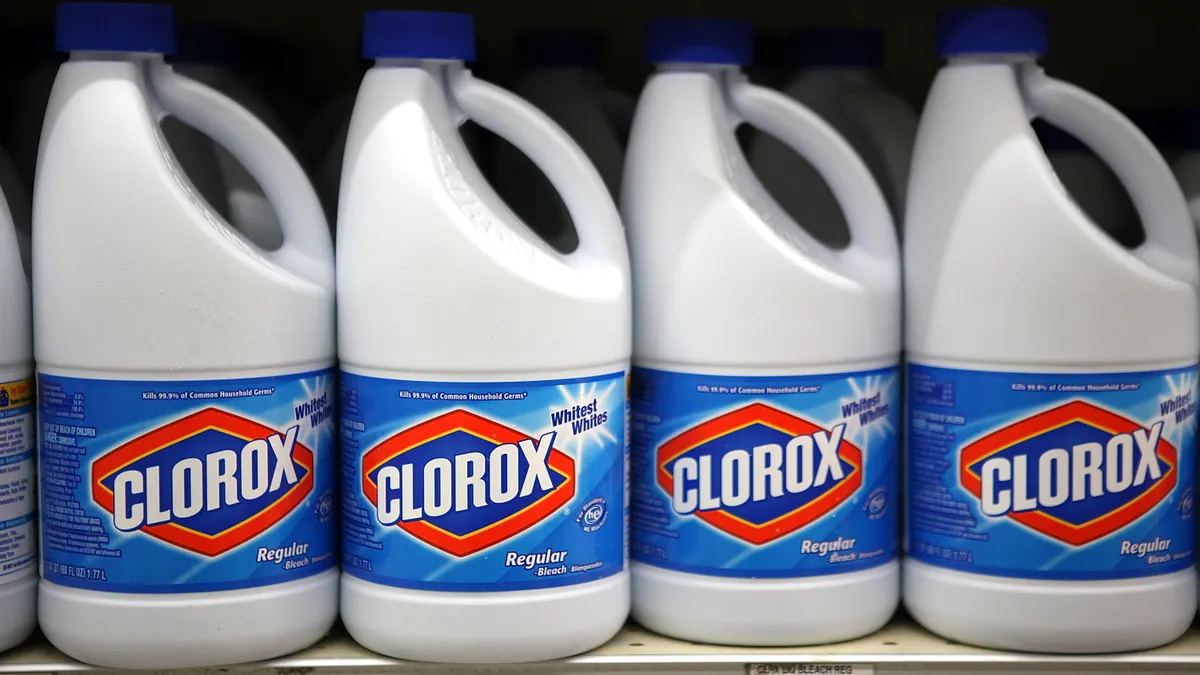
- Clorox expects to realize optimization gains from migrating its U.S. supply chain to a new enterprise resource planning system starting in the current fiscal year, EVP and CFO Luc Bellet said on an Aug. 3 earnings call.
- The household cleaning and consumer products maker expects productivity improvements in the supply chain through better planning, lower inventory levels and more tasks that can be automated, Bellet told investors.
- "You can have just your supply chain being much more reactive and, in some cases, proactive to some change in demand signal," Bellet said.
Dive Insight:
Clorox began transitioning its U.S. supply chain and other business operations to the new ERP system in 2025, replacing decades-old technology. However, the migration was not without hiccups. The company incurred additional expenses to address disruptions in demand fulfillment stemming from the ERP ramp-up, which went slower than expected.
"[It's] nice to start seeing the cost noise and volatility associated with this large, complex implementation in the rearview mirror," Bellet told investors this month.
Clorox integrated business planning into its ERP, which is expected to provide efficiencies in demand fulfillment and order-to-cash functions, Bellet said. In general, the company went from a manual operation dependent on spreadsheets to one that is now “fairly automated.”
The massive ERP upgrade rebuilt the company's data infrastructure — part of a five-year, $500 million digitization effort that started in 2021. Such technology migrations can lead to tens of millions of dollars in additional costs if the transition fails to go smoothly.
Other consumer-goods manufacturers have undergone ERP transitions in recent years, including a $1.2 billion initiative from Mondelēz International and Scotts Miracle-Gro’s and Nestle’s rollout of cloud-based SAP S/4HANA.
Editor’s note: This story was first published in our Operations Weekly newsletter. Sign up here.