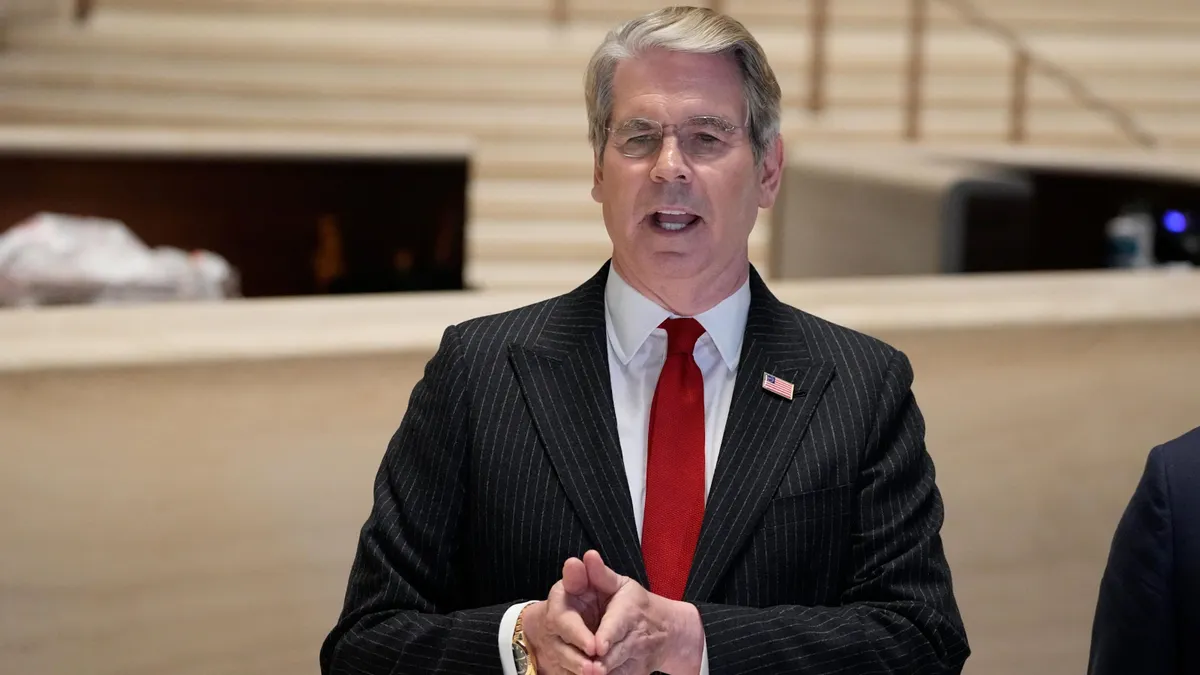
The United States and China will extend a trade truce set to expire in November by another two months as leaders from both countries meet in Washington, D.C., Treasury Secretary Scott Bessent said in a Fox News interview on Wednesday.
Following months of an escalating trade war last year, the two countries agreed to lower tariffs and suspend certain trade actions until Nov. 10, 2026. These measures included the U.S. reducing tariffs related to fentanyl trafficking on imports from China to 10% and suspending a Section 301 investigation into China’s maritime and logistics industries. The tariffs tied to fentanyl trafficking were implemented under the International Emergency Economic Powers Act. The Supreme Court in February invalidated levies put in place via the statute.
Bessent, who met with China Vice Premier He Lifeng this week, said that the conditions of the trade truce would stay in effect until Jan. 10, 2027 “to give us more time to see what we can do on the economic front.” He also said he was unsure if a “bigger deal” could be cemented by Jan. 10 or if the countries would further extend the current agreement. The White House has yet to officially document any extension.
As part of its end of the bargain struck last year, China agreed to suspend any retaliatory tariffs and non-tariff countermeasures, pause implementation of export controls on rare earths and buy 25 million metric tons of soybeans over the ensuing three years.
“[The] Chinese have been very good thus far about meeting their obligations this year. They have agreed to buy 25 million tons of soybeans, and they have been very fulsome in those,” said Bessent. “They have about $17 billion of other ag commitments that we think they are a little behind schedule on and we're encouraging them to pick those up.”
Bessent's comments came the same day China President Xi Jinping landed in Washington, D.C., for a summit with U.S. President Donald Trump. Bessent suggested that the two leaders would discuss potential deals related to financial services and additional agricultural purchases, while Trump himself has indicated that artificial intelligence, what he now calls “super intelligence,” will be a key topic.