It’s easier for shippers to plan with consistent cargo flows, and port-to-inland transit can offer that type of stability, APM Terminals Mobile managing director Brian Harold told Supply Chain Dive.
“I think for shippers what we’re seeing now is more about diversification. They don’t want to put all their eggs in that one basket,” Harold said.
It’s also about de-risking their supply chains, Harold said. If cargo is traveling either through the Panama Canal or the Red Sea to one port and issues arise, that can leave shippers with major problems.
A port-to-inland route can offer shippers lower costs, reduce empty miles and better use of rail capacity versus congested ocean freight corridors, according to Harold.
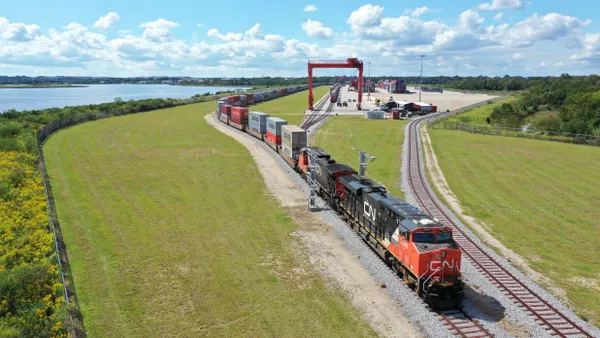
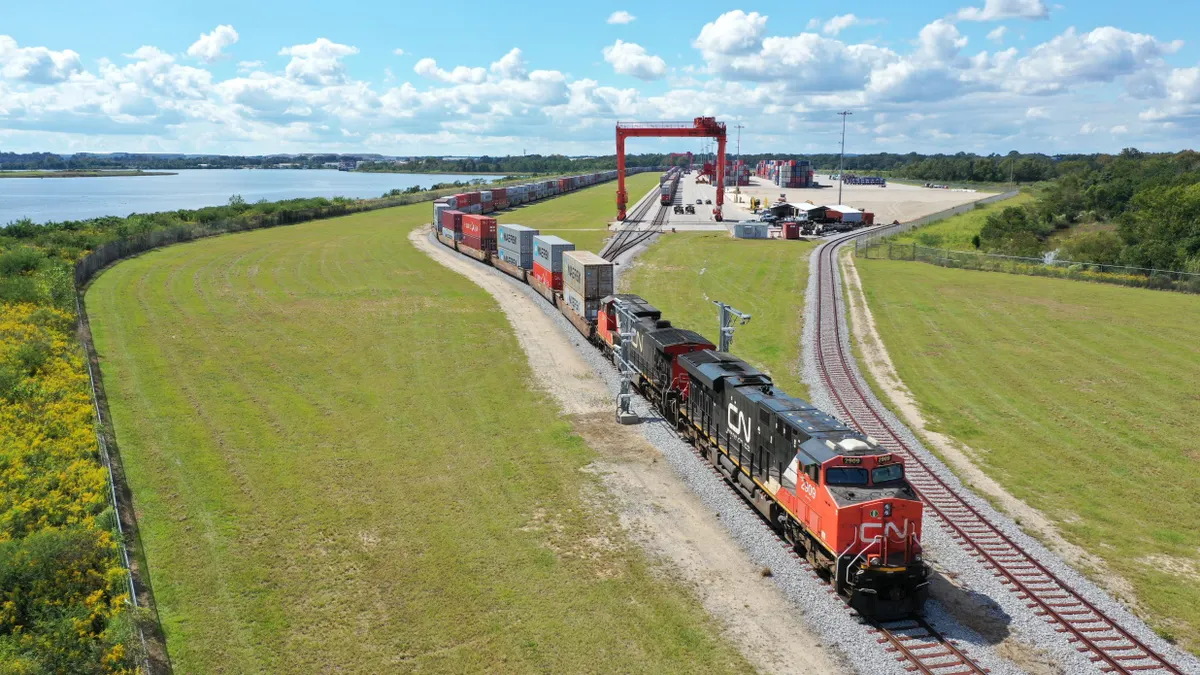
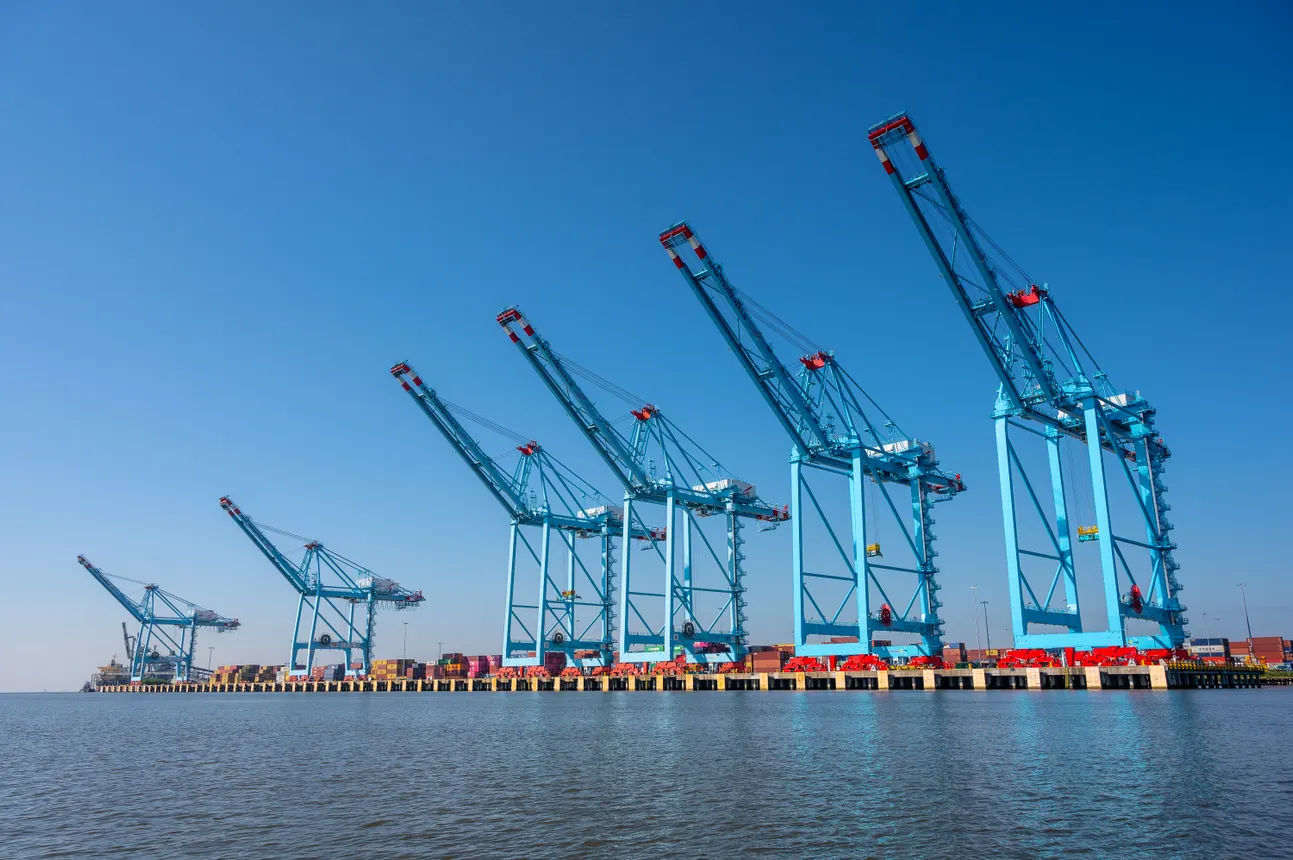
At Port of Mobile, APM Terminals is the only container terminal that operates at the port. It opened in 2008 and in 2016 APM Terminals opened its rail facility. Prior to that, there was no intermodal rail connectivity in Mobile, Alabama, Harold said.
The port currently handles around 600,000 TEUs annually, with the ability to move its gateway up to a 2.5 million TEUs throughput.
"We're investing a lot of money in the gateway right now, along with the state, deepening and widening the ship channel, and then we've expanded the terminal five times within the past 10 years, and invested over a billion dollars," he said.
Lower costs by reducing empty miles through shorter hauls
Shippers looking to lower costs can do so through inland port routes as they offer shorter truck moves instead of long hauls, reducing the number of miles traveled between origin and destination, Harold said.
A shipper also doesn’t have to worry about trucking a container 300 miles and then returning a chassis back 300 miles, he noted. Another example is when a container is picked up at a port and moved via truck a long distance, they’re still responsible for getting the unloaded container back to the port.
“If you can have a shipper that instead of trucking 300 miles each way, can now just have the truck move … about a mile or two to an inland port site, and then the railroad takes it from there, that’s a huge win and usually a very good positive impact to their overall supply chain cost," Harold said.
Shippers evaluate costs of trucking versus rail and the cost of rail versus barge. Another major factor, Harold said, is laws in various states where, in some instances, there are costs for cargo that goes overweight on a truck.
Hours of service rules that limit the amount of time drivers can operate during a day also can make longer haul trucking more challenging, Harold said.
Port of Mobile as an example that connects to inland routes
The Port of Mobile has one container terminal operated by APM Terminals where automotive is a huge business sector in the state of Alabama.
With an auto manufacturer, there are multiple Tier 1 or Tier 2 suppliers that move a lot of cargo and the overall ecosystem of these types of supply chains is very complex, Harold said.
“It requires flexibility within a port to really be able to cater to the needs of automotive manufacturers,” he said.
There can be situations where if these auto manufacturers don’t receive their cargo, they can shut down an entire line, Harold said, which comes at about thousands of dollars in costs a minute to these shippers.
“If a shipper can just basically expedite their cargo when it comes off a vessel within 24 hours to an inland site, right next to their distribution center or their manufacturing center, then that’s a huge plus for the stability of their supply chain,” Harold said.
Utilizing Class 1 railroads as a competitive advantage
Mobile’s access to Class 1 railroads offers a competitive advantage for shippers.
When looking at a specific railroad like Canadian National, for example, it doesn't have any access to ports on the U.S. East and West Coast, Harold said. Instead, it has access to Gulf ports that allow CN to get in the game to an untapped opportunity.
When evaluating the capacity that exists on other railroads, the West and East Coast lanes are heavily utilized.
“There’s not a lot of additional capacity there on a regular basis. Whereas from the Gulf for containerized cargo, there’s a tremendous amount of capacity available on these rail lines,” he said.