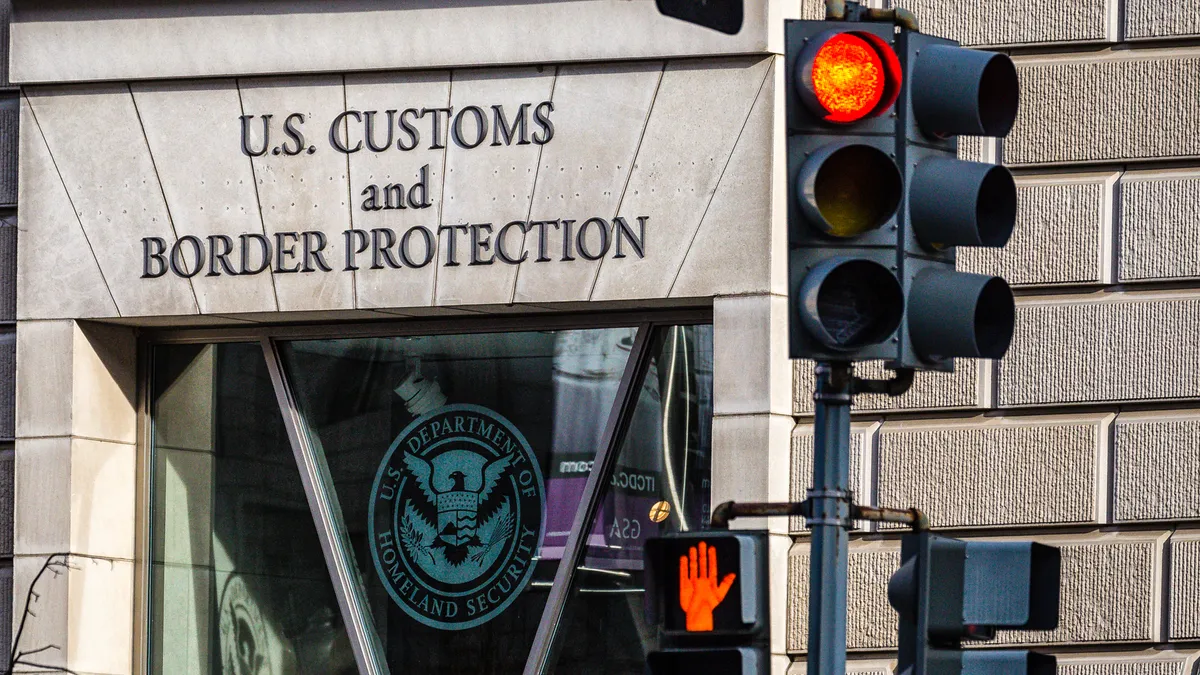
U.S. Customs and Border Protection has completed enhancements to its refund processing system for now-defunct tariffs to include entries for shipments that are awaiting reconciliation of their final duty calculations, the agency said in a June 29 notice.
Importers and brokers can now submit these entries through the agency’s dedicated refund portal for tariffs that the Supreme Court struck down earlier this year, the agency said.
The change covers certain entries marked for later adjustment, as long as they are either unliquidated or have been liquidated within 80 days of the declaration filing date within the portal, known as Consolidated Administration and Processing of Entries, or CAPE.
The CAPE update is the first of two phases to expand the number of entries that can be submitted in the portal. The latest functionality accounts for roughly $28.7 billion in refunds, the CBP said previously.
The second phase, which could come in late July, will include functionality for processing finally liquidated entries, CBP Executive Assistant Commissioner Susan Thomas said during a hearing earlier this month. The entries account for $11.4 billion, or 6.9%, of payments made for tariffs installed by President Donald Trump under the International Emergency Economic Powers Act last year.
Once both phases are completed, about 95% of all entries that faced IEEPA tariffs will be eligible for refunds, Thomas said. Entries covered by drawback, under protest or filed through improper channels would require additional work.
The CBP is working on new capabilities as the Justice Department appeals a Court of International Trade order directing the federal government to issue universal refunds for IEEPA tariffs. The initial order did not cover finally liquidated entries but was later expanded to include them.
The DOJ, which doesn’t wholly reject the CIT order, argues the court has jurisdiction to issue refund orders on finalized entries only for importers that have filed lawsuits against the IEEPA tariffs. The appeal is before the Court of Appeals for the Federal Circuit.