Dive Brief:
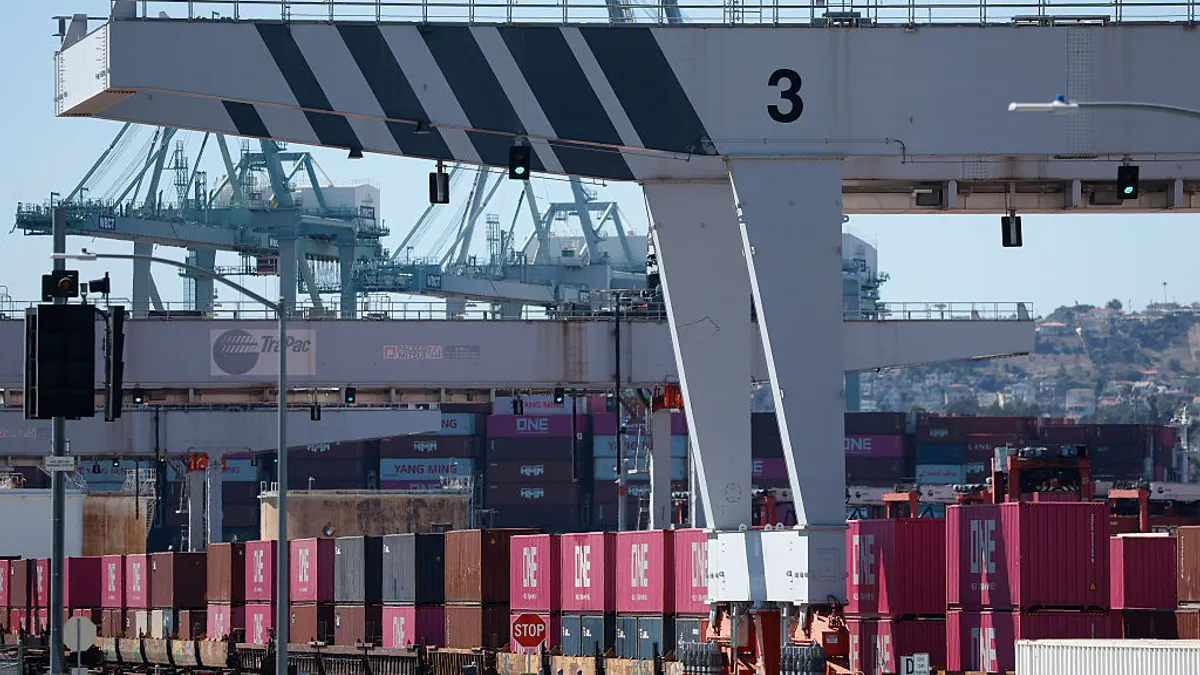
- The Port of Los Angeles is facing longer dwell times as containers designated for rail are sitting at the port for nine days or longer — that number should be zero, Executive Director Gene Seroka said in a media briefing on Thursday.
- About 9,500 containers are set for rail transport, with 75% of those being BNSF Railway’s responsibility, Seroka said. Half of that percentage are stuck at the Fenix Terminal.
- “We've got a plan. The last two weeks, we've seen rail cars, engine power and crewing ramped up on the westbound side to come into the port to pick up some of these boxes as quickly as possible,” Seroka said.
Dive Insight:
The Port of Los Angeles has been facing high rail dwell times for several months. During September, rail dwell times were at 7.19 days, the Pacific Merchant Shipping Association reported. Since then, rail dwell times stand at more than nine days.
The port is handling record volumes due to continued consumer spending, inventory replenishment, changes in trade policy and shipping disruptions, Seroka said.
Record volumes at the port are placing pressure on rail dwell times. The port processed close to 5 million TEUs from June to October, the strongest five-month stretch in its history, per a press release. The current containers sitting at the port are also “part and parcel of all this freight that we've moved over the last five months,” Seroka said during the media briefing.
In October, the port processed a bit over 1 million TEUs, setting a record for the month and marking the second-highest monthly total ever at the port.
Longer dwell times can raise shipper uncertainty and result in a need to adjust freight plans.
“When rail dwell climbs, some shippers switch to truck or transload near the port to keep inland freight on schedule,” per Whisk Freight Brokerage, a freight and logistics provider.
“This is an issue that we've got to fix,” Seroka said. “But with all the cargo coming in, we've seen an increase in rail cargo about 25% during this time frame. Loadings are up 17% compared to the same snapshot in time last year, yet we're not keeping up in totality with the inbound.”