Demand is growing for inland markets versus port markets as shippers seek to save costs, according to some commercial real estate firms.
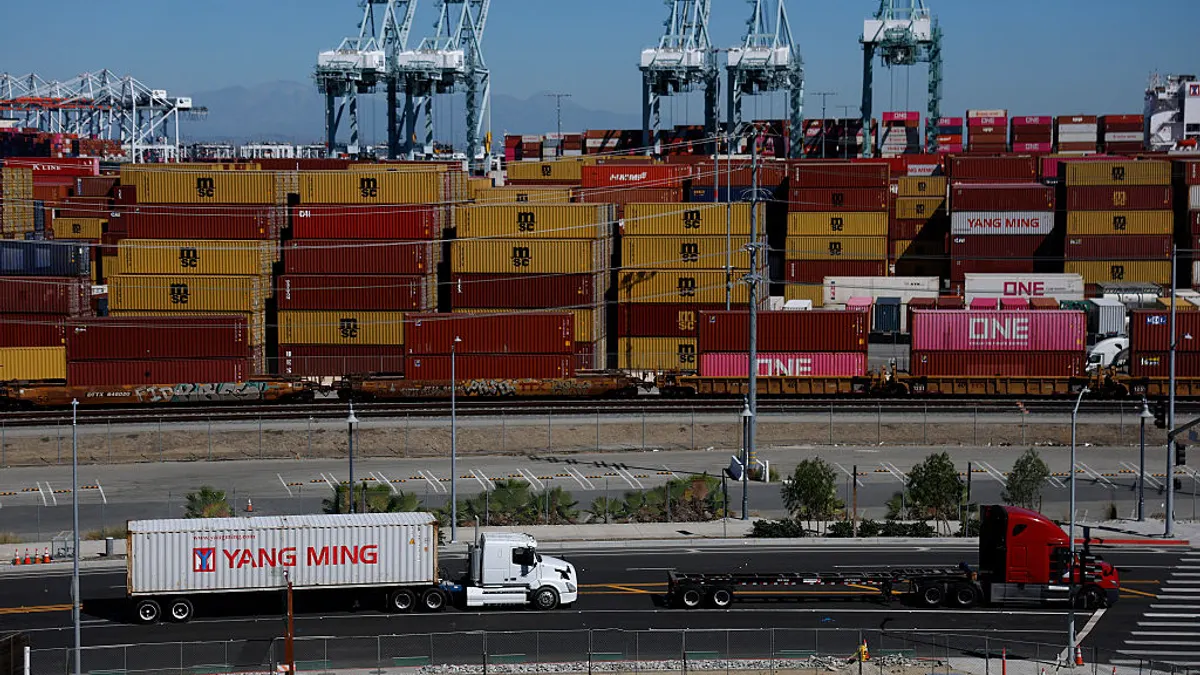
Cushman & Wakefield reported on Oct. 19 that demand has shifted toward inland industrial markets over the past two years while vacancy rates in port markets are 110 basis points above the U.S. average of 6.6%.
“More goods now move by truck or rail to inland distribution hubs, where labor, rents and energy costs are often lower. That shift, combined with rising import volumes from Mexico, pushed the inland share of industrial absorption to 83%, the highest level since 2010,” according to research from Cushman & Wakefield.
Shippers are facing rising transportation costs as diesel spikes tied to the Iran war continue. Uncertainty in the market leaves shippers needing to find ways to save on costs.
Interest in inland markets has grown as companies seek newer warehouse builds more ready for upgrades such as automation, CBRE Senior Managing Director John Kirkman told Supply Chain Dive in an interview.
“When I think about some of the trends that we’re seeing from our clients, it’s kind of this flight-to-quality, newer kind of class A type assets,” Kirkman said, adding later that "there is a lot more class A newer inventory inland these days.”
However, Cushman & Wakefield projects demand strengthening and vacancies tightening in port markets such as Hampton Roads, Virginia; Savannah, Georgia; Charleston, South Carolina; and Los Angeles. A record rent growth above 5% through 2028 is forecasted for seven of 13 key North American port industrial markets, according to Cushman & Wakefield.
Higher vacancies in a particular port market doesn’t necessarily mean that demand is shifting inland, Melinda McLaughlin, SVP and global head of research at Prologis, told Supply Chain Dive.
“On some long-distance routes, shipping freight by rail and truck is becoming more attractive as trucking costs rise,” McLaughlin said in an email. “But there’s limited evidence that companies are broadly moving warehouses inland. Changing how goods travel doesn’t necessarily mean changing where they’re stored.”
Overall, goods seem to be moving at a healthy pace through U.S. warehouses, according to Prologis data. Activity increased across industries such as e-commerce, manufacturing and retail with advanced manufacturing and data center suppliers adding to logistics needs.
“Businesses are still keeping inventories lean, so the increase in activity doesn’t necessarily mean they’re stockpiling goods or moving inventory inland,” McLaughlin said.