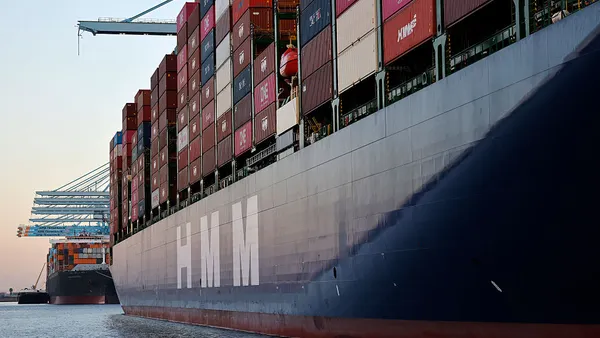


Since February 28, both of the Middle East's major maritime corridors have been severely disrupted simultaneously. The Strait of Hormuz handles roughly 20% of global oil trade, and its effective closure raised the cost of every input derived from oil – which is a lot. At the same time, the Red Sea route has seen disruptions since late 2023. Ceasefires have been announced and broken, and the situation continues to change, but the effects on global shipping are locked in regardless of how the conflict resolves in the near term. Product businesses that don't source from either region are absorbing those effects in higher freight costs and supplier lead times that have lengthened since the disruptions began.
Brands selling across multiple sales channels face a specific version of this problem. They track inventory across multiple disconnected systems, one for each channel and fulfillment partner. Those systems don't share data, so each new channel adds another partial stock record to reconcile. Committed inventory at one channel doesn't automatically appear as unavailable elsewhere, and overselling is a recurring risk, as is placing purchase orders that duplicate stock already committed at another channel.
In stable conditions, that fragmentation is a background problem, but supply disruptions require fast, accurate replenishment decisions built on a complete stock picture.
The instinct is to reorder. But merchants who can't see their committed stock across every channel reorder on incomplete data. So they end up with either excess inventory or missed demand on high-demand SKUs. Both cost money that tighter margins in a high-freight environment don't absorb easily.
Good forecasting depends on accurate data. For multi-channel merchants, reliable demand forecasting requires a consolidated view of stock across every channel and location, mapped against open orders and supplier lead times. During a supply disruption, those lead times change faster than forecasts account for. Forecasts built on pre-disruption supplier data produce reorder recommendations that are already out of date by the time a disruption hits. Merchants running on disconnected systems typically don't have a current view of those inputs.
A single system that consolidates stock and committed orders across every channel and partner gives the operations team one current view to plan from. Multi-channel merchants typically don't have that. Each new channel gets a new tool chosen for that channel, and those tools rarely share data with the rest of the operation. The stack grows incrementally, one channel at a time, rather than as a designed whole.
The inventory data problem precedes the Hormuz closure. The disruption raises the cost of that fragmentation for merchants who haven't addressed it yet, and the timing is harder than the tariff cycle was. Tariffs came with a date and a percentage; the causal chain was direct and most product businesses responded. Hormuz doesn't work that way. The connection from a military conflict in the Persian Gulf to a packaging cost increase or a delayed shipment is longer, and merchants running on fragmented stock data can't easily trace their own exposure before absorbing the cost. A current view of stock across every channel and location is what makes that connection traceable. The businesses that came through the tariff cycle best had one thing in common: a clear view of their full stock position before the pressure hit.
Learn how Katana gives multi-channel merchants real-time inventory visibility and demand forecasting across every channel. Start the free plan at katanamrp.com.