Dollar Tree is “making solid progress” building a more resilient and scalable supply chain through several initiatives, Chief Supply Chain Officer Roxanne Weng told Supply Chain Dive in an email.
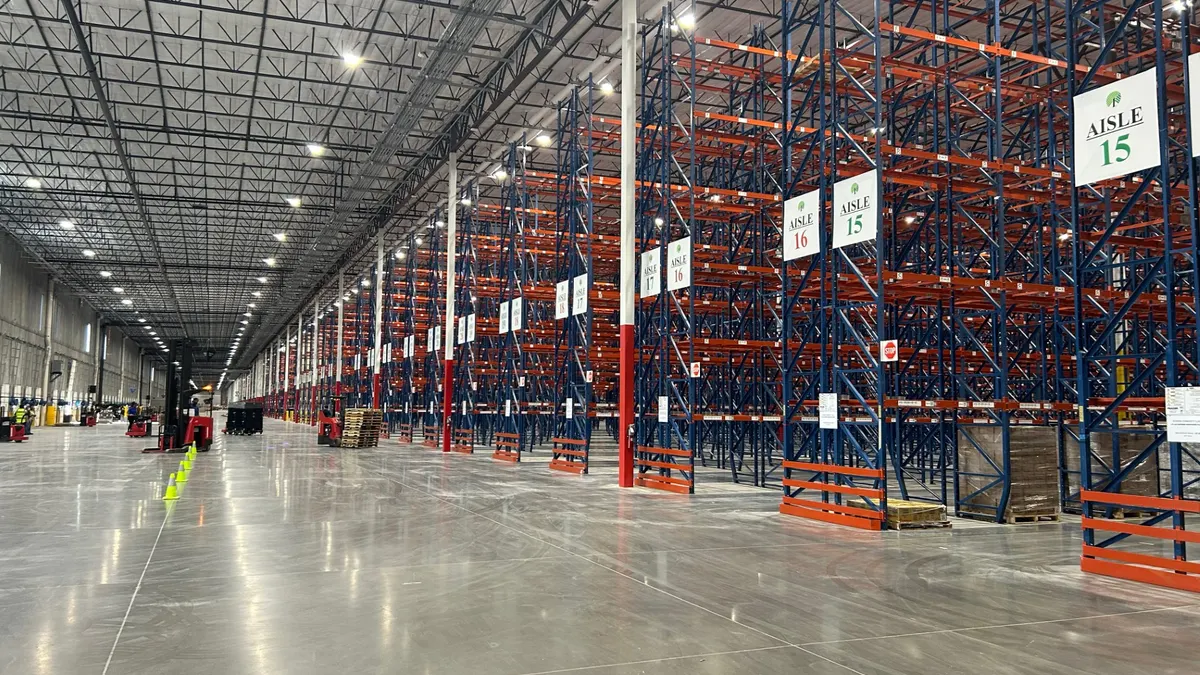
Most recently, the retailer on Wednesday opened a 1 million-square-foot distribution center in Litchfield Park, Arizona, to help improve delivery speed to stores.
The warehouse is expected to begin outbound deliveries next month and will move product to about 700 stores located across the West and Southwest, Weng said.
The facility enables Dollar Tree to support large-scale distribution in multiple states, including Arizona, Colorado, Nevada, New Mexico and Utah. It also helps create more consistent service and inventory flow, Weng added.
“It’s built to handle the volume we need today while also giving us room to grow in the future,” she said.
Elsewhere, the company is set to open a new distribution center in Marietta, Oklahoma, in 2027, according to Weng. The facility will replace a building that was destroyed by a tornado in 2024. The site’s destruction led to higher transportation costs due to reduced distribution capacity, which further strained Dollar Tree’s network and added transport miles, Weng said at an Investor Day event last year.
The new warehouses in Litchfield Park and Marietta are part of Dollar Tree’s long-term focus on “increasing the number of stores each distribution center supports, improving efficiency within our facilities, and lowering overall cost per location,” Weng told Supply Chain Dive.
“More broadly, our network strategy is all about positioning our infrastructure closer to stores so we can reduce transit times and get the products on shelves more quickly,” she said.
Dollar Tree is also enhancing its logistics network by “optimizing routes, better aligning inbound and outbound flows, and using data to drive more consistent delivery performance,” Weng said.
To improve its fleet management, the company is investing in upgraded systems and technology, including warehouse and yard management tools, Weng said.
Additionally, at the 2025 Investor Day event, Weng mentioned the company had secured multi-year inbound and outbound freight contracts to improve cost predictability and service reliability. The agreements cover about three-quarters of the retailer’s freight volumes and help reduce exposure to the spot market, Weng told Supply Chain Dive.
“We’re also strengthening our import strategy by diversifying where product comes from and balancing volume across carriers and ports. That gives us more flexibility to respond to global changes,” Weng said.
Altogether, Dollar Tree’s distribution footprint expansion and strategic logistics initiatives are meant to further fortify its overall supply chain.
“Ultimately, all of these investments are really about supporting our core mission – delivering value, convenience, and expanded assortment to millions of customers,” Weng said.