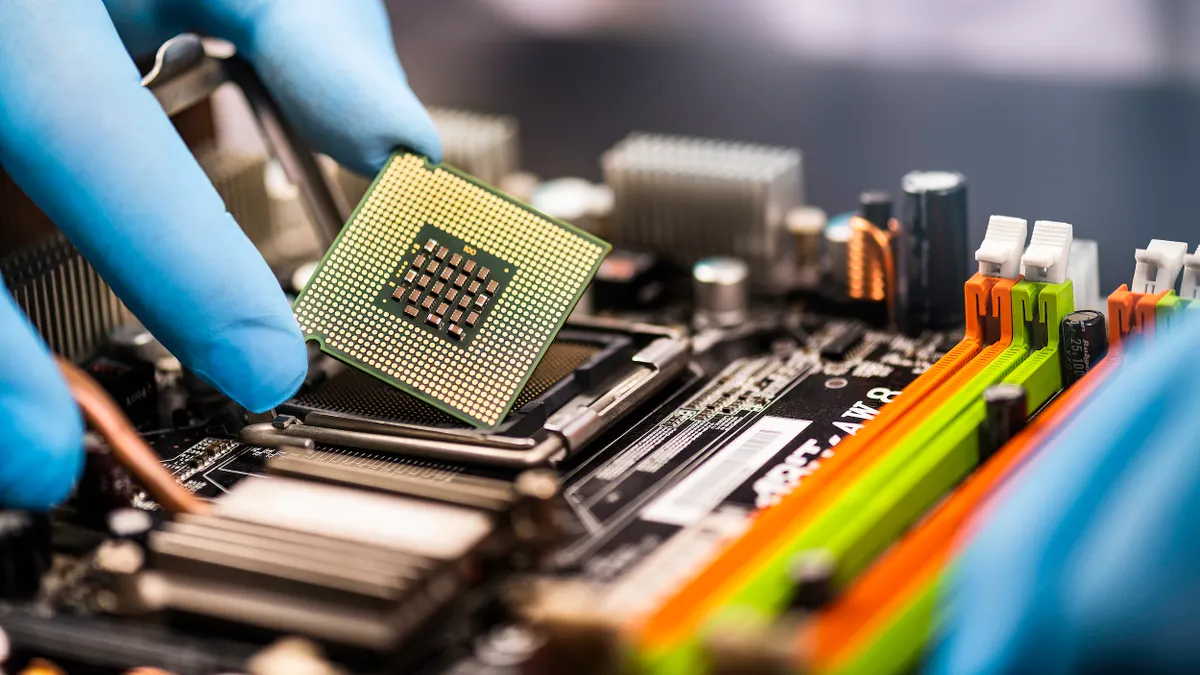
The United States plans to install new tariffs on semiconductors from China starting June 23, 2027, according to a Federal Register filing, adding another wrinkle to existing trade tensions between the superpowers.
Per the Dec. 23 filing, the U.S. will set an initial tariff of 0% immediately, which will be raised after 18 months to a rate to be announced at least 30 days before the implementation date. The new duty would stack upon the existing 50% tariff on semiconductors from China already in place following a Section 301 probe into forced technology transfer, the filing says.
The new tariff plan resulted from a Section 301 investigation by the Office of the U.S. Trade Representative into China’s policies and practices related to semiconductor production and trade. The probe was initiated last December by the Biden administration.
A Section 301 investigation is one of several powers available to impose tariffs. Such probes evaluate whether countries are engaged in unfair trade practices and can lead to the USTR imposing tariffs or other import restrictions; making changes to trade agreements; or providing other relief, a Congressional Research Service report notes.
The USTR has opted to roll out new levies on semiconductors from China because the country’s “targeting of the semiconductor industry for dominance is unreasonable and burdens or restricts U.S. commerce,” the filing says.
The USTR added the levies were meant to combat China’s "extraordinary control” of the semiconductor sector and the resultant harm to foreign competitors and purchasers, including the U.S. The filing points to China’s use of political guidance and mandatory directives to state and private enterprises as the means by which the country exerts such control, creating a lopsided business dynamic that stifles competition.
“China’s targeted dominance burdens or restricts U.S. commerce because it undercuts business opportunities for and investments in the U.S. semiconductor industry,” the filing says.
China’s policies also pose economic security risks by creating dependence and vulnerabilities for critical sectors, such as military and automotive, that rely on a consistent semiconductor supply.
The U.S. and China have sparred over tariffs and other trade policy for much of 2025, exacerbating mounting tension between the countries over the last decade.
Both the Trump and the Biden administrations have targeted China with multiple levies and trade practice investigations. While the countries in October reached a truce escalating tensions that flared this year, the U.S. has still kept significant tariffs in place against China.
Beyond China, the U.S. is also exploring potential tariffs on semiconductor imports from all countries, launching a Section 232 probe into the sector earlier this year. Similar investigations have led to sector-specific levies on goods such as steel and auto parts.