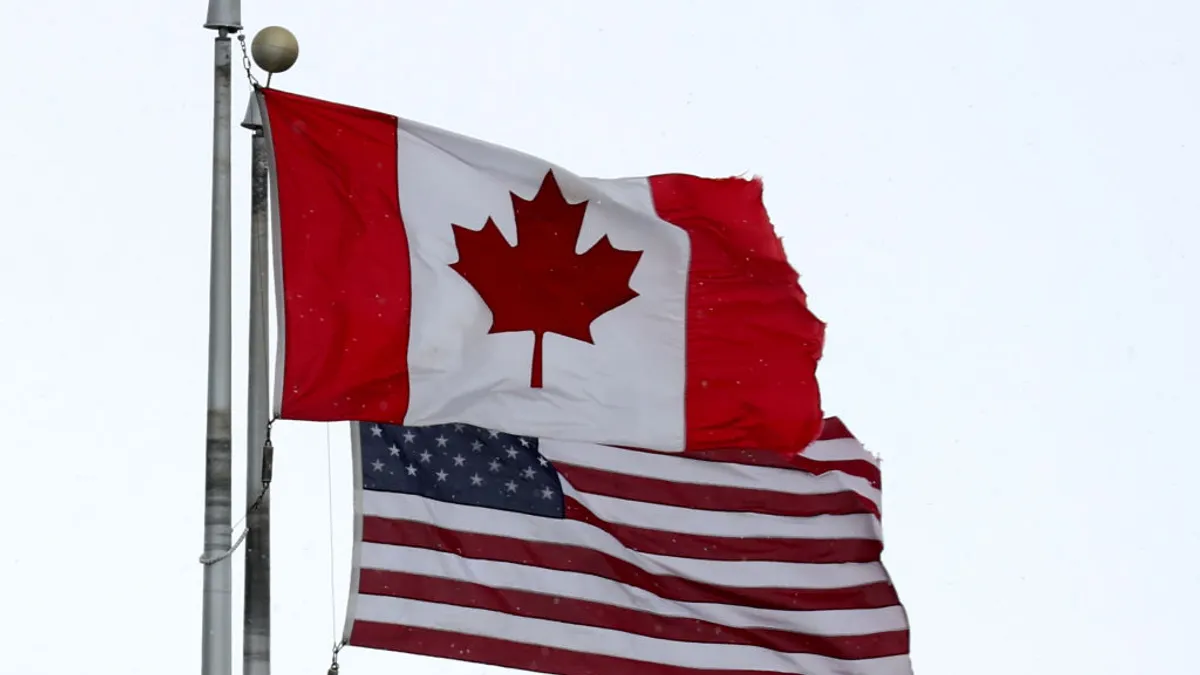
The escalating trade war between the United States and Canada is expected to fuel higher costs for both shippers and consumers while disrupting the North American supply chain, according to several industry trade groups.
After nearly a month of negotiations, both countries failed to reach a deal last week to avert 50% tariffs on $20 billion of Canada goods U.S. President Donald Trump announced in July.
In response, Canada has installed retaliatory tariffs of up to 50% on a range of U.S. imports, including steel, dairy products, appliances and agricultural equipment. Even before Canada imposed its counter tariffs, Trump threatened additional duties on cars, trucks, auto parts and steel from the U.S.’ northern neighbor.
The trade dispute will negatively impact trade flows in North America, particularly for sourcing in agriculture, forest products, wool apparel, tin mill steel, consumer goods and food, according to trade groups.
Read on to learn more about how the agriculture, retail and consumer products industries are viewing the situation and what they expect for shippers and consumers.
Agriculture Transportation Coalition Executive Director Peter Friedmann
“The Agriculture Transportation Coalition membership includes agriculture and forest products exporters (and importers) based in the US and Canada. And regardless of where based, our cargo flows through both US and Canadian ports, and crosses our border to find the most efficient domestic and export and import paths.
“In other words, US and Canadian ag and forest products trade is linked; it is severely impacted by the expanding trade war between our countries. Every day, the AgTC is working to reduce transport impediments that add expense, delay, disruption to ag shipments – but our efforts are undermined when trade volumes are reduced by new tariffs and other measures being piled on by both countries.”
American Apparel and Footwear Association President and CEO Steve Lamar
“These tariffs will be felt first and foremost by the Americans and Canadians who work together every day to provide consumers with specialty apparel and footwear. Canada is a critical source of tailored and wool apparel, ski jackets and other outerwear, waterproof footwear, hosiery, and select travel goods. Many of these products now face higher tariffs, with no regard for the [United States-Mexico-Canada Agreement] categorizations that were specifically designed to strengthen reliable North American trade and support businesses on both sides of the border. And Canada has now followed suit with tit-for-tat retaliation, hurting American made products.
“Sadly, this industry and its workers are being caught in the cross hairs of a much larger trade dispute. Although they are not the focus, that is little comfort to the millions of Canadians and American workers and consumers who bear the brunt of this breakdown in trade talks. Collateral damage is not acceptable when real people are paying the price.”
National Retail Federation VP of Supply Chain and Customs Policy Jonathan Gold
“It is well established that the economy works best when trade policy is predictable and stable, resulting in more affordable prices for American families. We encourage the parties to immediately return to the negotiating table to resolve the trade issues between the nations. Canada is a valuable trade partner, and higher tariffs will result in higher costs for business owners and higher prices for goods and services paid by U.S. consumers.”
Consumer Brands Association SVP of Supply Chain Resiliency Tom Madrecki
“Canada's retaliatory actions unfortunately target certain U.S. manufactured CPG products. In this case, consumers in Canada will pay more for items such as toilet paper and personal care products like hair conditioner.
“Meanwhile, the absence of a deal means no progress on issues like tin mill steel, which must be sourced from Canada and other countries due to lack of U.S. production. Without a deal, current tariffs of 50 percent remain in full effect, contributing to higher canned food prices.
“Consumer Brands is engaged with both governments to seek resolution. Candidly, we don't anticipate swift progress. The importance of the trading relationship will hopefully win out eventually and help to ratchet down trade tensions.”
Editor’s note: This story was first published in our Procurement Weekly newsletter. Sign up here.