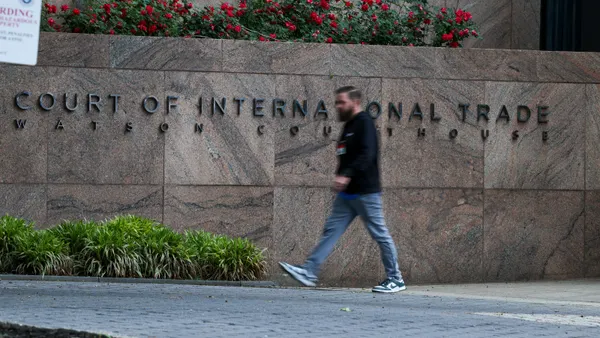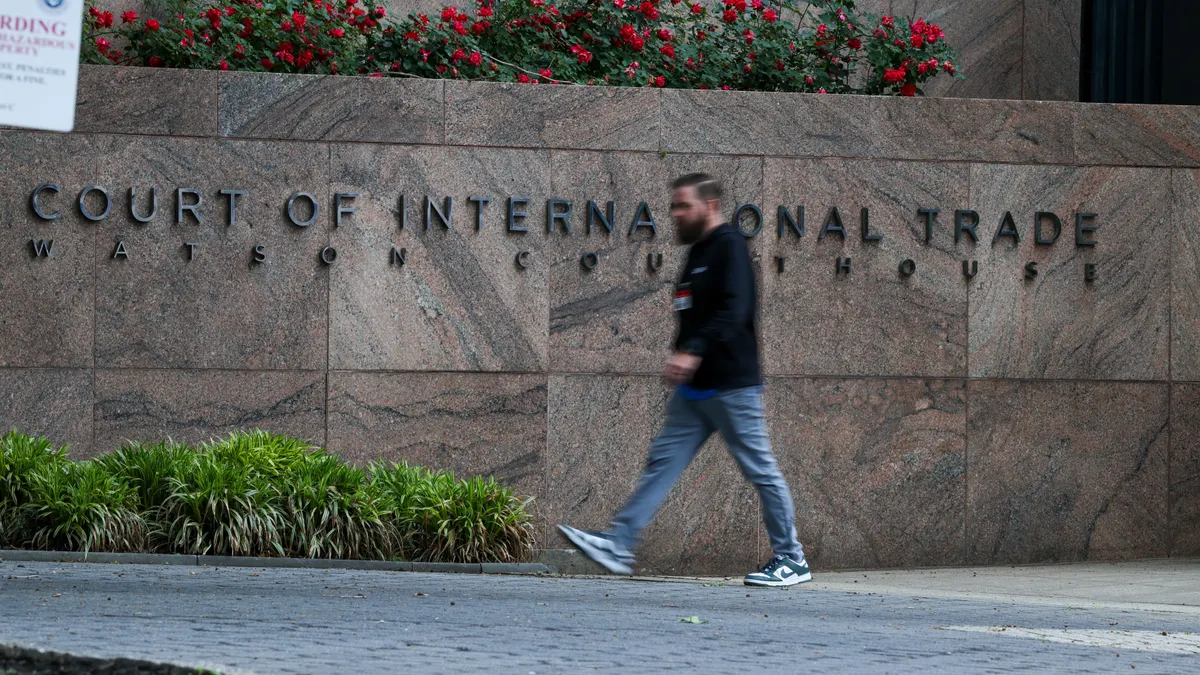
The U.S. Court of International Trade will allow importers to pursue a class-action lawsuit against now-defunct U.S. tariffs, potentially paving the way for a broader range of businesses to obtain refunds.
In a slip order issued Thursday, the court certified a class of importers who paid tariffs installed under the International Emergency Economic Powers Act between Feb. 1, 2025, and Feb. 19, 2026, excluding those who have filed separate lawsuits. To date, more than 4,000 such suits have been filed, per the order.
After IEEPA tariffs were ruled illegal by the Supreme Court in February, the Court of International Trade ordered Customs and Border Protection to issue refunds for the roughly $166 billion collected under the invalidated levies. Since then, CBP has paid out over $100 billion in refunds for the defunct levies through its dedicated Consolidated Administration and Processing of Entries portal, or CAPE. In certifying the class, the court aims to ensure all importers who paid the invalidated tariffs have a pathway to reimbursement.
“Some importers of record have not taken advantage of CAPE,” Thursday’s order says. “It is believed that these are overwhelmingly small importers who, because of the cost or effort involved in filing a CAPE declaration, or because they are unaware of the program, will never take advantage of CAPE.”
CBP has gradually expanded the scope of entries CAPE can process, including launching the ability to pay refunds for finally liquidated entries this week, though only for a select group of importers that have filed lawsuits.The court asserts that without the possibility of class action, approximately $30 billion in IEEPA tariffs would remain with the government.
“Today, the court is certifying a class in the hope, and expectation, that this certification will lead to the liquidation or reliquidation of all of the entries on which the unlawful IEEPA duties were imposed, and the refund of those duties to the importers of record that paid them,” the order says.
Despite the order, there remain several more legal hurdles before the court could issue a sweeping refund directive for all class members. The court scheduled a closed conference for Oct. 13 with the parties involved in the case while setting an Oct. 22 deadline for proposed scheduling for additional filings required in the class-action suit.
“The decision doesn't immediately expand refund eligibility or direct payment,” James Kim, an international trade partner at ArentFox Schiff, said in a LinkedIn post. “It does, however, create a potential path forward for non-litigants, toward a single order requiring refunds to be issued to importers that have not pursued individual lawsuits.”
As the class-action case advances, the Justice Department is still appealing the order requiring CBP to refund all finally liquidated entries. The department argues that the court only has the jurisdiction to order such reimbursements for importers who have sued for refunds. The appeal remains pending in federal court.