UPS has launched a pickup dashboard that enables shippers to schedule, manage and track pickups in one place, an upgrade that will particularly aid small businesses with fluctuating pickup needs, the carrier announced in a news release last week.
The new dashboard, which also features real-time notifications, adds to UPS' efforts to attract more volume from small- and medium-sized businesses.
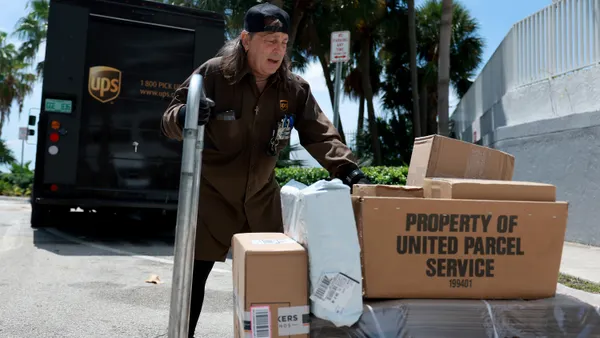
Larger shippers with daily UPS pickups "typically have a pretty good pickup experience," due in part to predictability, said Dave Hudson, UPS president of global digital channels, in an interview with Supply Chain Dive. Meanwhile, smaller customers with less volume may rely more on options like on-call pickups or Smart Pickup, which initiates pickups only when shipments are ready.
While more flexible in nature, shippers historically haven’t had a complete picture into the status of less frequent pickup services, unless they spent time contacting UPS for more information, Hudson said.
"In the past, you never knew when we were actually on the way, and you never got absolute confirmation that we were going to be there at 3:30 or 4:15 before you close and send your employees home," he said.
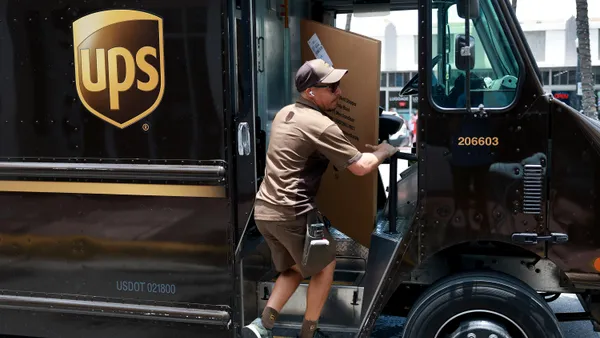
Now, the process will be clearer, according to Hudson. Pickups can be scheduled online, after which UPS provides a pickup window, notifies the customer when a driver is on the way and confirms when the pickup is complete. Notifications arrive through the pickup dashboard and via email, with text and push alerts for mobile coming later this year, a UPS spokesperson said in an email.
The upgrades benefit all pickup types and are being rolled out in a phased approach, the spokesperson added. For on-call pickups, scheduling and notifications are available today. Meanwhile, Smart Pickup scheduling and management is live on the dashboard, with notifications set to launch in September. Notifications for daily pickups are slated to arrive later in the year.
Beyond small businesses, upgrades to less frequent pickup options can also help larger shippers with smaller locations that have occasional pickup needs, Hudson said. For example, a company may need daily pickups at their busiest distribution centers, but at their stores, pickups are needed less often, opening the door for the non-daily options.
UPS revealed the pickup enhancements along with several other upgrades catering to small- and medium-sized businesses in last week's release. The carrier also announced a redesigned mobile app so users can handle shipping tasks away from a desktop, along with shipping label templates that reduce time spent on data entry for orders, per the release.
"This enhancement is really about just responding to what we've known about SMBs for a lot of years, telling us, 'I need ease of use, I want control, I need … some certainty, and I need to spend less time on shipping and more time running my business,'" Hudson said of the upgrades.
UPS is competing with rival FedEx for small business volume as both carriers seek to attract more profitable shipments into their networks. UPS is making progress on that front, with average daily U.S. volume from SMBs increasing 4.3% year over year in Q2, EVP and CFO Brian Dykes said on an earnings call last week. SMBs made up 34.5% of total U.S. volume in Q2, up 250 basis points YoY, he added.