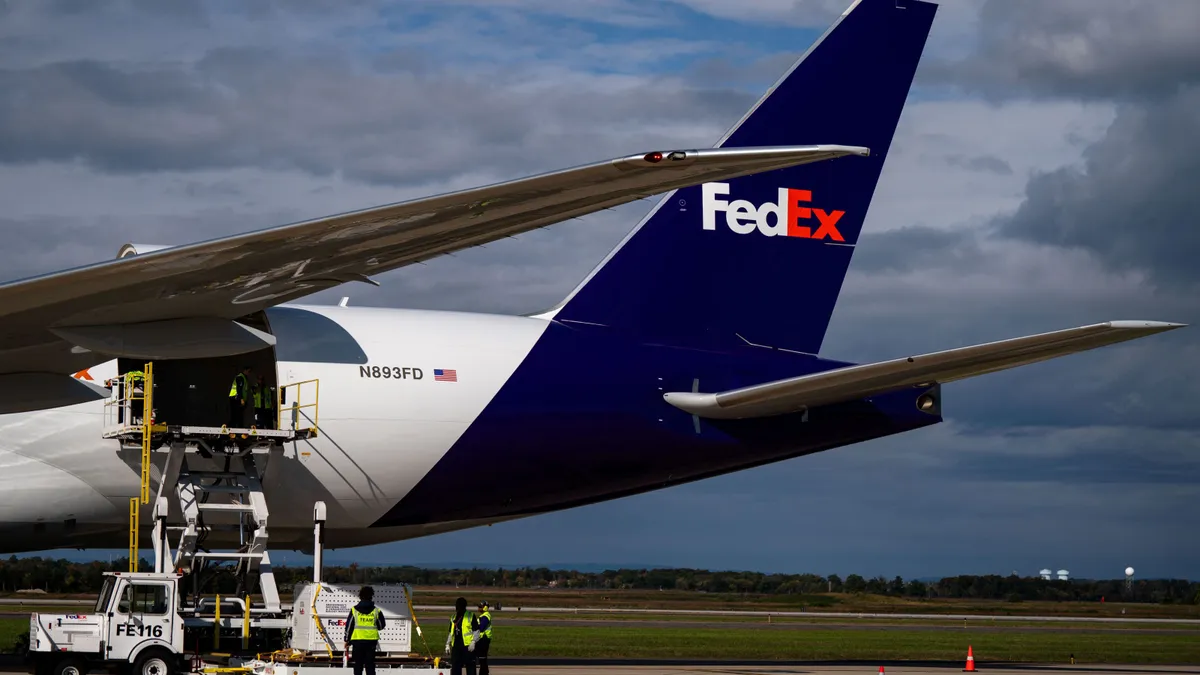
FedEx and UPS have installed fuel surcharge rate increases and levied new shipping fees this month, adjustments that will impact a wide range of customers' international shipments.
The carriers are applying temporary fees for shipments between the U.S. and various countries until further notice. One from UPS is a 32 cent per-pound surcharge for volume to the U.S. from any origin country or territory, save for those in which a surge emergency fee already applies.
"Our goal is to continue to meet our customers’ shipping needs without compromising on the quality or timeliness of service expected from us," UPS said in a customer notice about the surcharge.
FedEx and UPS are upping their fuel fee calculations on import and export services as well. For example, if the price per gallon of jet fuel is $4 in a given week, FedEx will levy a 38.5% fuel surcharge for international exports. Previously, FedEx charged a 36.5% rate at that fuel price. Meanwhile, DHL eCommerce is increasing its fuel surcharge calculations for domestic products on May 30.
UPS, FedEx and DHL eCommerce surcharge changes this month
| Carrier | Surcharge | Services impacted | Effective date |
|---|---|---|---|
| UPS | A 32 cents per pound surge fee between the U.S. and most other countries. | UPS Worldwide Express, UPS Worldwide Express Saver, UPS Worldwide Express Plus, UPS Worldwide Expedited, UPS Worldwide Saver Pallet, UPS Express Freight Time of Day | May 3 |
| UPS | An 11 cents per pound surge fee for shipments from certain countries in Asia to the U.S. | UPS Worldwide Express, UPS Worldwide Express Saver, UPS Worldwide Express Plus, UPS Worldwide Expedited, UPS Worldwide Saver Pallet, UPS Express Freight Time of Day | May 3 |
| FedEx | A 20 cents per pound export demand surcharge for U.S. shipments to various countries, including Canada, Mexico and several locations in Europe. | U.S. international parcel and freight services | May 7 |
| FedEx | A 25 cents per pound import demand surcharge for shipments entering the U.S. from China, Hong Kong or Macau. | U.S. international parcel and freight services | May 7 |
| FedEx | A 20 cents per pound import demand surcharge for shipments entering the U.S. from 13 other countries, including Taiwan, Japan, Vietnam and South Korea. | Parcel and freight services | May 7 |
| UPS | An increase of 2 percentage points to fuel surcharge rate calculations for international air imports and exports. | UPS 3 Day Select from Canada, UPS Worldwide Express Plus, UPS Worldwide Express NA1, UPS Worldwide Express, UPS Worldwide Express Freight Midday, UPS Worldwide Express Freight, UPS Worldwide Saver, UPS Worldwide Expedited, UPS Express Critical | May 11 |
| FedEx | An increase of 2 percentage points to fuel surcharge rate calculations for international exports, and a 2.5 percentage point increase for international imports. | International services, excluding FedEx International Ground and FedEx International Ground Consolidation shipments to Canada. | May 11 |
| UPS | An increase to UPS Mail Innovations' fuel surcharge cap from 8.5% to 12%. | UPS Mail Innovations | May 24 |
| DHL eCommerce | A 14 cents per pound increase to domestic fuel surcharge rates. | Domestic Expedited Max, Expedited and Ground parcel and mail products | May 30 |
The wave of surcharge hikes and adjustments adds to ongoing cost pressures for parcel shippers as logistics giants pass on increased expenses. Carrier surcharges tied to fuel prices have risen as the Iran war and Strait of Hormuz disruptions continue to squeeze the global oil supply.
"We manage fuel through fuel surcharges," UPS EVP and CFO Brian Dykes said on an April earnings call. "So even though we have a large airline, we're very different than passenger airlines and our industry operates very differently. And so our fuel surcharge indexes protect us from impact to profit, right?"
UPS and FedEx have adjusted the rates behind their fuel surcharges several times in recent quarters, escalating their impact when the fuel prices they're tied to increase, according to parcel spend consultants. Ground fuel surcharges rose 26.7% year over year in Q1, outpacing a 10% jump in diesel fuel prices, according to the TD Cowen/AFS Freight Index.
Shippers can limit the sting of fuel surcharges through negotiated discounts, reducing other parcel-related costs or exploring alternative carrier options, according to experts. For UPS and FedEx's international fuel fee hikes, shippers should update their cost models and landed-cost calculations to understand the impact, and cross-reference the companies' increases to assess exposure at the carrier level, per ShipScience.