Dive Brief:
- Kimberly-Clark is more than halfway through a five-year, $3 billion productivity enhancement program launched in 2024, executives said at the 2026 dbAccess Global Consumer Conference earlier this month.
- The progress has been fueled by three components of the CPG maker’s supply chain strategy, namely simplifying the value stream, optimizing its network and scaling automation, according to Nelson Urdaneta, CFO and interim principal accounting officer.
- The company expects to further ramp up its efforts, particularly network optimization, with plans to increase capital investments this year and the next, Urdaneta said.
Kimberly-Clark’s supply chain boosts productivity
Dive Insight:
Increased productivity is a key priority for Kimberly-Clark, particularly within its supply chain.
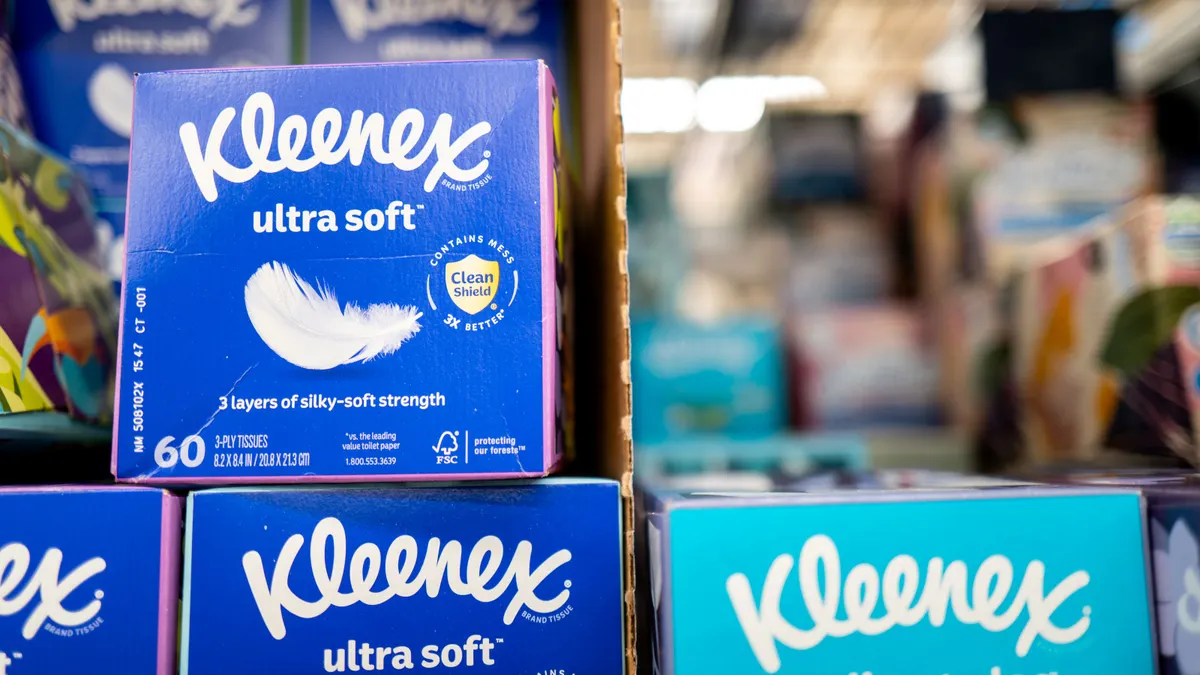
The maker of Kleenex announced plans to invest $2 billion into its U.S. operations last year as part of its five-year plan. The funds included a combined $1 billion to build an automated distribution center within its factory in Beech Island, South Carolina, and an advanced manufacturing facility in Warren, Ohio.
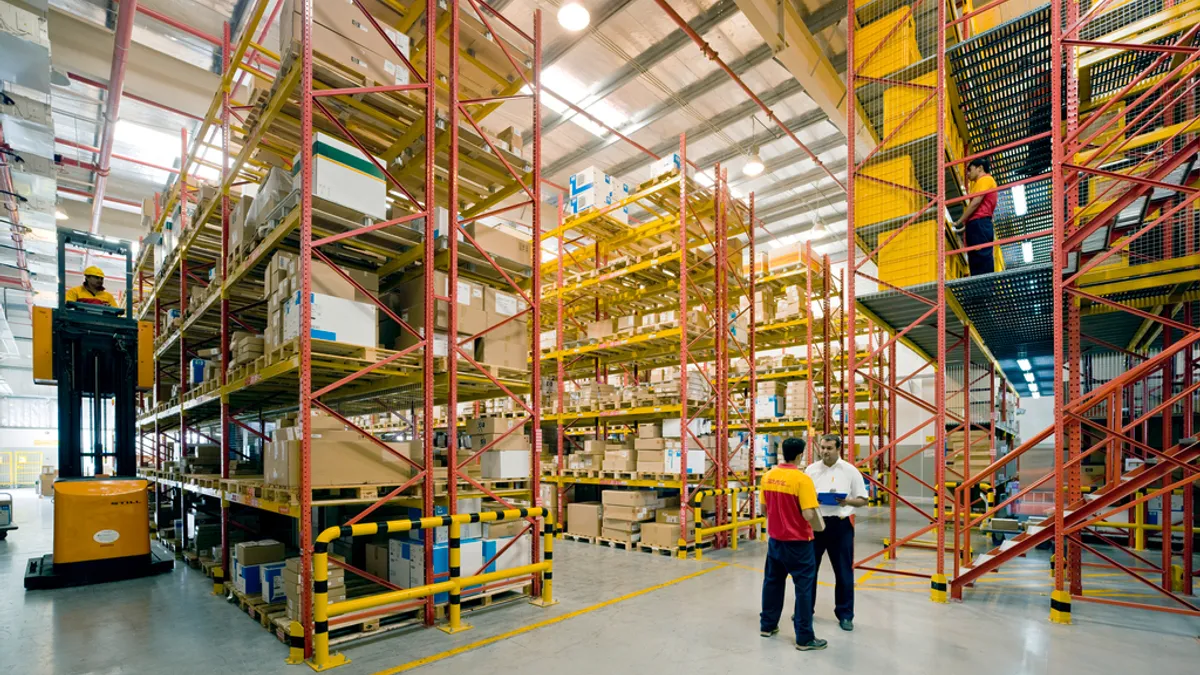
For the South Carolina distribution center, the company aims to boost efficiency by leveraging robotics, artificial intelligence-powered logistics systems and optimized storage space, according to a company press release.
The South Carolina facility is Kimberly-Clark’s largest in the world and manufactures “almost every product” the company offers, CEO Michael Hsu said at the dbAccess Global Consumer Conference.
“That's one of the places where we're making a very big investment in distribution on top of our greenfield facility,” Urdaneta said of the South Carolina site. “That productivity is going to kick in starting 2027, hence our confidence in our ability to continue to deliver on strong productivity over the next few years.”
Kimberly-Clark is also projecting further supply chain productivity gains from its pending merger with personal home care product manufacturer Kenvue, which is expected to close in the second half of 2026. More specifically, Kimberly Clark sees opportunities to reduce logistics and procurement costs through the merger.
“We tend to cube out a truck at about 50%. Kenvue tends to weigh out at about 50%. And we tend to deliver at almost the same drop-off points. So that's a key source of productivity,” Urdaneta said. “But it goes beyond that. If you look at procurement, we're going to be having a much bigger scale and many materials that are shared.”
Urdaneta added the companies expect to drive further efficiencies through standardization across a combined supply chain.
Despite the productivity gains, Kimberly-Clark is still contending with the fallout from an April fire that damaged a distribution center near Los Angeles, as it expects a 70-to-80 basis-point headwind on shipments from the disaster. Demolition of the affected areas of the third-party-run facility got underway earlier this month.