Dive Brief:
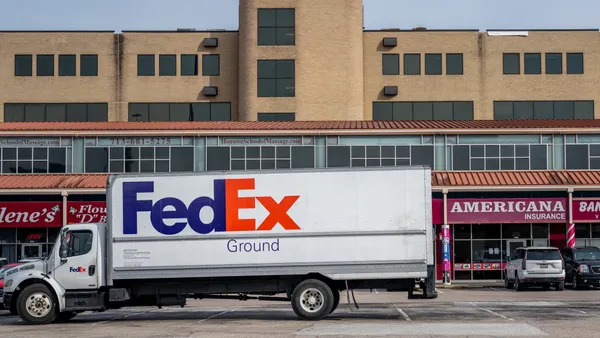
- FedEx is expected to close over 475 stations by the end of 2027 due to its Network 2.0 overhaul plan, or about 30% of its facility footprint, according to Scott Ray, the carrier's COO-elect for U.S. and Canada surface operations.
- Network 2.0 is a yearslong effort by FedEx to consolidate its historically separate Ground and Express operations. The initiative has already led to the closure of more than 200 stations, Ray said during a 2026 Investor Day presentation Thursday. The initial integration efforts in the U.S. have been focused on smaller markets, but FedEx is now pushing to optimize large metro areas like San Francisco, he added.
- About 25% of FedEx's eligible average daily volume in the U.S. and Canada is currently flowing through more than 360 facilities "optimized" for Network 2.0, according to Ray. By the 2026 peak season, the carrier expects that figure will rise to 65% as the integration continues to scale.
Dive Insight:
FedEx expects to see major cost reductions as its network overhaul efforts gain steam — by the end of 2027, the carrier anticipates $2 billion in savings. Network 2.0 has already led to a 10% reduction in pickup and delivery costs in markets it's rolled out in, thanks to the elimination of overlapping routes.
"The concept is pretty straightforward: Our customers don't need both an Express and a Ground truck in the same neighborhood on the same day, and they don't need to separate their Express and Ground packages for two separate pickups," Ray said.
FedEx is maintaining high service levels despite the network overhaul, according to Ray. The company has done this in part by establishing dedicated routes for high-priority services and customers and factoring in market-level characteristics.
"One size certainly does not fit all markets," Ray said. "This type of agility has been key during both planning and implementation, given the high operational complexity of an integration of this magnitude."
FedEx is also leaning on technology to maintain delivery reliability amid the transformation plan. The company's real-time package visibility tool is now available to all field management employees, helping improve forecasting and planning. Additionally, FedEx operations leaders, dispatch teams and linehaul planners can now see real-time load factors by lane and facility, along with weather impacts and congestion.
"Predictive analytics flag potential issues, and our tools suggest reroutes before delays become customer problems," Ray said. "For example, when severe weather hits, or there's an unplanned disruption, we can increasingly rebalance volume across routes and assets, rather than reacting after the fact."