Editor's note: This story is the first in a three-part series about how parcel delivery providers are using AI to strengthen their operations and service performance.
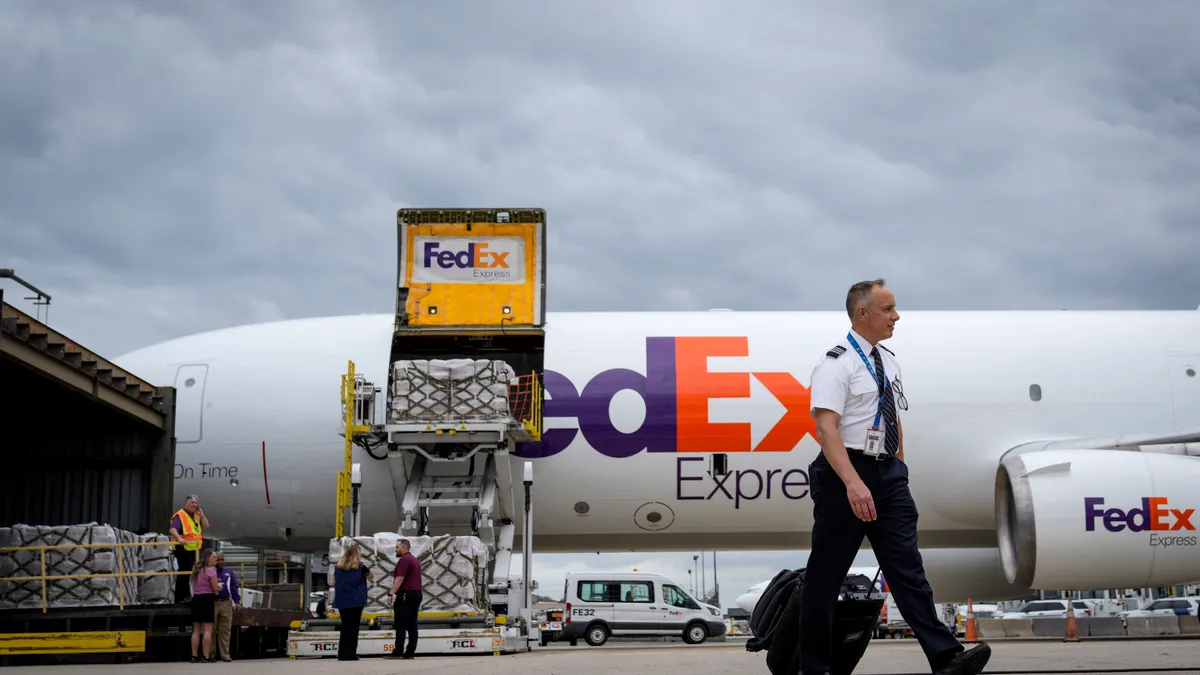
FedEx plans to further scale its use of AI over the next several years to power physical assets like RFID sensors and robotic systems, an undertaking that aims to boost network reliability and shipper connectivity.
AI and data analytics are already embedded in various FedEx operations, including forecasting, routing and capacity management. Every day, FedEx plans and optimizes 100,000 first-mile and last-mile transportation routes via AI, according to Bala Vaidyanathan, VP and lead for data and AI at FedEx. The company also uses AI to balance its middle-mile network to ensure airplanes and trucks travel as full as possible, Vaidyanathan said in an interview with Supply Chain Dive.
But the carrier's AI journey is far from over. By 2028, FedEx plans to have AI integrated into more than 50% of its core operational workflows, Vishal Talwar, EVP and chief digital and information officer at FedEx, said during the company's 2026 Investor Day in February. Through its continued expansion of AI use, FedEx aims to improve service, trim costs and boost its competitive standing, Talwar said.
FedEx is advancing toward its integration goal by ensuring AI is embedded in the process of how it executes wide-ranging initiatives like Network 2.0, Vaidyanathan said.
"It's not like a side project," Vaidyanathan said of AI. "It's the main show, right? It becomes a part of how you deliver on these programs, because that's the right way to do it."
Through Network 2.0, the carrier is bringing day-definite volume from FedEx Ground and time-definite volume from FedEx Express into the same network. Amid this overhaul, which is combining FedEx's historically separate Ground and Express operations, the carrier still needs to ensure packages get delivered on time, a task AI is helping with.
"As you put the end of day volume together with the time commit volume, you need AI systems that can help people plan and execute the network, and that's something that we have deployed at scale," Vaidyanathan said.
FedEx eyes expanded use of sensors
As part of its increased AI focus, FedEx aims to make the technology more prevalent in its physical operations. Vaidyanathan said that “physical AI” capabilities such as RFID sensors and robotics will be key in sharpening reliability and efficiency.
For example, FedEx is testing RFID sensors on select customers' packages and plans to scale deployment over time, Vaidyanathan said, a move that aims to expand the scope of the carrier's visibility.
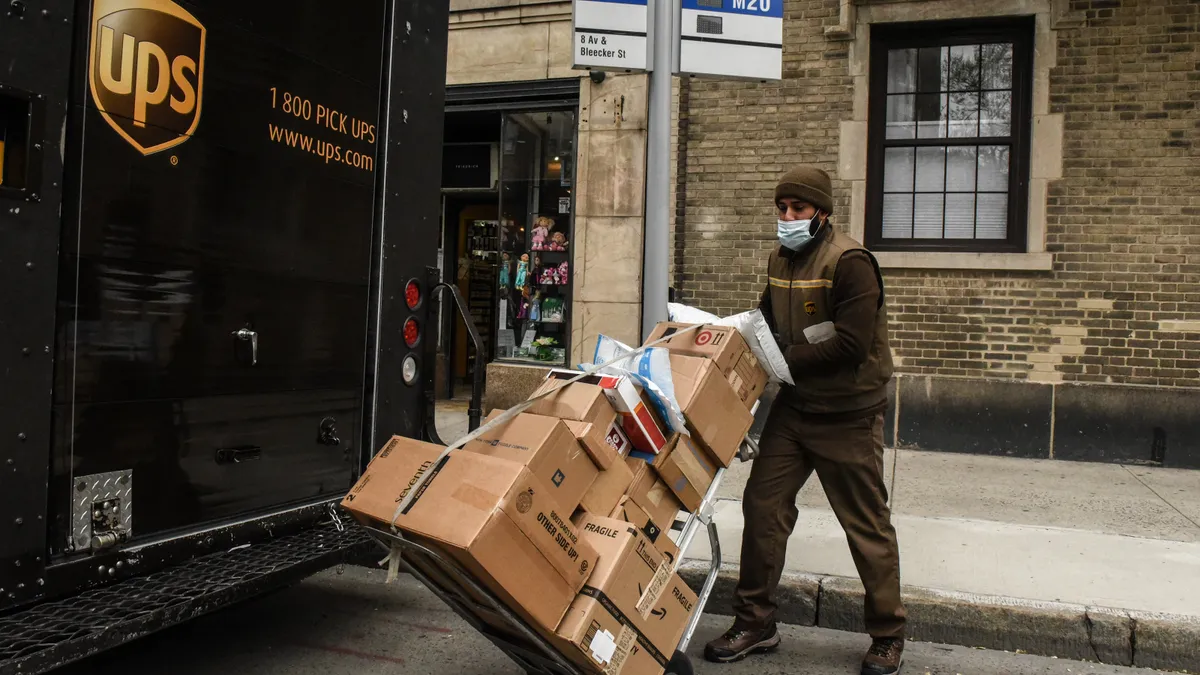
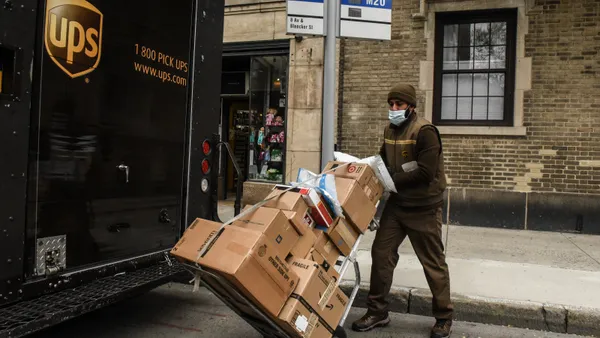
Rival UPS has also been expanding its RFID capabilities in order to drive increased shipment visibility. For FedEx, the goal with RFID sensors is to improve the flow of information between shippers' supply chains and the carrier’s operations while aiding its data platform, Vaidyanathan said. The platform allows FedEx to organize information generated in its processes, such as scans of package labels, to help employees solve operational issues or gain a better understanding of the company's network.
“So think of a platform as an investment that keeps giving, and the way it keeps giving is by generating a flywheel of use cases,” Vaidyanathan said.
Additionally, separate sensors used in FedEx's sortation operations combined with AI models help enable predictive maintenance, identifying issues in package sortation systems that need to be fixed before a failure occurs and slows down the network, Vaidyanathan said.
FedEx's predictive maintenance platform, MOBIUS, has prevented 17,000 hours of potential downtime in its deployment across 41 surface operations facilities, per a Monday press release. The platform is designed with a roadmap for a full rollout across FedEx's industrial network.
"By combining rich sensory data with proprietary AI models, we can anticipate equipment failures in our sorting systems before they occur," Talwar said. "This shift is already saving us $10 million annually, and our goal is to scale it significantly across our network and set a new standard of service."
FedEx taps AI-powered trailer unloading tech
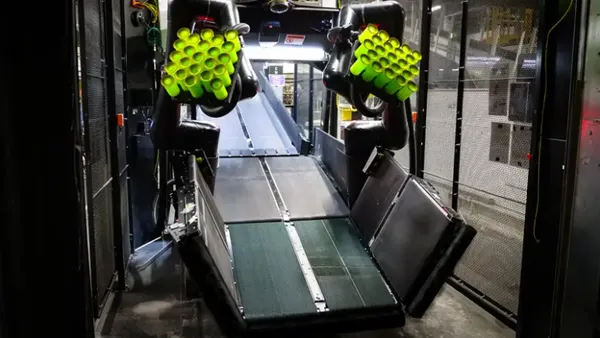
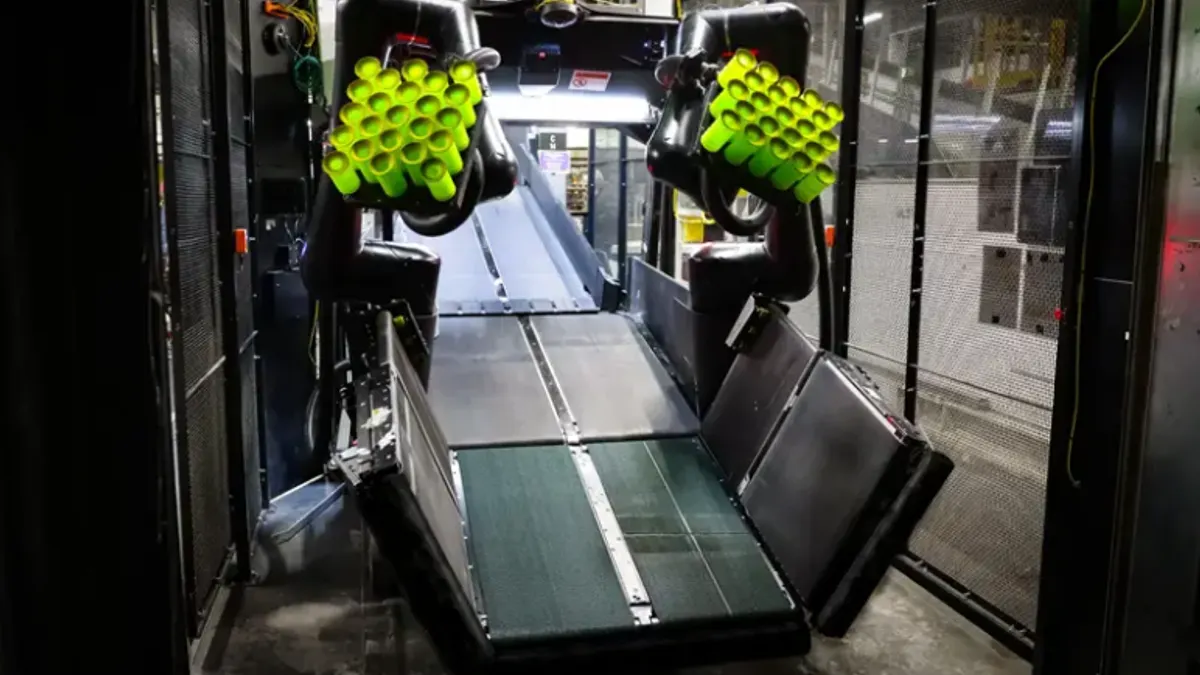
FedEx also plans to scale the use of automated trailer unloading and loading capabilities over the next few years, bringing the AI-powered technology to thousands of dock doors in more than 20 U.S. hubs, Kawal Preet, EVP of planning, engineering and transformation, said during the 2026 Investor Day.
That work has already begun. The company announced in February that it would use a robotics system from Berkshire Grey to autonomously unload trailers in its operations starting this year, enabling a consistent inbound flow of parcels.
"We're also testing autonomous trucking technology in the middle mile linehaul where it is safe and practical," Preet said. "These are the types of solutions that mark a step change in how we move and process volume."
Predictive tools help FedEx avoid delays
Outside the walls of its own facilities, adverse weather is an obstacle FedEx navigates with the help of technology advancements. The company uses predictive analytics to flag potential issues, such as transportation congestion or inclement weather, and generate rerouting suggestions before delays cascade into customer issues, Scott Ray, COO-elect for U.S. and Canada surface operations, said during the 2026 Investor Day.
"For example, when severe weather hits or there's an unplanned disruption, we can increasingly rebalance volume across routes and assets rather than reacting after the fact," Ray said. "We can shift volume between air and surface, between lanes and between facilities to protect service and reduce cost."
Even with FedEx’s improved capabilities, weather-related network adjustments may still require several people working in tandem to plan and implement any changes, Vaidyanathan said. In the future, agentic AI could handle some of that work and present recommendations to employees on what adjustments need to be made at the FedEx Memphis World Hub and beyond.
"We can also scale this horizontally," Vaidyanathan said. "Instead of deploying it just at Memphis, we can apply it at any node in the network. You can deploy it for any kind of weather, not just the worst kind of weather.”