Dive Brief:
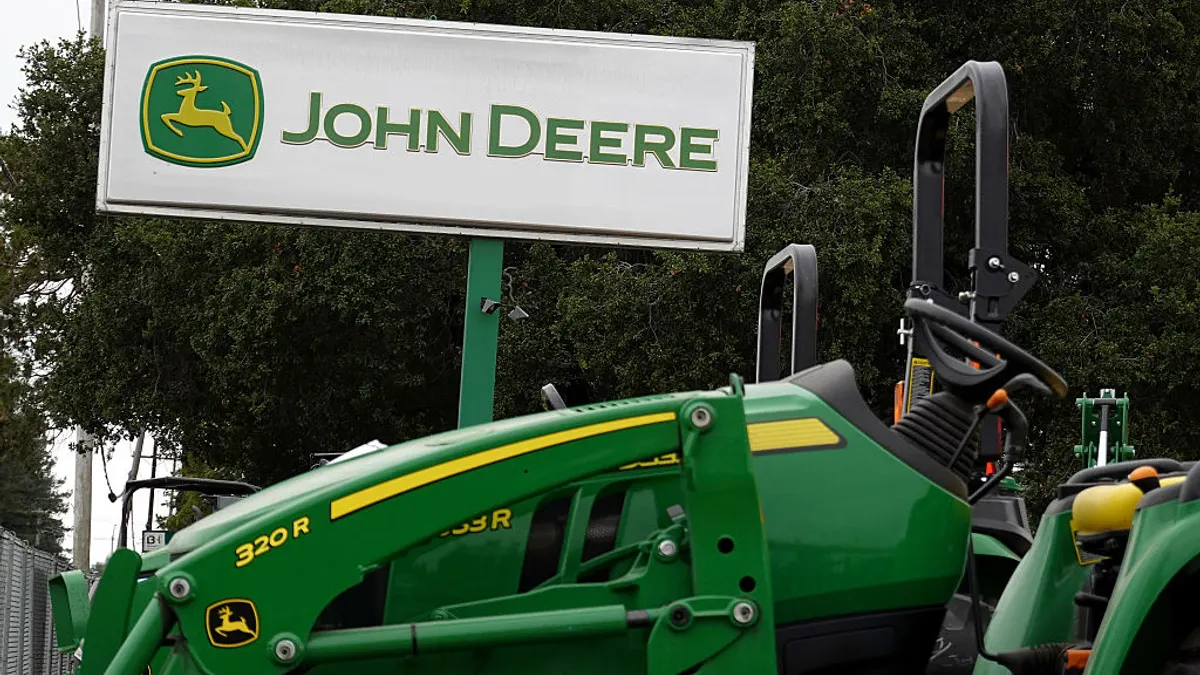
- Deere & Co. recovered $272 million in tariffs that the Supreme Court ruled in February were collected illegally by the Trump administration, Director of Investor Relations Josh Beal said on a May 21 earnings call.
- After factoring in the refund, Deere still expects about $900 million in net tariff costs for the current fiscal year ending Nov. 1 as the administration collects Section 122 duties and adjusts its Section 232 levies, Beal told investors.
- "We are not surcharging our customers on tariffs," SVP and CFO Brent Norwood said. "I think especially given the fact that tariff rates have been somewhat inconsistent and been very dynamic here in the recent months."
Dive Insight:
Deere has joined other companies in reporting positive results after applying for tariff refunds through the U.S. Customs and Border Protection's dedicated portal for returning funds.
Other examples include cosmetics company E.l.f Beauty and retail giant Walmart, which anticipate $58.5 million and $2.4 billion in rebates, respectively. Also, Ford Motor Co. recorded a $1.3 billion benefit in the first quarter tied to potential refunds.
As of May 22, the CBP is on track to process around $85 billion in potential and certified refunds, the agency said in a recent court filing. Roughly $20.6 billion in certified refunds with interest has been completed through CBP's system.
About 50% of Deere's tariff refund went to its construction and forestry division, while 30% went to small agriculture and turf and the remaining 20% to its large agriculture business, Beal said.
Deere has reduced its potential tariff costs through several cost-cutting measures, Norwood said. The actions include adjusting sourcing strategies, pursuing product exemptions and ensuring compliance with import rules under the U.S.-Mexico-Canada Agreement.
"I have full confidence that we will largely counter the negative financial impact of tariffs over the coming periods, largely through cost measures without ever having to rely on any surcharges to our customers," Norwood said.
Also helping to reduce Deere's tariff exposure is the amount of manufacturing and sourcing the company does in the U.S., Norwood said. Roughly 80% of Deere's products are manufactured at its U.S. facilities, and about 75% of the components used in those plants are sourced from U.S. suppliers.
The company remains committed to expanding its U.S. manufacturing through a $20 billion investment over the next 10 years, Norwood said. For example, during the current quarter, the company started building Deere-designed excavators in Kernersville, North Carolina, following a $70 million factory expansion.
Editor’s note: This story was first published in our Procurement Weekly newsletter. Sign up here.