Dive Brief:
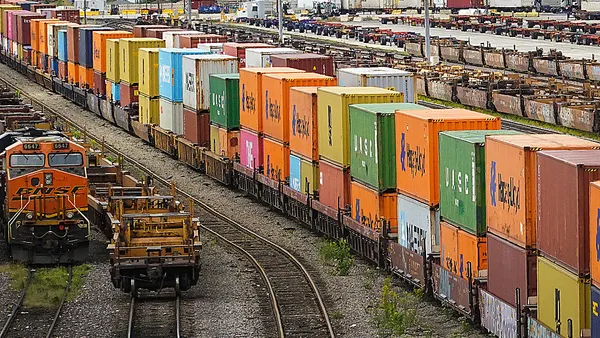
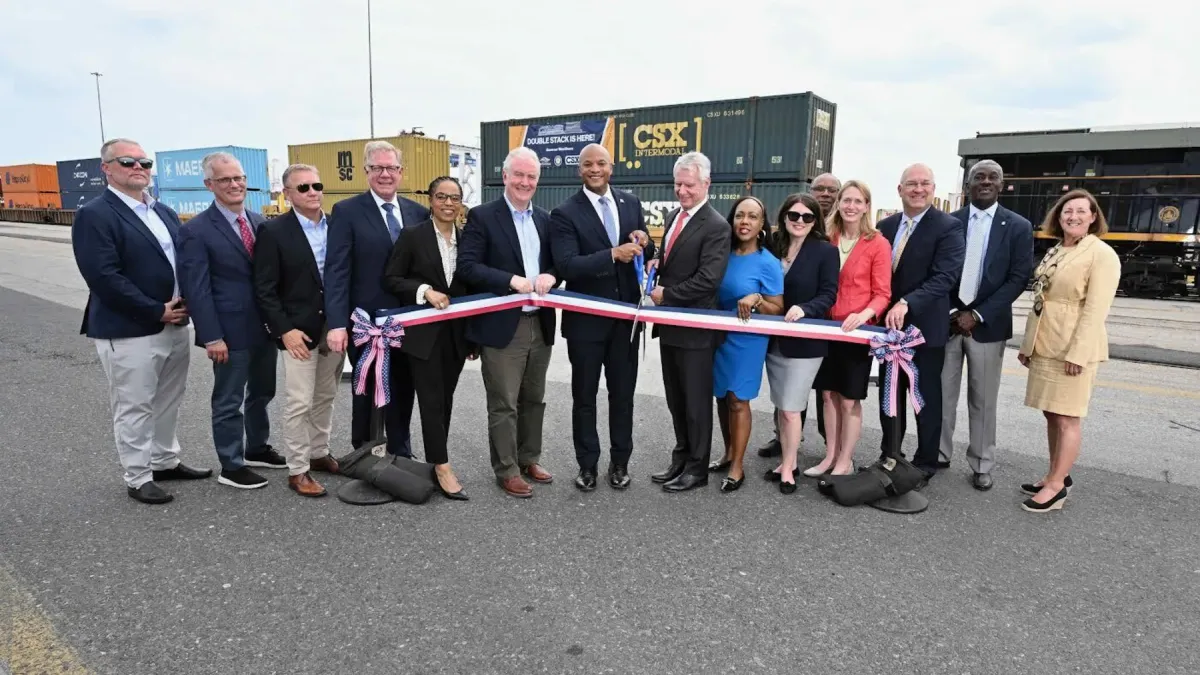
- CSX Transportation has completed its $495 million rail tunnel project at the Port of Baltimore, further enabling double-stack rail services at the port, according to a press release from Gov. Wes Moore’s office.
- The double-stack rail clearance aims to move freight more efficiently from Baltimore to key Midwestern and East Coast markets, reducing congestion along the I-95 corridor and lowering emissions, according to multiple CSX LinkedIn posts.
- “This project expanded a 131-year-old freight tunnel in Baltimore by 18 inches and made clearance improvements at 21 other locations in Maryland, Delaware and Pennsylvania,” per the release.
Dive Insight:
The Howard Street Tunnel reconstruction, which was in partnership between CSX, the State of Maryland, the Federal Railroad Administration and the U.S. Department of Transportation, has been years in the making. Previously, height restrictions hindered shipments of double-stacked containers to and from the Port of Baltimore to other East Coast locations.
The use of double-stacked trains could have arrived sooner, but CSX walked away from the Howard Street Tunnel project in 2017. During that time, the company said the tunnel project proposal “no longer justifies the level of investment required from CSX and our public partners at this time,” as reported by the Baltimore Sun.
The project resumed two years later after CSX returned to the table.
In 2024, the Port of Baltimore debuted its double-stack rail service through a northern route and completion of CSX’s century-old, 1.7-mile Howard Street Tunnel under Baltimore was a work in progress. At the time, the project was expected to increase the Port of Baltimore’s annual cargo capacity by 160,000 containers, former Maryland Port Administrator Jonathan Daniels told Supply Chain Dive in an interview.
The tunnel reopened in September 2025, with the Port of Baltimore noting there there were still pending projects expected to be complete in 2026, according to a port Facebook post last year.
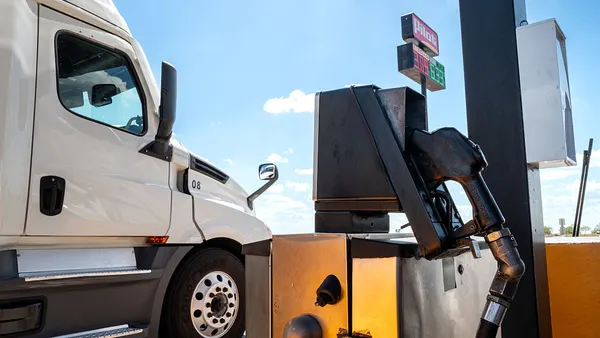
“The ability to double-stack containers on rail cars will also provide environmental benefits, including reducing truck fuel consumption by about 137 million gallons and truck vehicle miles by 1.2 billion over 30 years,” according to the release. “That translates into cleaner air, safer roads and less congestion for the communities that surround these corridors.”
The new rail service has also removed a long-standing constraint for shippers connecting freight between the port and inland markets, CSX CEO Steve Angel, said in the release.
“This strengthens a critical link in our network and enables us to move more freight on existing trains, giving customers greater access, capacity and flexibility across the East Coast,” Angel said.