U.S. Customs and Border Protection is on track to process around $85 billion in potential and certified refunds for invalidated tariffs through the agency's dedicated portal, the CBP said in a court filing on Tuesday.
As of May 22, about $20.6 billion in certified refunds with interest have been completed through Consolidated Administration and Processing of Entries, or CAPE, which launched on April 20, the CBP reported. The refunds have been transmitted to the Treasury Department for disbursement.
The CBP noted that 4,185 consolidated refunds were not sent to the Treasury Department because the importer or the company authorized to receive refunds and notices on its behalf had not provided Automated Clearing House account information.
The latest update represents more than half of the $166 billion that the CBP estimates was paid for the invalidated tariffs. Nevertheless, a large portion of importers remain waiting for their turn. The agency is still unable to process entries that have been finally liquidated, although it previously said it was developing the capability.
More than 15.85 million entries with tariffs that the Supreme Court ruled illegal in March have been accepted for duty removal through CAPE, per the CBP. More than 8.51 million of the accepted entries have been liquidated or reliquidated without the invalidated tariffs.
Also, more than 3.48 million entries through CAPE have failed entry-level validations, according to the CBP. The primary reasons for the failures included entries falling outside the CBP's 90-day reliquidation authority or entries already included in prior CAPE submissions.
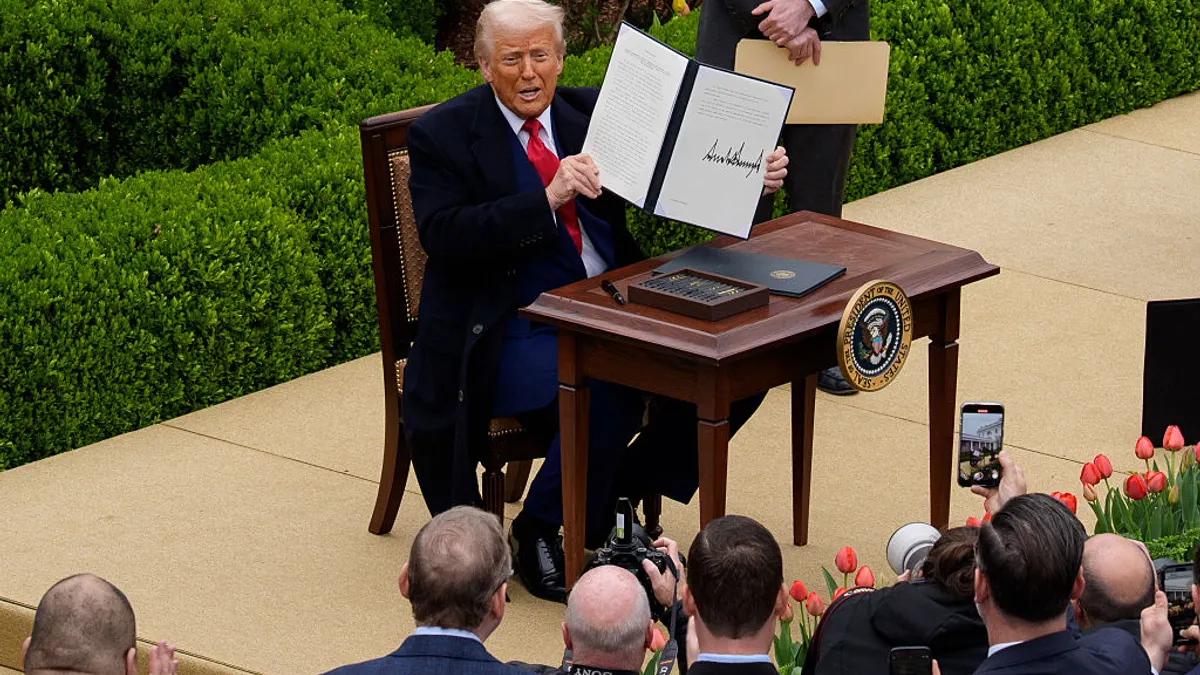
A third primary reason for rejection was the lack of the special tariff code used to apply duties that the high court later ruled were illegally imposed by President Donald Trump under the International Emergency Economic Powers Act.
Importers and customs brokers had sent 157,402 refund files through CAPE as of May 22, with 108,760 of those passing CBP's initial checks, per the agency. The common causes for file-level rejection are importer or filer mismatches, bad entry numbers and CSV files that do not conform to the template published by the Automated Commercial Environment. ACE is the CBP's main electronic system for processing import and export data.
In the latest filing, the CBP lowered the anticipated refund amount for liquidated entries it reported earlier in the month from $35.46 billion to $25.46 billion. The overstatement was due to an error in the CBP's data query rather than in CAPE's actual processing, Customs said.
Several companies have already folded in the potential for tariff refunds into their financial plans for the year. Ford Motor Co. and General Motors expect returns of $1.3 billion and $500 million, respectively. Others, such as Williams-Sonoma and PVH Corp., the parent of Calvin Klein and Tommy Hilfiger, are waiting to bake in potential tariff refunds into their financial plans.
Some companies are also preparing to refund the portion of tariffs that partners and customers have paid. Candymaker Bazooka plans to share refunds with its suppliers but isn’t yet sure how. FedEx, UPS, and DHL Express say that once they receive tariff refunds for eligible shipments, they will return the money to the customers who originally paid it.