Dive Brief:
- Cal-Maine Foods sees signs of U.S. conventional egg supply and demand rebalancing, but the company cannot predict when the glut depressing wholesale prices will end, President and CEO Sherman Miller said during a Sept. 30 earnings call.
- Early signals include higher demand, a greater-than-expected reduction in the U.S. layer flock, fewer chicks hatched from breeder eggs and a slight decline in estimated monthly production of egg cases, Miller said, citing industry reports.
- "These indicators do not establish that the market will turn, but they provide important context on the potential direction of supply," Miller told investors on the Q1 FY2027 call.
Dive Insight:
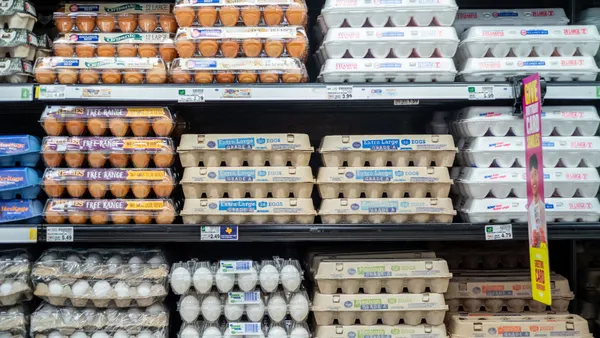
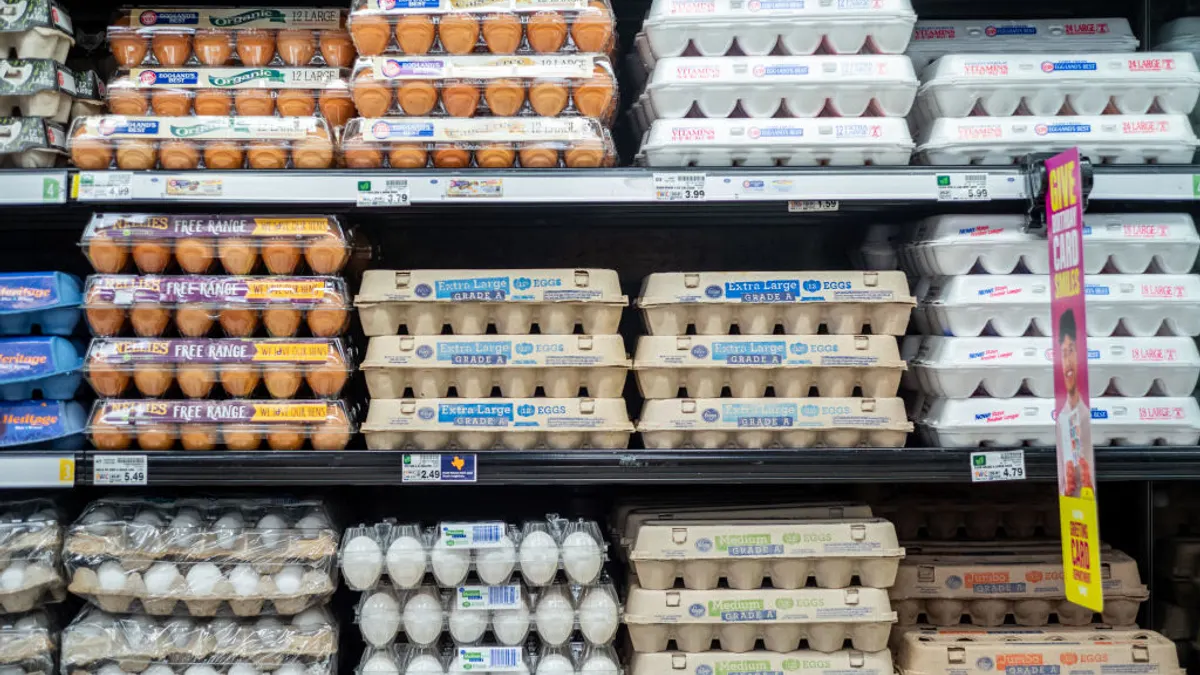
The current egg oversupply reverses conditions from a year ago, when an avian influenza outbreak killed more than 145 million U.S. birds, causing egg shortages and soaring prices. The glut has since depressed prices and Cal-Maine profits, with conventional shell egg sales falling 59.5% year over year to $201.7 million in Q1, the company reported.
The oversupply stems from elevated flock numbers, strong hen productivity and insufficient exports to absorb additional production, according to the industry-funded American Egg Board. However, Miller cited several figures in the AEB's September report indicating that supply and demand were beginning to rebalance.
The AEB estimated the layer-hen flock at 336 million to 343 million, roughly 4 million below previous estimates, per the report. Hatch numbers from breeder eggs were down 12% year to date, while monthly case production over the past three months edged down to 19.9 million compared with the prior report.
Meanwhile, Cal-Maine has seen no "structural weakness in egg demand," Miller said. "The data remains constructive across retail, food service and exports."
U.S. retail egg volume rose about 4% from January through August compared with a year earlier, Miller said, citing NelsonIQ, a market-measurement company. Also, sales in the four weeks through Aug. 29 were slightly higher, and the average price per dozen fell about 27%.
"Affordability and greater promotional activity should provide additional support to consumption as we move into the seasonally stronger fall baking and holiday periods," Miller said.