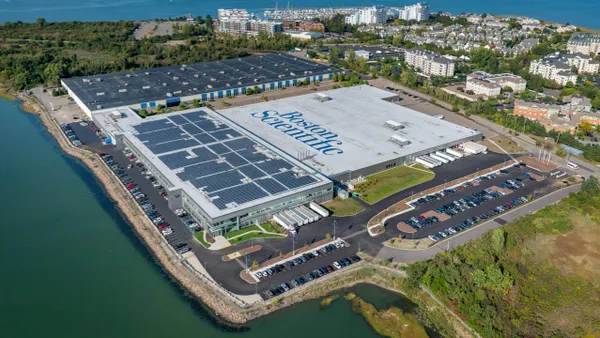
Best Buy has installed a solar field at its distribution center in Dinuba, California, according to a July 16 press release.
The field can generate about 5.87 million kilowatt-hours of electricity each year to power the facility, per the release. The field’s capacity would be enough to power 559 homes. The Dinuba site is the first distribution center within the electronics retailer’s network to feature a solar field, a company spokesperson told Supply Chain Dive in an email.
The field is part of Best Buy’s larger efforts to reduce its carbon footprint. Since 2009, the company has been working to achieve its net-zero emissions goal by 2040.
“We already cut carbon emissions in our operations by 74% since 2009 and are excited to keep making strides toward reducing our carbon emissions across our operations,” Tim Dunn, head of environmental sustainability, said in the release.
Best Buy is also reducing emissions in other areas of its supply chain, such as through its “Get There Greener” program in Canada in partnership with vendors and carriers.
The program shares freight between vendors and carriers by facilitating and consolidating full truckload deliveries into Best Buy's distribution centers, according to the company’s Corporate Responsibility and Sustainability Report released in July 2025.
In fiscal year 2025, the company saved 7,767 truckloads in Canada by using the program.
Best Buy is also leveraging waste diversion to achieve sustainable operations inside its supply chain facilities.
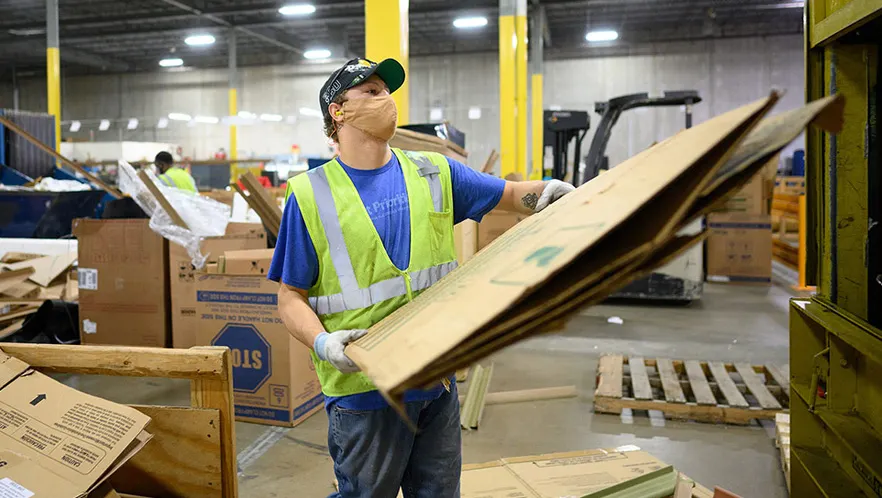
The company added 29 cardboard balers in fiscal year 2025 to help divert cardboard from going into landfills. These balers help compress cardboard, making it easier to transport and recycle with other bales of recycling, according to the report.
Best Buy’s supply chain facilities also use polystyrene densifiers, which break apart and condense expanded polystyrene, a foam packing material, into cubes, providing more space on trucks and making shipping more efficient.
“By adopting zero waste principles in our supply chain, we are not only minimizing our environmental impact but also improving our efficiency for the long-term success of the enterprise,” Chief Supply Chain Officer Mark Irvin said in the report.