You don’t need to be an expert to identify the most significant challenge facing consumer electronics supply chains today: the memory supply crisis.
Driven by heavy investment in artificial intelligence applications and the data centers that serve them, memory prices have skyrocketed by as much as 400% in the last two years, per Omdia research. The crunch is creating a feeling of “desperation” among electronics makers, according to Willy Shih, the Robert and Jane Cizik Baker Foundation professor of management practice in business administration at Harvard Business School.
As if battling a memory shortage was not complicated enough, consumer electronics brands are also contending with fluctuating trade regulations and logistics disruptions, both man-made and naturally occurring.
“It seems like there's much more tactical scrambling going on,” Shih told Supply Chain Dive.
How are these hurdles — and other market forces — impacting how these types of companies manage their supply chains? Here’s a look at five key trends in the sector.
1. Welcome to the long-term planning renaissance
Today’s market is pushing consumer electronics manufacturers to double down on long-term planning to more accurately control the flow of goods, experts told Supply Chain Dive.
“Really looking at landing your inventory, your roadmaps, and your investments to more of a multiyear strategy versus just looking at the budget for the next year is going to be key for a lot of these organizations,” Cori Masters, a senior research analyst director in the supply chain operations, industrial and high tech practice at Gartner, told Supply Chain Dive.
Joseph Fitzgerald, a managing director and partner at Boston Consulting Group, calls this trend a “renaissance in planning discipline,” as companies prioritize the long view over short-term tactics. Many firms built up those planning muscles during the COVID-19 pandemic and are being forced to bulk back up after regressing since the health emergency’s end, Fitzgerald told Supply Chain Dive.
To strengthen long-term strategizing, Fitzgerland said companies are making more investments in advancing planning systems or revisiting the operating model from prior investments in software packages from vendors such as Kinaxis, Blue Yonder and SAP. Firms are also experimenting with AI to enhance demand sensing and lean fulfillment.
“I think we're in the infancy of applying AI intelligence to supply chains where we have always-on responsiveness,” Fitzgerald said.
2. High costs are impacting product mix, design
Over the last 18 months, the consumer electronics industry has largely tried to absorb the elevated costs brought on by tariffs and memory shortages, according to Masters. However, many have exhausted their mitigation efforts and are passing those costs onto consumers.
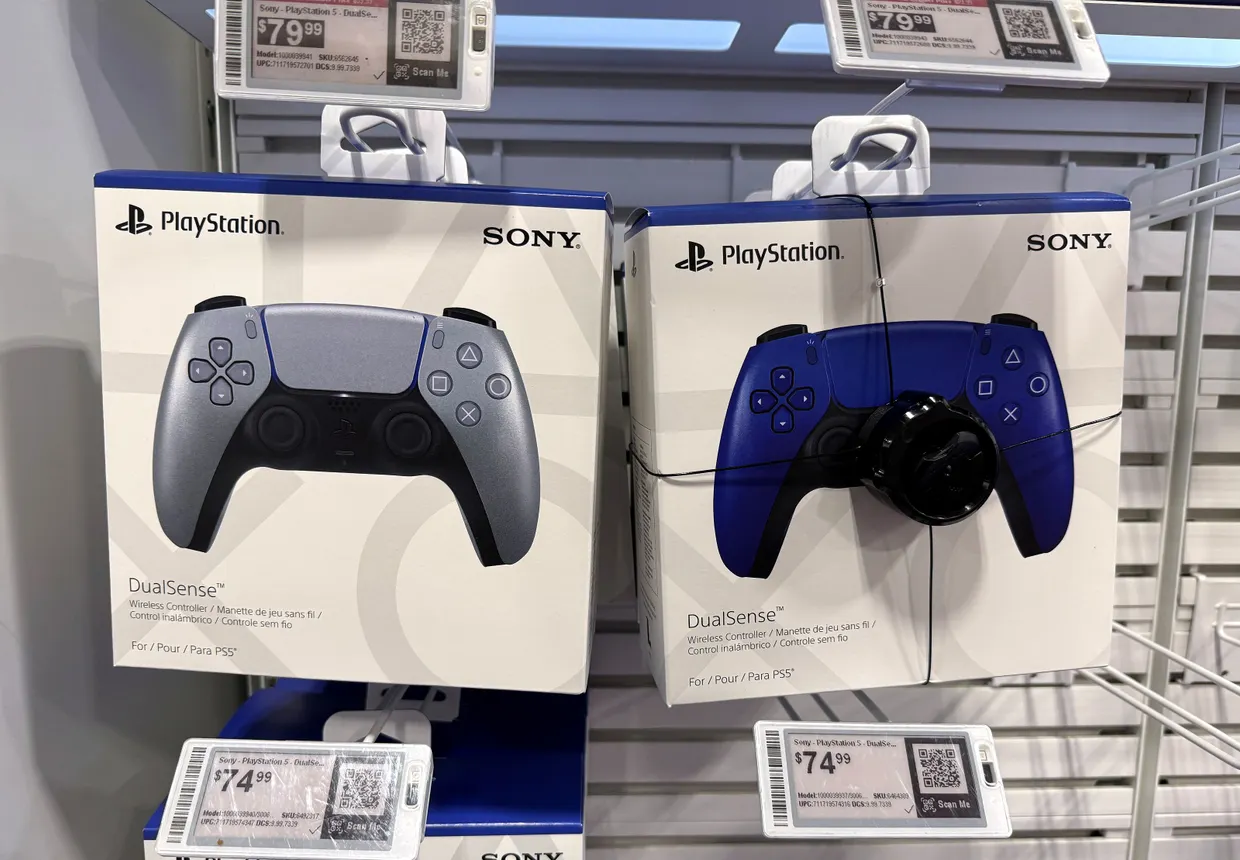
For example, electronics manufacturer Sony in April hiked prices on many of its PlayStation video game consoles and accessories due to “continued pressures in the global economic landscape.” Microsoft followed suit this summer by raising prices by as much as $150 for its Xbox consoles.
The impact of more expensive materials is trickling into decisions about product mix and design for many consumer electronics manufacturers, according to experts. Companies are retreating from less lucrative cheaper models to focus on higher-end products that drive greater margins.
Some companies are also experimenting with alternative components and materials, particularly to mitigate U.S. tariffs on metals such as aluminum and steel. This has become an even higher priority since the Supreme Court struck down International Emergency Economic Powers Act tariffs that were based on country of origin.
“What's now happening is the tariffs that are being applied now are more specific to the component and the content,” Venky Ramesh, a director at AlixPartners, said. He noted how one of AlixPartners’ clients in the industrial automation space has shifted to plastic from aluminum in some products to cut down on costs.
3. Supplier relationships are becoming more integrated
Strengthening collaboration with key memory suppliers can be a differentiator in competing for supply.
This is seen acutely in the length of contract agreements, with companies eschewing traditional one-year pacts for deals that secure supply for three to five years, according to Ramesh. In some instances, these longer-term contracts include advance payments of up to 30%.
“If I want my supplier to put me higher up on their priority list, I need to give them a sweeter deal, which would mean, obviously, meet their cost demands, give them a longer-term contract, try to be a better partner in terms of each order that I give them,” Ramesh said.
This type of tactic favors the largest players in the industry, as balance sheet capacity to prepay and commit years ahead becomes the differentiator in competing for supply, he added.
“It seems like there's much more tactical scrambling going on."

Willy Shih
Robert and Jane Cizik professor of management practice in business administration at Harvard University
Hewlett-Packard Enterprise and Apple are two manufacturers who have made long-term supplier contracts a key part of their sourcing strategy for components, such as chips. Apple, in particular, signed a multiyear agreement with long-time vendor Broadcom earlier this year to supply custom silicon for computer manufacturing.
But tighter supplier relationships yield additional benefits beyond a secure supply flow. Some manufacturers and their vendors are collaborating to improve visibility into where goods are sourced and manufactured, as well as where they are imported and exported, Masters said.
“So, we're seeing a huge rise in the desire for collaboration for what we call provenance in these spaces, and being able to have that resilience not just at the device level,” Masters said, noting that these partnerships are taking several forms, including joint ventures, investment options and take-or-pay agreements.
4. Expanding the supply base is more of a priority
While memory supply scarcity continues to grab headlines, the crunch is also being felt for other components that AI data center infrastructure and electronics manufacturing require.
For example, Dell Technologies said in September it was navigating shortfalls beyond memory, storage and CPUs, such as for rack-level cooling, networking and power components for AI computing. Apple, meanwhile, has flagged a lack of advanced-node capacity for manufacturing its systems-on-a-chip as a supply constraint in recent months.
Consumer electronics manufacturers are increasingly moving beyond the single- and dual-sourcing models of the past to improve optimality and supply allocation, according to Masters.
Building out a more varied pool of suppliers can’t be done overnight, though. Many larger companies are slowly developing new vendor and manufacturing bases, and once they are mature, winding down some production in countries where companies are overexposed, such as China, per Ramesh.
As electronics manufacturers expand their supplier networks, many are also leaning into more regionalized supply chain models, wherein goods are produced in or near their intended end market, experts told Supply Chain Dive. These moves can alleviate cost pressures and help companies better meet vendor and customer requirements in a given country or region.
5. Component scarcity is driving logistics decisions
Freight cost is no longer the primary factor in setting logistics strategies for consumer electronics manufacturers. With memory and other inputs now so difficult to obtain, companies are more willing to pay for more expensive shipping modes to ensure quick delivery.
“Mode and route decisions are now driven by component scarcity rather than freight cost, because the premium to air-ship a constrained part is trivial against the cost of an idle line,” Ramesh said.
Other firms are prioritizing more ocean shipping as a means of serving growing enterprise customer bases, according to Fitzgerald.
“You can get a more stable long-term forecast, and so you can put a certain percentage on a longer, a slower freight mode, and then save money and boost margin or retain margin given your memory cost increases,” he said.
Companies are in the best position if they are able to leverage multiple modes depending on their needs.
“The best in class operators now run a low-cost ocean base flow alongside a small, deliberately (expensive) expedite lane, with surcharges tied to periodic review and shipment on time performance,” Ramesh said.
Editor’s note: This story was first published in our Procurement Weekly newsletter. Sign up here.