.jpg)
A wise boxer once said, “Everybody has a plan until they get punched in the mouth.”
Supply chains are no different. The next disruption IS coming, but no one knows when or where. This means the challenge isn’t avoiding the hit as much as it’s about controlling what happens after.
That’s the essence of supply chain management. No one expects you to predict the future perfectly. But everyone respects the team that builds out a system that can handle when things don’t go as planned.
Working with organizations around the world, Fastenal has installed more than 140,000 inventory management devices. As the global leader, we’ve learned a lot of lessons. One that stands out? The most resilient supply chains don’t try to control everything. Here's what they do control.
What is supply chain management?
Ask ten people, “What’s supply chain management?” and you’ll get ten different answers. Some will describe global logistics. Some will mention sourcing, purchasing or freight. And while all of that is involved, it’s too narrow.
Supply chain management is more than just moving products from point A to point B. (That’s logistics.) The supply chain is broader. It’s about what inventory you have on hand, where it’s being used and when you’ll need more.
Have you seen this meme? A milk jug has a line drawn in the middle and Sharpie’d letters saying, “THIS is where you tell me we need more milk!” That is supply chain thinking.
In other words, while movement is important, supply chains work thanks to visibility and control. And more and more, that control starts with your employees.
Where do supply chains break?
COVID made people more "supply chain aware," but it didn’t give them enough knowledge. So, it’s easy to blame supply chain issues on global events like port congestion or labor shortages. And yes, those are real challenges, but more often than anyone wants to admit, the real problems are internal.
Parts sit unnoticed in receiving. Inventory gets misplaced. Teams somehow run out of critical items they already purchased.
In my work we call this internal struggle the “last quarter-mile.” It’s where breakdowns happen, not because supply isn’t available, but because visibility is missing. If you don’t know what’s being used, where it’s going or when it’s running low, even the best upstream planning falls apart.
Control. Control. Control.
Too often I see teams react to volatility by over-ordering or attempting to put out “urgent fires” all day. Those steps might be needed here and there, but they are too reactive. You need to flip the script and be proactive. You need control at the point of use.
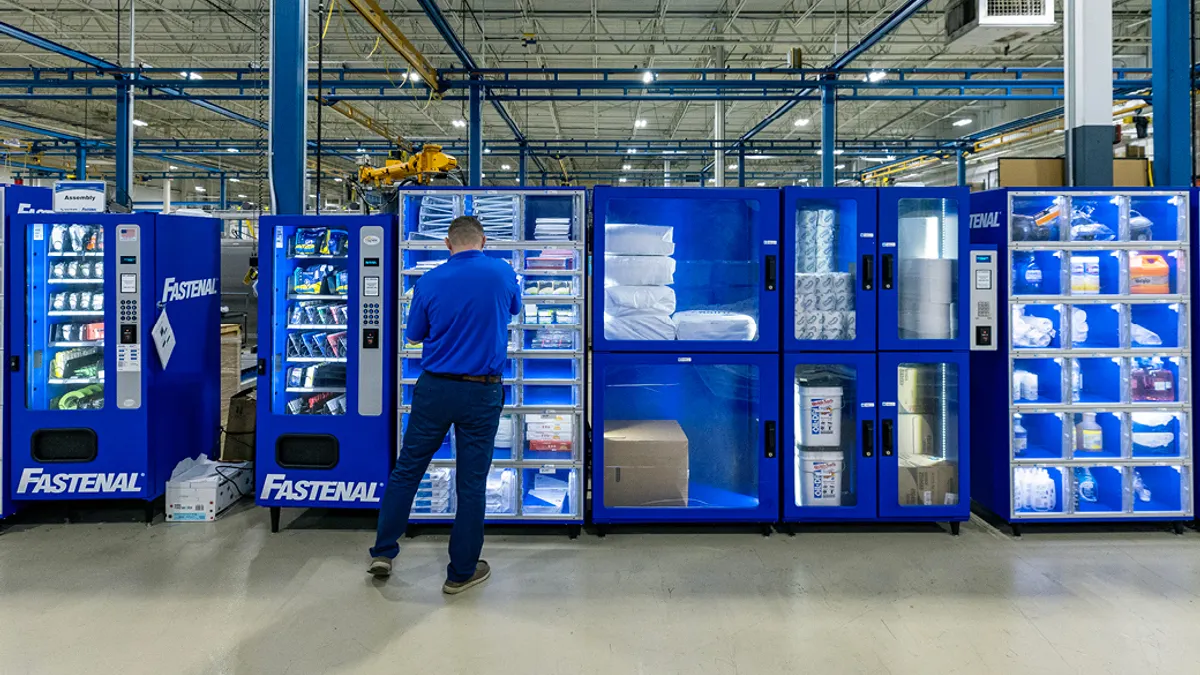
It’s the 21st century and our inventory systems have evolved. Technology’s been merged with things like electronic lockers, vending machines and sensor-based bins. This gives you the power to do a lot of things you previously couldn’t.
Employees shouldn't have to walk across the production floor for supplies. These inventory devices let you put products right where the work happens. Plus, today's technology lets you monitor usage automatically AND trigger replenishment before a stockout.
This level of control means that instead of reacting to disruptions, you become proactive. In short, you'll be able to roll with the punches during the next disruption.
Can AI replace supply chain management?
No. But it will absolutely shape the future. You see, AI depends on good data. And in supply chains, that data doesn’t magically appear. It has to be captured at the ground level.
Inventory systems generate that data continuously by monitoring what’s being used, how often it’s used and where demand is changing. That information feeds better forecasting and planning. And eventually we'll have AI-driven decision-making.
But without that data foundation, even the best supply chain software falls short. So, while AI will play a role in the future of the supply chain, it won’t replace the need for accurate, real-world visibility.
The takeaway
The best supply chain technology should 1) operate in the background, 2) automate routine tasks and 3) reduce manual work. When inventory is automatically tracked and replenished, teams spend less time managing supplies and more time on the work that matters.
You can’t control global events. You can’t eliminate uncertainty. And you can’t predict every demand shift. But you can control what’s on hand, who’s using it and when it’s reordered.
Because when the next right hook comes, the teams that respond best will be the ones with the most control.