Smaller parcel carriers are growing fast as major providers narrow their focus and shippers seek options that suit their priorities.
Regional, local and alternative last-mile providers delivered nearly 1.32 billion packages in the U.S. in 2025, up from 424 million packages four years earlier, according to market intelligence firm The Colography Group. In the process, these providers grabbed market share from major carriers like FedEx, UPS and the U.S. Postal Service.
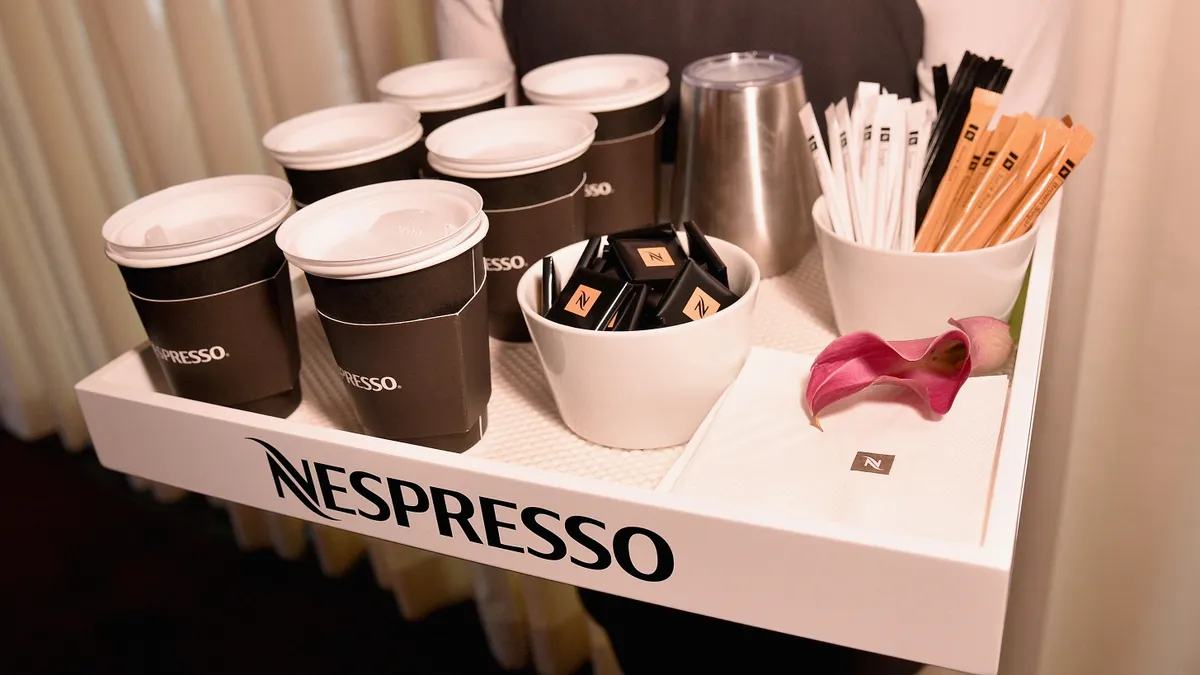
Espresso and coffee company Nespresso's logistics strategy illustrates the trend in motion.
Nespresso historically relied on a single-carrier network, focusing on cost and on-time delivery as core performance metrics, Matthew Greenspan, Nespresso's director of logistics and transportation, said at Home Delivery World 2026 last month. Those factors are still important, but in the past five years, Nespresso began considering if carrier choice can also improve the customer delivery experience.
"Today we don't look at our carrier strategy as purely a transportation decision, we're looking at it more so as part of the end-to-end customer experience," Greenspan said. "So, when we're evaluating our partners, we're asking: Can they enhance the experience? Can they give us more flexibility? Do they support our long-term brand ambitions?"
Risks of single-carrier strategies
While single-carrier networks can look great on paper due to discounts for higher shipping volumes, they can also introduce risks in terms of customer experience, Greenspan said. For example, the upfront cost savings don't consider potential negative delivery moments like lost and damaged packages. Additionally, when relying on a lone carrier, a labor disruption or capacity shortage can cascade into broader problems for shippers without a backup plan.
"Suddenly you're breaking a promise that you made to your customers when they placed their order, and that's where I think a lot of shippers may underestimate the value of diversification and a well-designed multi-carrier strategy," Greenspan said.
Nespresso's mindset shift pushed it to leverage more alternative carriers for delivery operations. The company seeks alternative carriers that scale "in the right way" to ensure a collaborative partnership doesn't morph into a more transactional, volume-focused relationship, Greenspan said.
"As long as those fundamentals stay in place, then I want our partners to grow, because when they scale, we can continue to scale that relationship with them," he said.
Jitsu collaboration adds customer convenience
Jitsu is one alternative carrier with which Nespresso has grown its relationship, particularly as the company explores ways to make it easier for customers to recycle coffee capsules. While Nespresso offers recycling drop-off locations, it has built a capability with Jitsu in which a customer can request a recycling pickup at the same time an order is delivered to their address.
The option enables the customer to leave a bag of to-be-recycled capsules outside, with the Jitsu driver picking up the bag after delivering an order. The capability is available for free in select ZIP codes for orders of $50 or more, according to Nespresso's website.
"It's the same trip," Greenspan said. "There's no extra effort for the customer; there's no additional miles traveled for the carrier."
Nespresso is seeing both a sustainability benefit in addition to more engagement, loyalty and consumption from customers that have opted into the service, Greenspan said.
Although Nespresso has embraced alternative delivery options, some shippers still prioritize national providers like FedEx and UPS. For example, furniture retailer Wayfair generally doesn't leverage many regional carriers, instead preferring deep integrations with partners that offer the company visibility into their networks, Nitin Kapoor, the company’s VP of technology, said during a Home Delivery World 2026 session.
"We don't try to operate carriers like a commodity, if you will," Kapoor said. "They are trusted partners for us, and most of the carriers that we work with are super tightly integrated with us.”