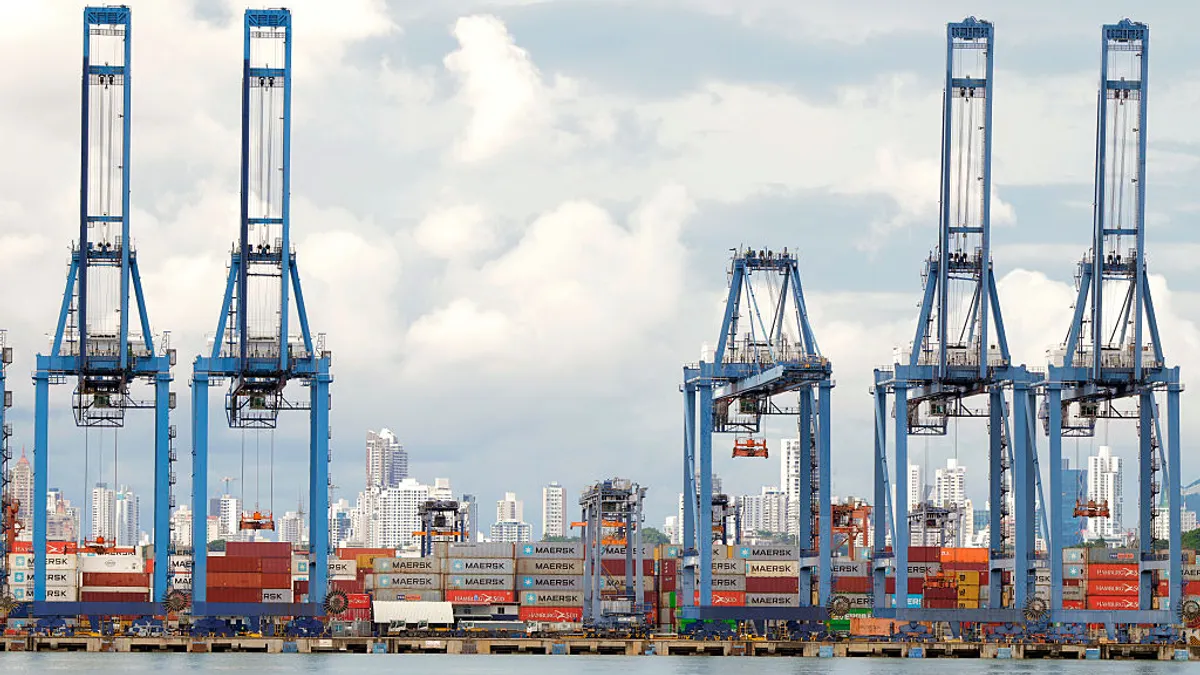
Shippers are facing new and updated surcharges from ocean carriers due to water-level-related concerns at the Panama Canal.
MSC on Tuesday introduced a Panama Canal Surcharge of $100 per TEU, set to go into effect Aug. 19, due to operational constraints at the waterway. The surcharge applies to all cargo types for shipments between Southeast Asia, China, Korea and Japan to the U.S. East Coast and U.S. Gulf Coast.
Meanwhile, CMA CGM will increase its Panama Canal Surcharge from $40 to $100 per TEU, effective July 25. The fee applies to all cargo shipments, such as dry, reefer and special equipment, from Asia to East Coast Central America, North Coast South America, the Caribbean and Manaus.
The France-based carrier advised customers that the surcharge is due to the recent decrease in Panama Canal water levels and that it is tweaking surcharges to “address the associated operational costs.”
The Panama Canal has been implementing measures to limit the maximum authorized draft for vessels entering the waterway’s Neopanamax locks throughout the summer.
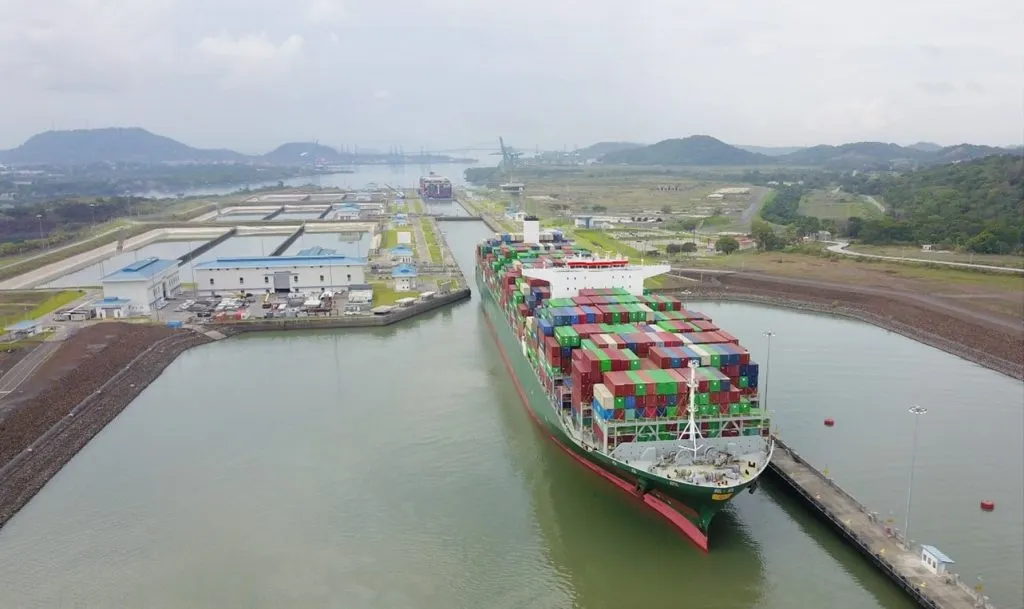
After setting the limit at 49.5 feet earlier this month, the canal said it would reduce the threshold to 49 feet, starting Friday, according to a shipping advisory. Another round of draft restrictions to 48.5 feet will start Aug. 15.
These draft restrictions build on water-saving measures the canal has implemented to prepare for potential weather impacts from the looming El Niño climate pattern expected in the second half of 2026.
Booking restrictions are another water-saving measure that the Panama Canal is considering as “a probability of a severe El Niño event has increased, rising significantly from 25% in April to 81%, as of July,” according to a July 22 press release.
“[C]apacity restrictions will likely be implemented, not only in terms of draft limitations but also through reductions in the number of daily booking slots,” Panama Canal Administrator Ricaurte Vásquez Morales said during a conference call, per the release. Morales emphasized that the timing and scope of any restrictions will depend on market conditions.
As of Thursday, the canal has not yet implemented restrictions due to concerns over low water levels, a spokesperson told Supply Chain Dive.
However, according to freight forwarder Norton Lilly Panama, the canal has suspended slots offered on Period 3 Daily Auctions. These booking slots offered during Period 3 are part of the canal’s booking reservations system and allow for last-minute transits to be scheduled three to two days prior, per Adimar Shipping, a shipping agency in Panama.
The last time water levels hit a low point was during 2023 and 2024, when drought conditions led to longer transit times and higher transit fees. A dry spring combined with a looming El Niño weather pattern put the shipping channel on alert for low water levels at nearby Gatun Lake in 2023 that were set to stretch into 2024. At that time, the canal also installed draft restrictions and limited bookings to save water.
The Panama Canal is considered a primary route for global trade between Asia and the U.S. East and Gulf Coast, according to ICIS, a global market intelligence company.
“In 2024, 52% of transits through the canal had ports of origin or destinations in the US. More than 76% of the cargo that transited the canal had the US as its origin or destination,” per ICIS.