The United States reached agreements with the European Union, Japan and Mexico to cooperate on securing critical minerals used in industries from automobiles and clean energy to defense, aerospace and consumer electronics.
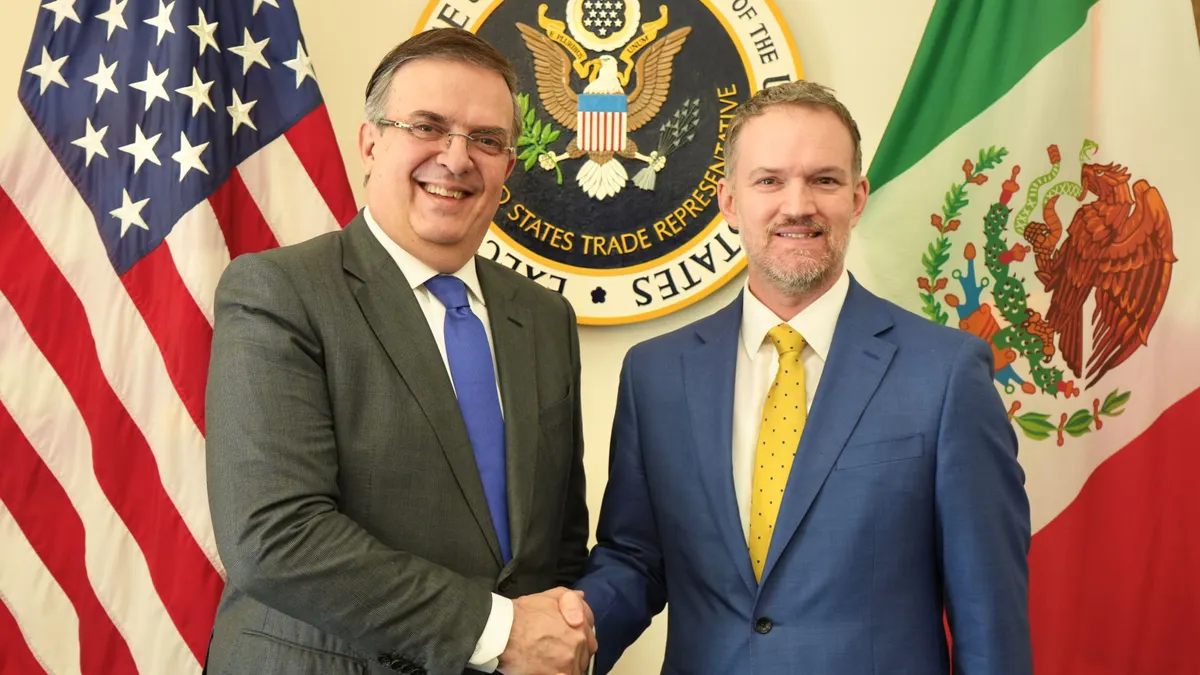
The Office of the U.S. Trade Representative outlined the alliances on Feb. 4, with the Mexico pact unveiled separately from a combined agreement with the EU and Japan. Under the agreements, the countries aim to co-develop methods for mining, processing and stockpiling critical minerals and rare earths.
The pacts come after President Donald Trump earlier this year instructed his administration to work with trading partners to build a critical mineral supply chain independent of non-allied countries. Prior to the directive, the president in October signed nonbinding frameworks with Australia and Japan for ensuring critical mineral supplies.
In the combined agreement with the EU and Japan, the bloc and the U.S. committed to finalize within 30 days a memorandum of understanding to work together to identify and support projects in mining, refining, processing and recycling critical minerals.
For its part, Japan agreed to continue operating under the existing framework deal while working with the U.S. and the EU to explore trade policies with other partners that establish border-adjusted price floors, standards-based markets, price-gap subsidies or offtake agreements.
"Today's announcement is an important signal that the world’s largest market-oriented economies are committed to developing a new paradigm for preferential trade in critical minerals," U.S. Trade Representative Jamieson Greer said in a press release.
Under the U.S.-Mexico pact, the two countries agreed to an “action plan” to be implemented within 60 days. Per the plan, the countries will discuss the feasibility of adopting border-adjusted price floors and regulatory standards for mining, processing and trading in critical minerals. The pact also includes technical and regulatory cooperation, joint research and development, and coordinated stockpiling.
Stockpiling critical minerals has become a major focus of the Trump administration. On Feb. 2, the president signed an executive order to create a $12 billion critical mineral reserve to prevent sudden shortages from affecting the U.S. economy.
In a press release, Greer said the Mexico agreement was "an important step to strengthen bilateral cooperation" as the two countries approach the July 1 joint review of the U.S.-Mexico-Canada Agreement. The trade deal enacted in 2020 is set to expire in 2036.