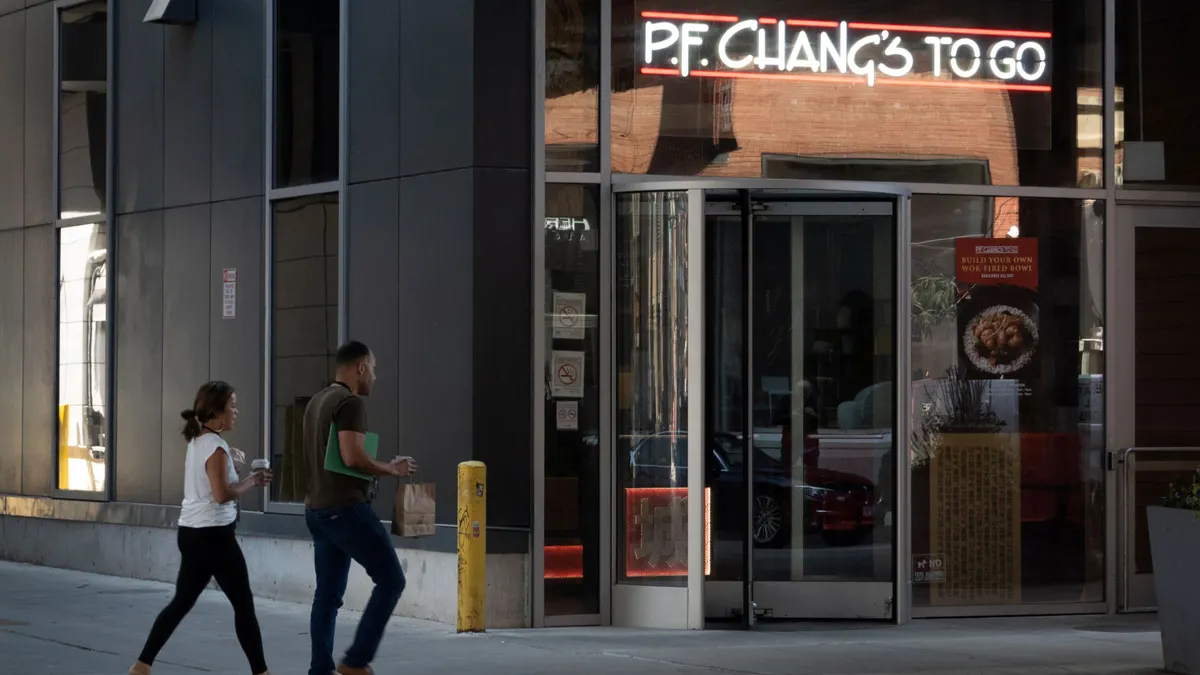
P.F. Chang’s agreed to renew its partnership with supply chain software provider ArrowStream to improve visibility and resilience across its operations, according to a Sept. 17 press release.
By extending the collaboration, which began in 2019, the restaurant brand will continue to utilize ArrowStream’s contract management, inventory management and price audit platforms.
The contract management tool allows P.F. Chang’s to centralize purchasing agreements and maintain spending discipline across its distribution network, per the release. The platform facilitates closed-loop communication between the brand and its distribution and supplier partners, per ArrowStream’s website.
P.F. Chang’s leverages ArrowStream’s inventory management platform to maintain real-time visibility of product availability and distributor stock levels to reduce product flow disruptions and stockouts. Meanwhile, the restaurant brand employs the price audit tool to automate price verification and billing and invoice reconciliation, allowing it to recover overcharges and control costs.
"Having total transparency into our contracts, pricing audits, and inventory pipeline allows our team to make proactive, data-backed decisions that safeguard our margins and keep our restaurants running smoothly,” Taylor Frendahl, senior director of supply chain at P.F. Chang's, said in the release. “Extending this partnership was a natural choice as we continue raising the bar on supply chain performance."
Like P.F. Chang’s, other restaurant operators are turning to technology and new processes to help maintain supply and inventory health while combating rising food costs. For example, Panda Express is leveraging software to manage supplier and distribution spending while forecasting ingredient demand. The company is also bullish on artificial intelligence’s ability to boost its performance.
“I think that’s where technology and AI are really going to help every business,” Panda Restaurant Group Chief Supply Chain Officer Roland Ornelas told Supply Chain Dive earlier this year. “It’s seeing how supply chain data, marketing data and operational data can all come together.”
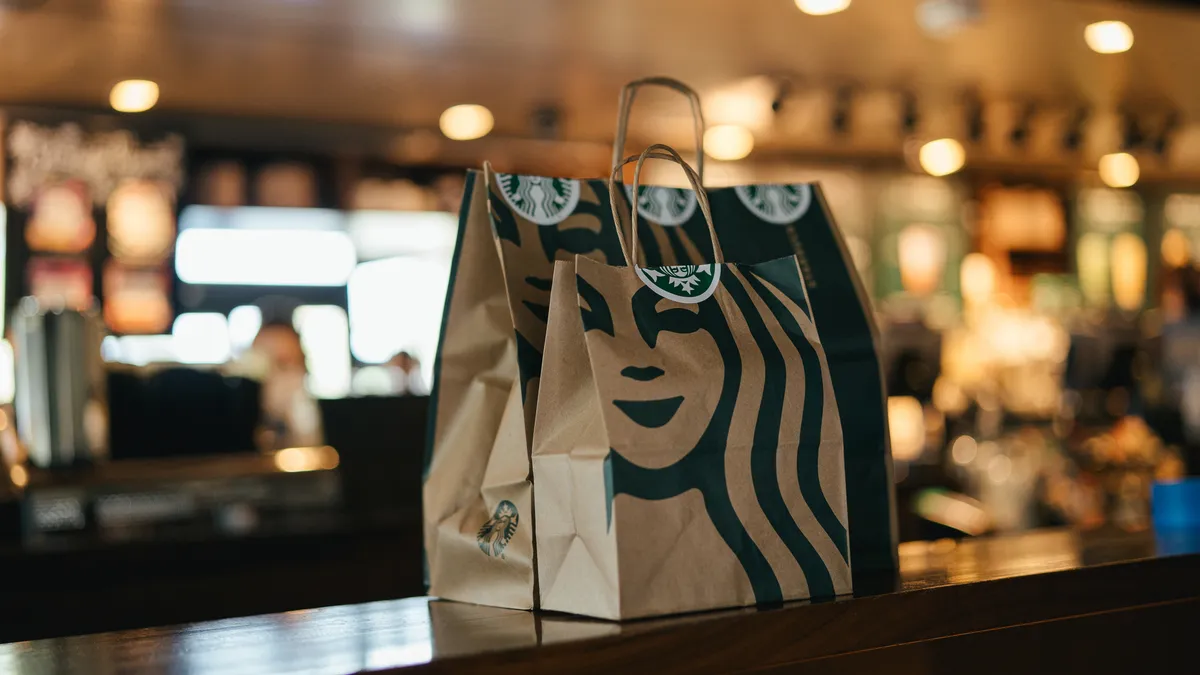
Meanwhile, Starbucks is piloting a 24-hour operating model to improve product replenishment after scrapping an AI inventory management tool that employees found to be “unreliable.”