Dive Brief:
- Uber Technologies believes drones and sidewalk-roaming robots will eventually play a larger role in the delivery industry, despite some limitations in their current capabilities, CFO Balaji Krishnamurthy said at a Morgan Stanley conference earlier this month.
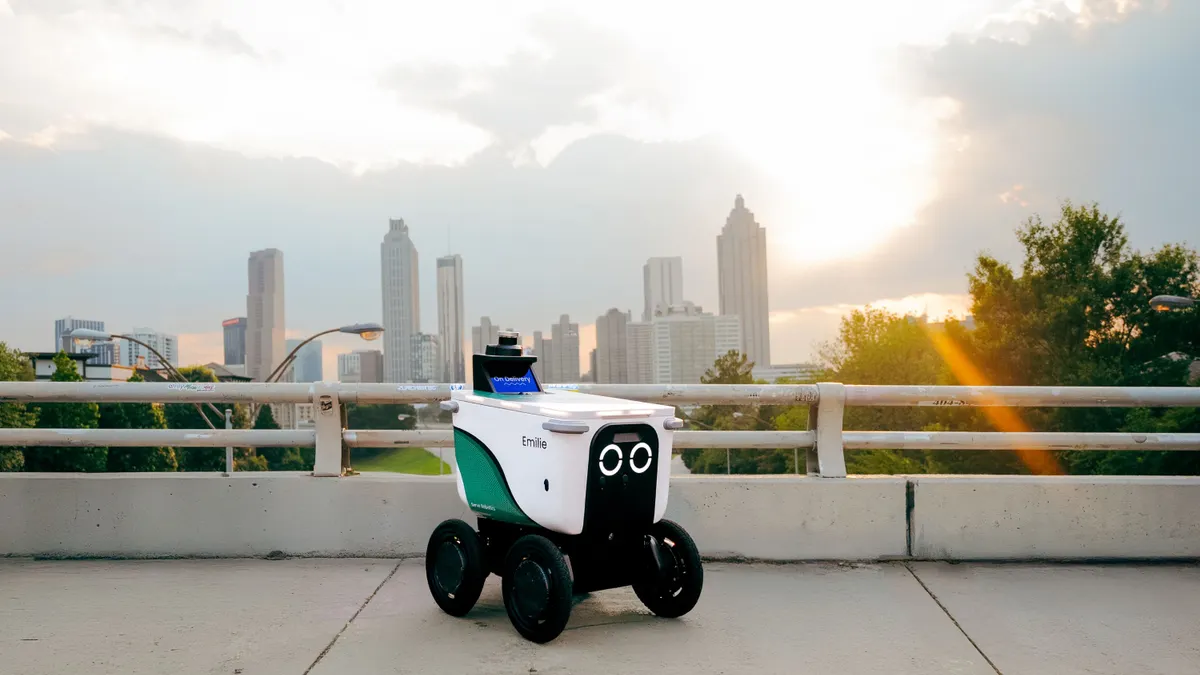
- Uber's network currently features over 1,000 delivery bots deployed in more than 10 cities. "We're working with about seven partners in that ecosystem," Krishnamurthy said. "It spans both sidewalk robots and drones."
- Krishnamurthy said sidewalk robot deliveries "have friction on both ends" as merchants and consumers need to engage with the robot during the process, rather than a human courier picking up the order or dropping it off without interaction. Drones can move faster and make backyard dropoffs, which provides "a broader use case," he said.
Dive Insight:
Companies are testing and scaling their use of autonomous robots and drones as they look for long-term opportunities to reduce the cost of last-mile delivery, an expensive step in the transportation process.
For example, DoorDash is tapping into Serve Robotics robots to make Los Angeles deliveries, and Walmart is using Wing drones to quickly bring food and essentials to customers' homes.
The progress isn't without speed bumps, however. Despite momentum in fundraising and expansions in 2025, sidewalk delivery robots are still facing some consumer pushback. Drone delivery momentum has been hobbled by regulatory complications and noise complaints, although the Federal Aviation Administration has made moves to streamline operator approvals.
"Long term, no question in our mind that drones and bots will play a much bigger role in delivery, but there's still some things to be ironed out," Krishnamurthy said.
Even with current challenges, Krishnamurthy said Uber is game to keep exploring the emerging delivery technologies. Last year, Uber invested in and partnered with drone delivery provider Flytrex and began a delivery partnership in Chicago with Serve Robotics.
"The good news is that [the] economics of these deployments is already quite attractive for us," Krishnamurthy said. "It's interesting for us to be able to deploy these while not having to make a deep investment, and they're learning as we go."