President Donald Trump is imposing a 100% tariff on patented pharmaceutical products and ingredients while also carving out reduced rates for certain goods and trade partners.
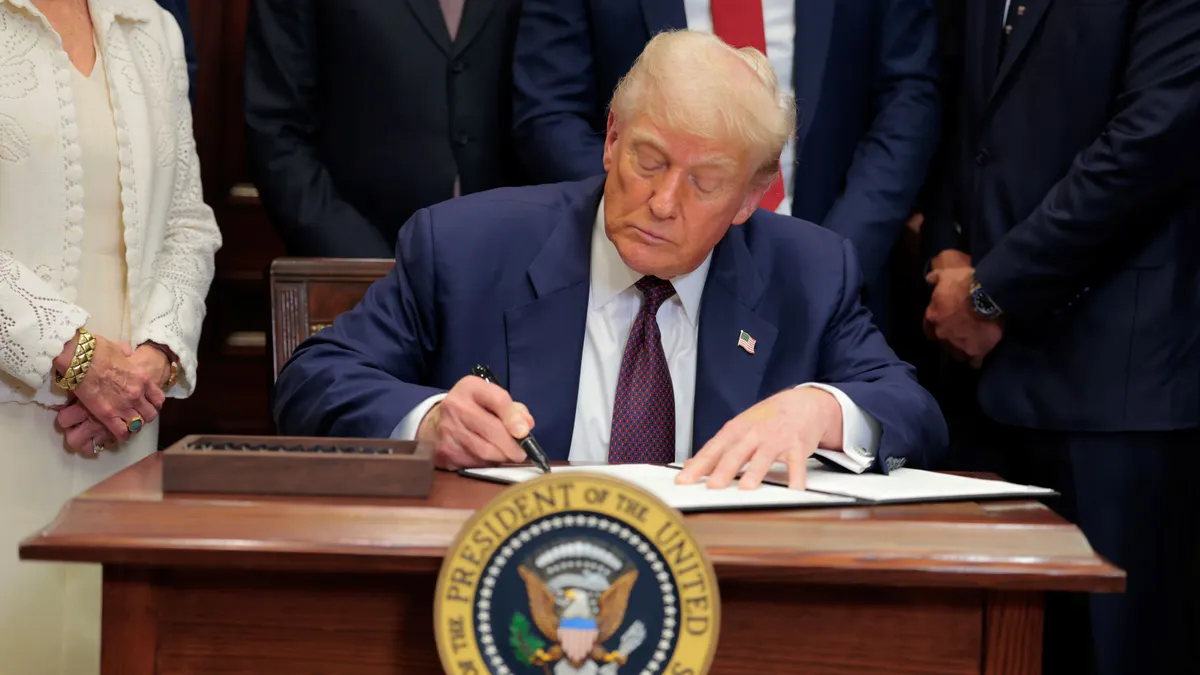
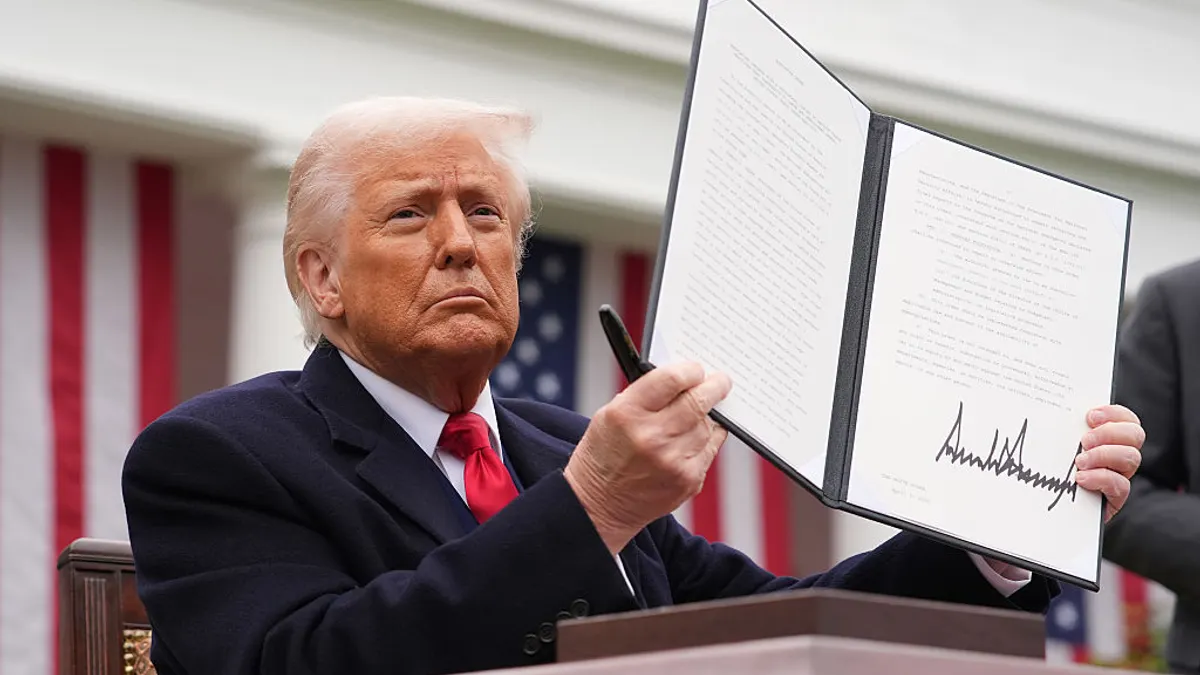
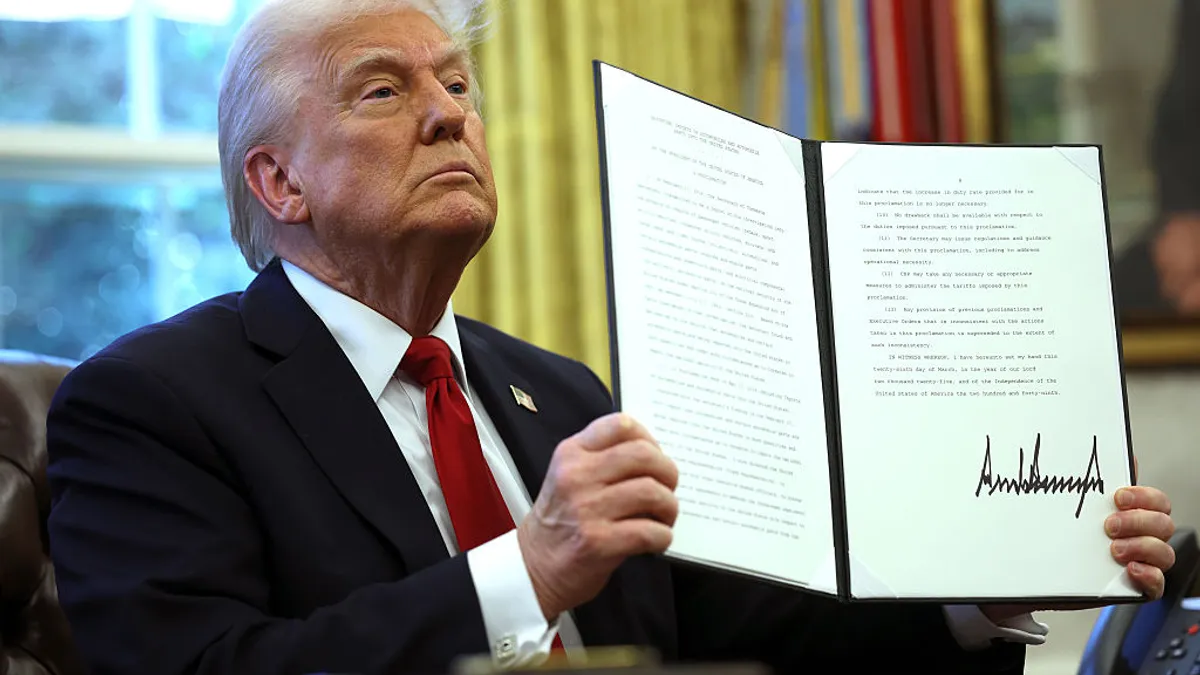
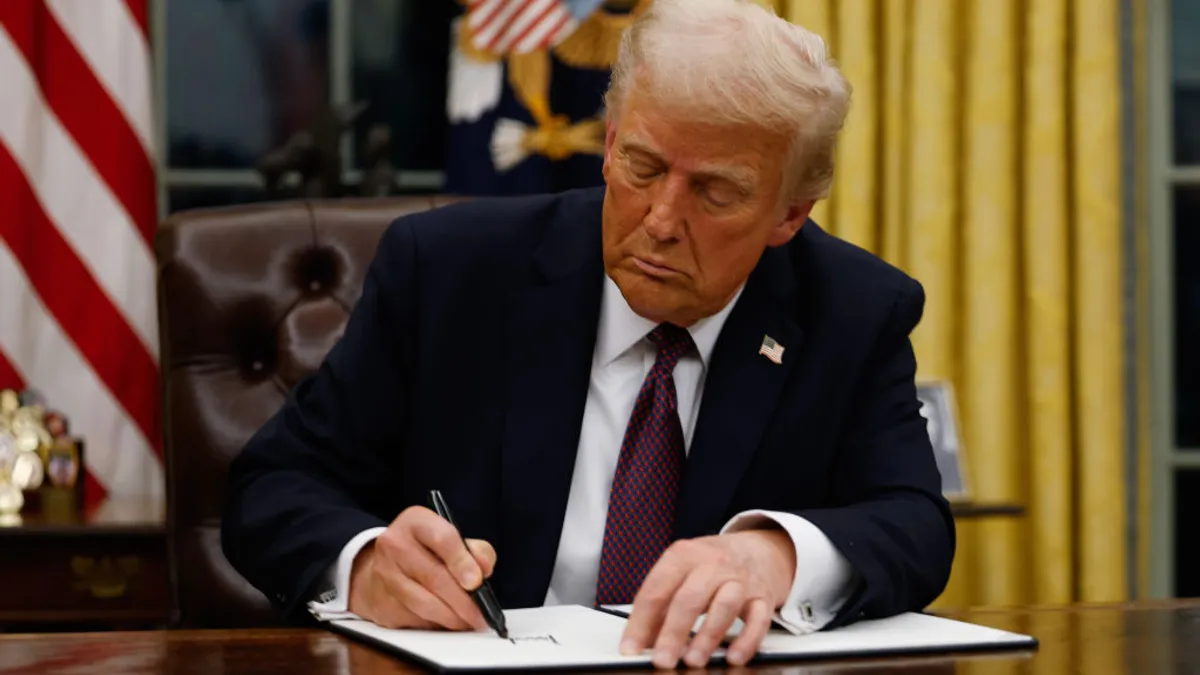
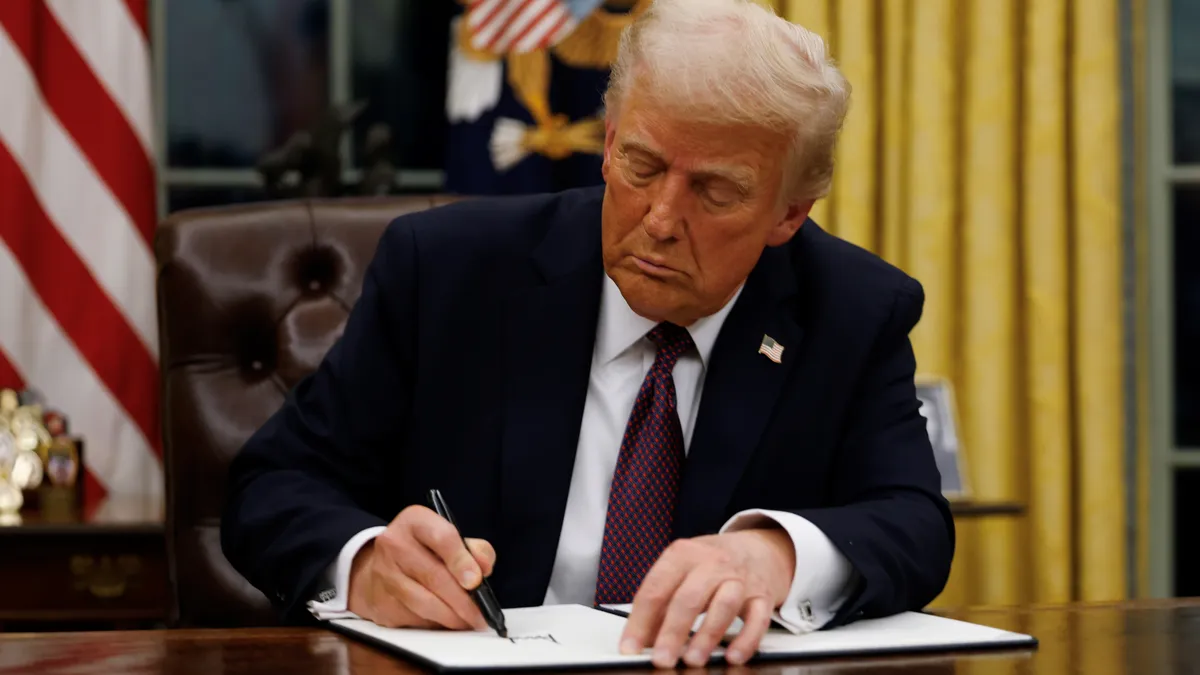
The duty will go into effect on July 31 for a list of 17 major pharmaceutical companies, including Eli Lilly and Co., Pfizer and Novo Nordisk, according to an executive order Trump signed Thursday. Other companies will begin facing the tariff on Sept. 29.
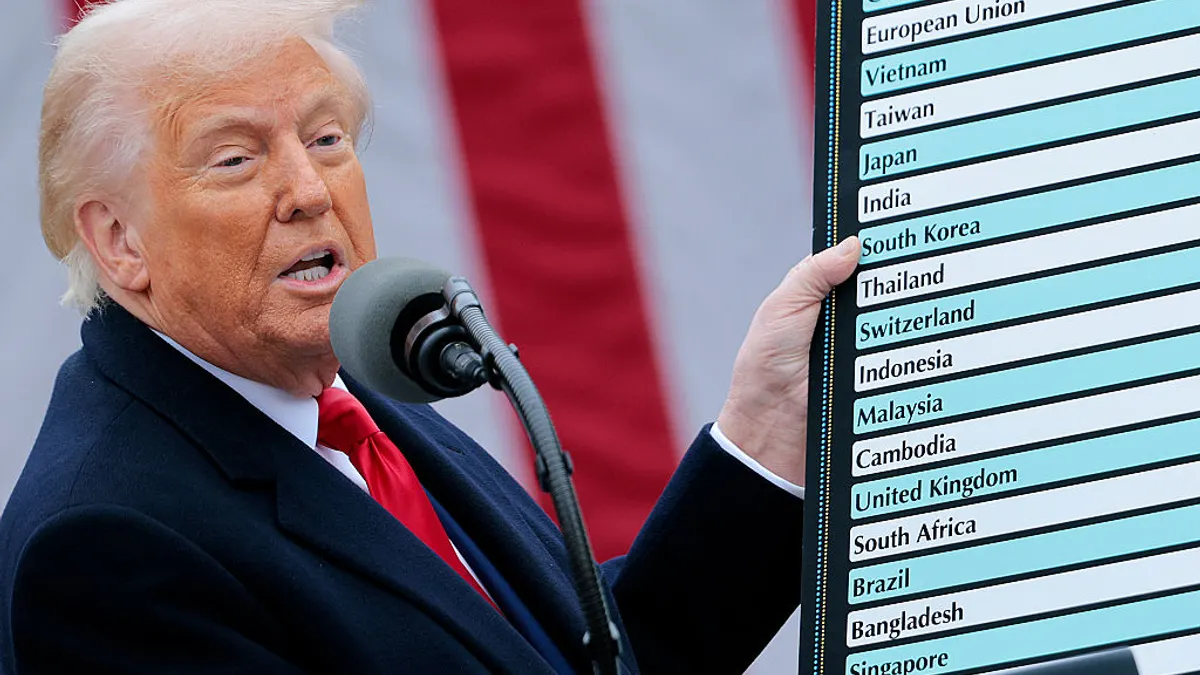
However, only a 15% tariff will be imposed on covered pharmaceutical products from the European Union, Japan, South Korea, Switzerland and Liechtenstein, per the fact sheet. Previously, the Trump administration reached agreements with those trading partners on a 15% tariff cap on most goods.
Similarly, a 10% tariff will apply to covered products from the United Kingdom, with the rate potentially falling to zero under a future pharmaceutical pricing agreement, according to the order. Late last year, the U.S. and the U.K. reached an agreement under which the U.S. would remove Section 232 levies on pharmaceutical goods from the U.K.
On Thursday, the U.S. Trade Representative released a document serving as a public record of the earlier U.K. agreement. The document said the U.S.’ Section 232 investigation into the pharmaceutical sector will result in no tariffs applied to patented and non-patented pharmaceuticals of the U.K. from Jan. 1, 2026, to Jan. 19, 2029.
Beyond adjustments by country, companies that enter into both Most Favored Nation pricing agreements with the Department of Health and Human Services and onshoring agreements with the Commerce Department will be entitled to zero tariffs through Jan. 20, 2029, according to a White House fact sheet.
Businesses that reach onshoring agreements with the Commerce Department but do not sign MFN pricing deals will have a 20% tariff applied, rising to 100% in four years, per the executive order.
Exempt from tariffs are certain specialty pharmaceutical products, such as orphan drugs and animal-health drugs, if they are from trade-deal countries or meet an urgent public health need, according to the White House. The tariffs also won’t cover generic pharmaceuticals, biosimilars and associated ingredients, although the Trump administration will assess this exception in one year, per the fact sheet.
The tariffs follow a Section 232 investigation that found the U.S.’ heavy reliance on imported pharmaceuticals and ingredients threatened national security and public health if disruptions occurred, the fact sheet said.
The Trump administration has launched other Section 232 investigations in adjacent sectors, including personal protective equipment, medical consumables, medical equipment and devices.
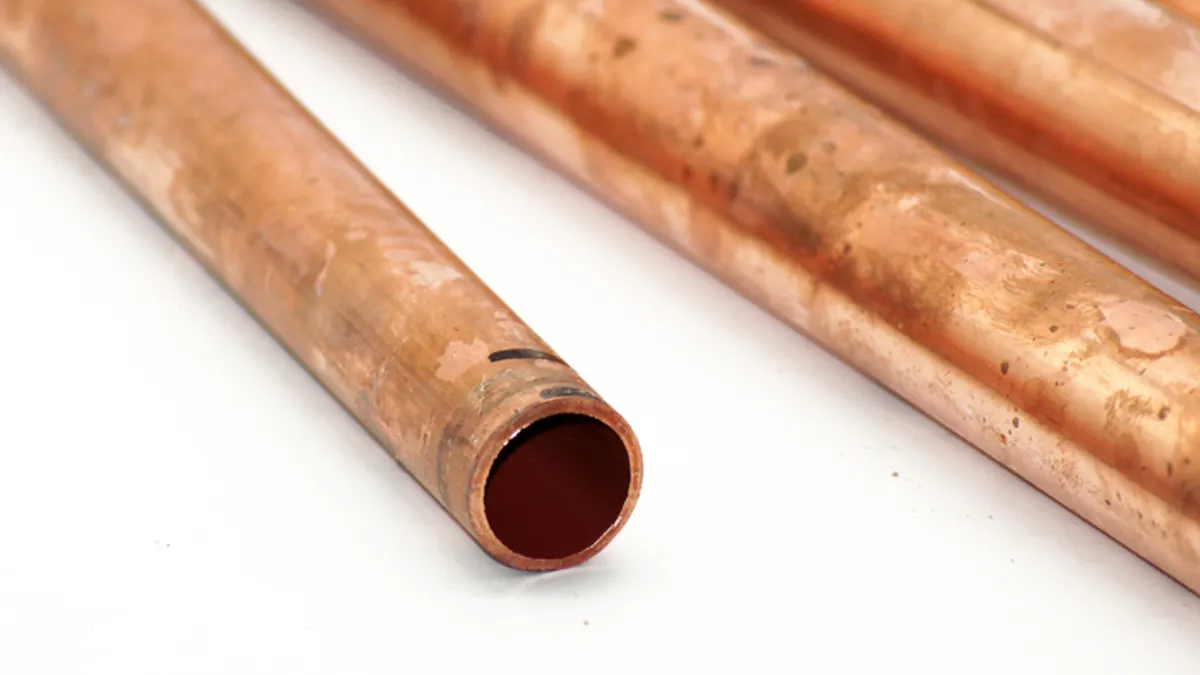
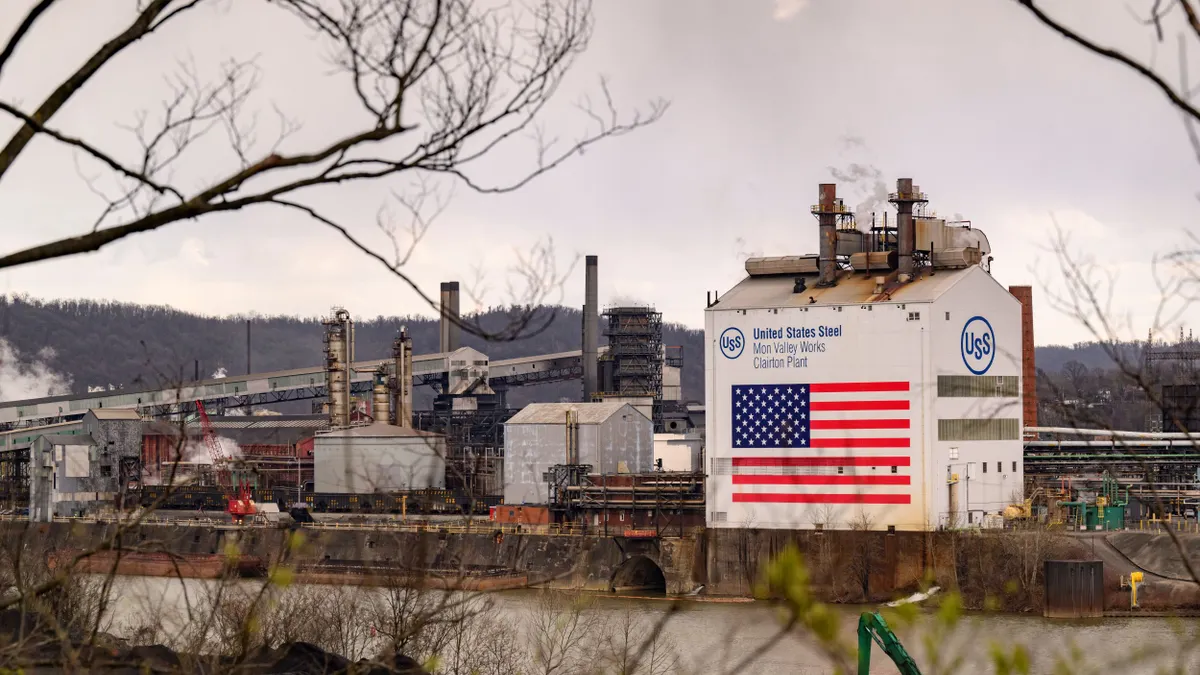
The new pharmaceutical levy was just one update the Trump administration made to its tariff regime on Thursday. In a separate proclamation, Trump adjusted Section 232 tariffs on steel, aluminum and copper imports.
Goods made entirely of the metals will continue facing a 50% levy, but certain derivative goods will begin incurring a reduced rate of 25%, effective April 6. The proclamation will also install reduced rates for U.K. imports, goods made with U.S. steel and “certain metal-insensitive industrial equipment and electrical grid equipment.”