The White House has outlined the timeline for additional trade actions it plans to take as it seeks to reconstruct President Donald Trump’s far-reaching tariff regime following a Supreme Court decision that axed previous levies.
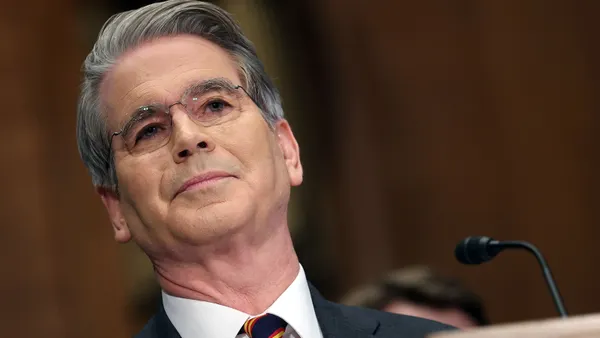
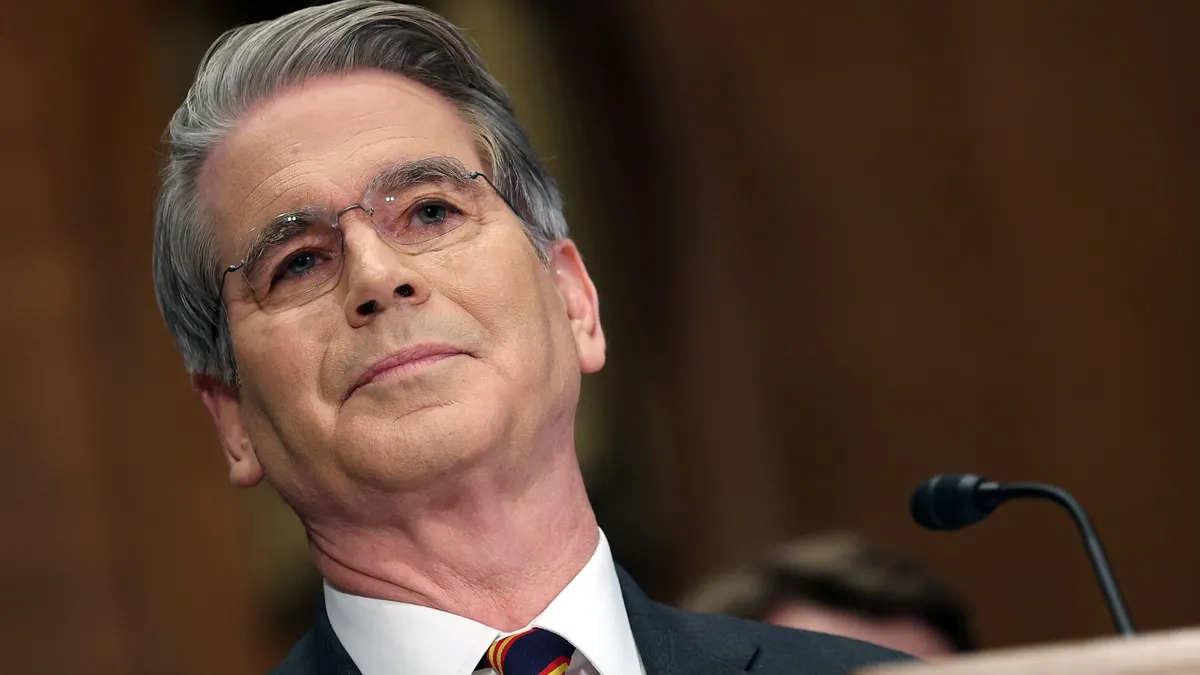
Treasury Secretary Scott Bessent on Wednesday said that the U.S. will likely increase a current temporary global tariff to 15% “sometime this week.”
Trump initially set the global surcharge at 10% immediately following the high court’s ruling that wiped out levies enacted under the International Emergency Economic Powers Act. He then said he planned to increase the rate to 15% but did not provide a timeline or documentation for the move.
Regardless of the rate, the global tariff will expire after 150 days, unless it is extended by an act of Congress, per Section 122 of the Trade Act of 1974, the statute Trump is using to implement the fee.
In parallel with the new global tariff, the Trump administration is also fast-tracking investigations that could lead to additional duties. U.S. Trade Representative Jamieson Greer said Tuesday that these Section 301 investigations would be completed within the next five months. Previous probes, which review trading practices of countries, have led to tariffs on imports from China and Nicaragua.
The White House has signaled its intention to recreate much of Trump’s IEEPA tariff regime using this mechanism.
“It's my strong belief that the tariff rates will be back to their old rate within five months,” Bessent said during a CNBC interview Wednesday.
While the White House moves to build its case for new tariffs, the question remains whether trade framework deals reached with numerous countries last year will be affected by the Supreme Court’s ruling. Many of those agreements were made in response to Trump’s IEEPA tariffs.
“We know there are countries out there with deals who are very interested in keeping the deals,” Greer said during a bilateral meeting between Trump and Germany’s chancellor, Friedrich Merz, on Tuesday. Trump also espoused confidence about the status of tariff deals and indicated that the U.S. may “adjust it somewhat upward” in some instances.
At least one of the U.S.’ trading partners has already cooled on its tariff agreement with the U.S., however. Last month, the European Union halted efforts to implement provisions of a pact reached last August pending “full clarity” into the U.S.’ plans following the Supreme Court decision.
“The current situation is not conducive to delivering ‘fair, balanced, and mutually beneficial’ transatlantic trade and investment, as agreed to by both sides and spelled out in the EU-U.S. Joint Statement of August 2025,” the European Commission said in a statement last month.
Merz said after the meeting with Trump Tuesday he still supported a deal but not if the terms would change because of new tariff actions from the White House, according to Bloomberg.