Dive Brief:
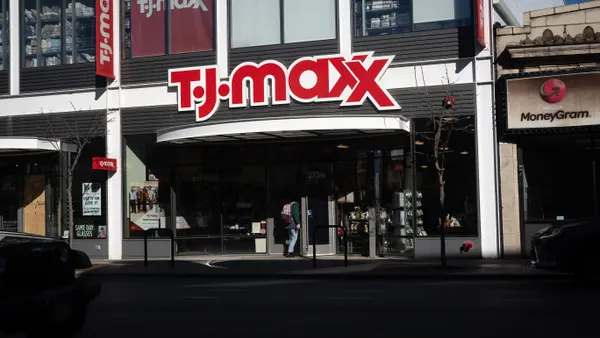
- TJX Companies is confident in navigating weather-related events such as El Niño due to its warehouse distribution model, CEO Ernie Herrman said in a Q2 earnings call on Aug. 19.
- Herrman said since the company keeps its liquidity and shipping out of its warehouses, it has better control than traditional retailers. Inventory doesn’t need to go straight to the stores if the off-price retailer thinks there’s going to be an unusual weather pattern in a certain region, he added.
- “[T]his is a benefit of our model where we stage goods in our warehouses versus goods at most brick-and-mortar retailers come into the warehouse and have to go out,” Herrman told analysts. He added that the company's "planning organization is really good at reacting to any wild swings in weather or natural disasters or any of those red flags."
Dive Insight:
Off-price retailers and classic retailers tend to have different supply chain models when it comes to how they manage their inventory, but it’s not one-size fits all, Dheera Anand, a partner at Bain and Co., told Supply Chain Dive in an interview. The supply chain strategy Hermann described in TJX’s earnings call is known as the hold and flow, or staged, model, Anand said.
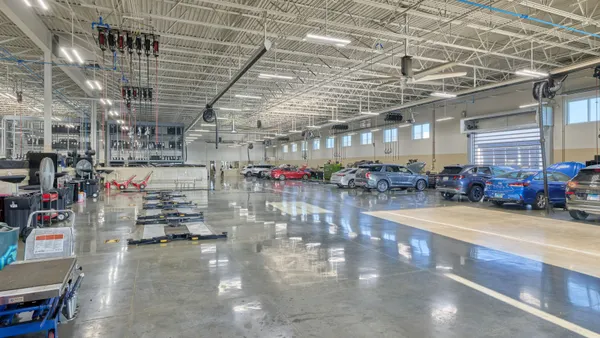
In the hold and flow model, items sit at the distribution center and retailers can react based on sell-through data, weather patterns and other factors, Anand said. Inventory can slowly trickle into the right source where things are moving based on real data, she added.
“A portion of the inventory, based on predetermined data, stops and sits in the [distribution center] and sits on the racks. And so you don’t send everything right in that moment to the stores,” Anand said.
In contrast to the hold and flow model is the flow-through, or cross-dock, model. Under this type of system, items come into a retailer’s distribution centers from suppliers, with inventory typically leaving in a day or two rather than being held for an extended period of time.
Meanwhile, some retailers employ a hybrid model where they use a mix of the two strategies, Anand added.
“What we typically see is you look at your assortment, seasonal things, high fashion, things that tend to have more variability are more suitable to hold and flow,” Ananda said, “and things that are low complexity, more predictable, low variety, that’s more suitable to the flow through.”