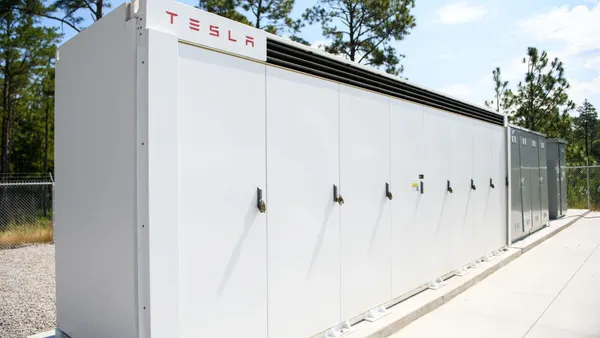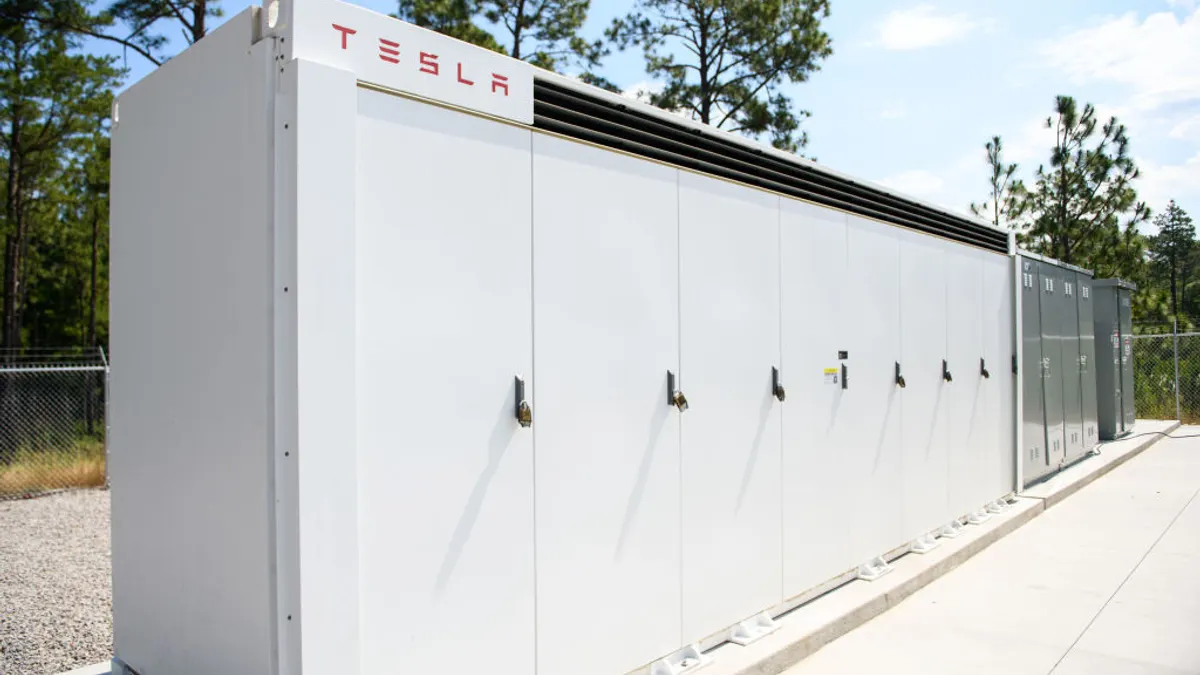
Tesla and LG Energy Solution have agreed to build a $4.3 billion manufacturing facility in Lansing, Michigan, to produce lithium-iron-phosphate cells for Tesla's Megapack 3 utility-scale energy storage systems, according to the U.S. Department of the Interior.
Production at the facility is scheduled to begin in 2027, the agency said in a press release. The facility will supply cells for Megapack 3 systems assembled at Tesla's Houston-area Megafactory.
Tesla and LG did not immediately respond to a request for comment about the supply agreement.
The LG deal comes as Tesla sees increasing interest in its energy generation and storage production capabilities. In 2025, the company ended the year with nearly $12.8 billion in revenue within the segment, representing a 26.6% year-over-year growth rate, CFO Vaibhav Taneja told investors during the company's Q4 2025 earnings call.
"This was the result of higher deployments in all regions and continued strength in demand for both Megapack and Powerwall," Taneja said, referring to the company’s large-scale energy storage and home battery storage products, respectively. "As we look at 2026, our backlog remains strong, well diversified globally, and we expect increasing deployments with the launch of Megapack 3 and Megablock."
In its Q4 earnings call presentation, Tesla reported that it planned to begin production of Megapack 3 and Megablock at its Houston facility this year.
Meanwhile, LG, a major maker of electric vehicle batteries, also plans to expand its energy storage systems business. The company expects to book 90GWh of new grid-scale and other energy storage system orders this year and to expand its production capacity to over 60GWh, according to the company's 2025 financial results. It also said it plans to have more than 80% of its energy storage systems production capacity in North America.
LG has emphasized energy storage systems while maintaining automotive partnerships, including two multi-year EV battery supply agreements with Mercedes-Benz. However, Ford cancelled a $6.5 billion battery supply contract with the company last year as the carmaker shifts its focus away from EVs.
The latest partnership between Tesla and LG was confirmed as part of a broader package of projects meant to strengthen U.S. energy manufacturing, which included private sector commitments totaling $56 billion to secure critical energy supply chains in the U.S., according to the Interior Department. The commitments followed a meeting between the Trump administration and Indo-Pacific leaders from 17 countries.
Other commitments stemming from the Indo-Pacific Energy Security Ministerial and Business Forum involved projects related to liquefied natural gas expansion, nuclear energy, coal-based power and fuel technologies.