Dive Brief:
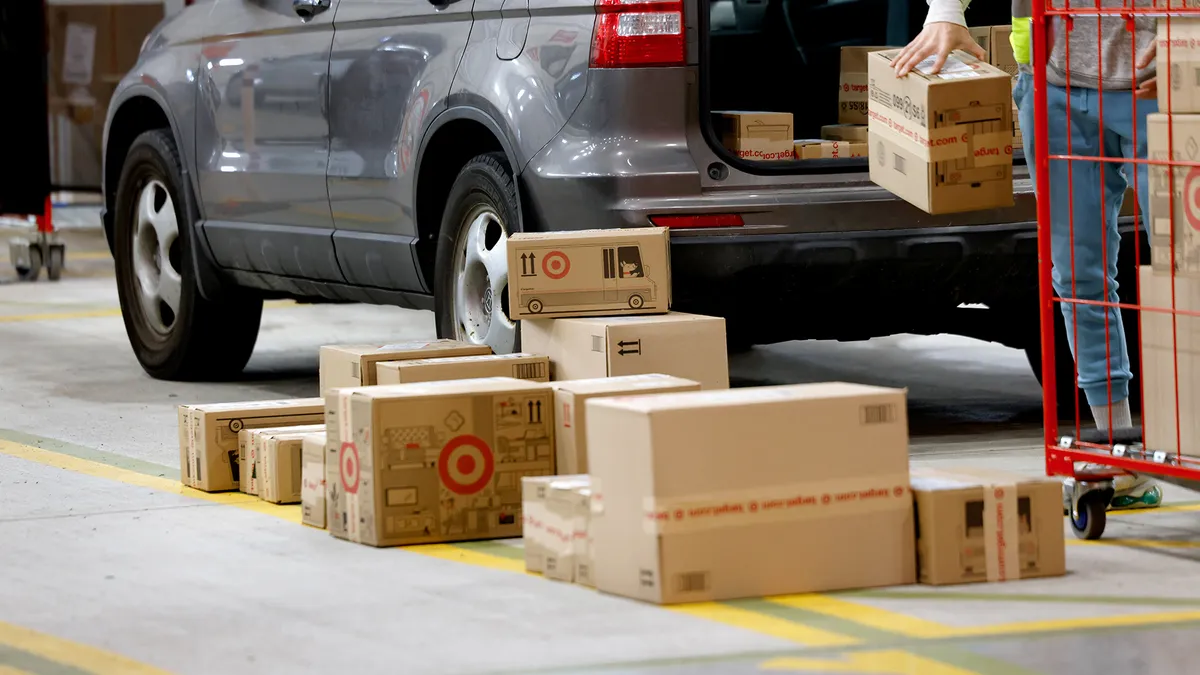
- Target is expanding one of its shipping methods this year, using drivers from its Shipt subsidiary to bring next-day deliveries to customers straight from the retailer's stores, executives told Supply Chain Dive.
- More than 100 stores in 50 markets will offer the direct-from-store capability, called Target Last Mile Delivery Direct, by the end of 2026, Shipt CEO Kamau Witherspoon said. A year ago, the method was available in six stores in two markets.
- By initiating fulfillment at stores closer to the end customer, Target can "eliminate some of those traditional logistical bottlenecks" and lower delivery-related costs, Witherspoon said. Using Shipt for deliveries lowers Target's cost to serve customers by about $2.50 per package compared to national parcel carriers, he added.
Dive Insight:
The expansion will bolster Target's growing roster of next-day shipping capabilities by taking advantage of its robust retail footprint and delivery subsidiary. Target injects packages into parcel carrier networks for some deliveries, and Shipt drivers also deliver next-day shipments originating from Target sortation centers, said Daryl Glass, Target's senior VP of fulfillment and last mile.
"We're expanding into key markets where we may not have a sortation center, or we're seeing the need and demand is high," Glass said of Target Last Mile Delivery Direct.
In March 2025, Target revealed it was testing Shipt delivery routes from stores for "brown box delivery," or shipping options outside of same-day delivery and pickup, touting speed and cost benefits.
Target's next-day coverage for brown box shipments currently reaches 50% of the U.S. population, Glass said. That will grow to over 60% by the end of this spring as the company introduces next-day delivery coverage in 20 new metro areas.
Not every Target store will serve as an origin point for next-day deliveries, however. Target has concentrated order volume at certain retail locations, while some of its other stores have scaled back their fulfillment duties. Target initiated a pilot of the strategy in Chicago last year. Results showed the retailer was able to offer next-day delivery on five times more of the local shipping demand, Target announced in September.
Target's determination of which stores should handle more volume, and which should handle fewer orders, considers multiple factors, according to Glass. For one, Target has to make sure the company can match inventory levels at particular stores to order fulfillment demand. The company also has to ensure stores have enough time to staff up their operations and train employees to handle online orders effectively.
"It's the same on how we may ramp down in some of those stores that are no longer doing it," Glass said. "How do we ensure we're reallocating some of that time and energy into the store?"