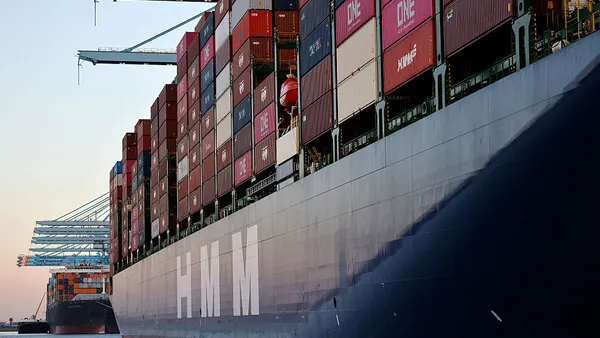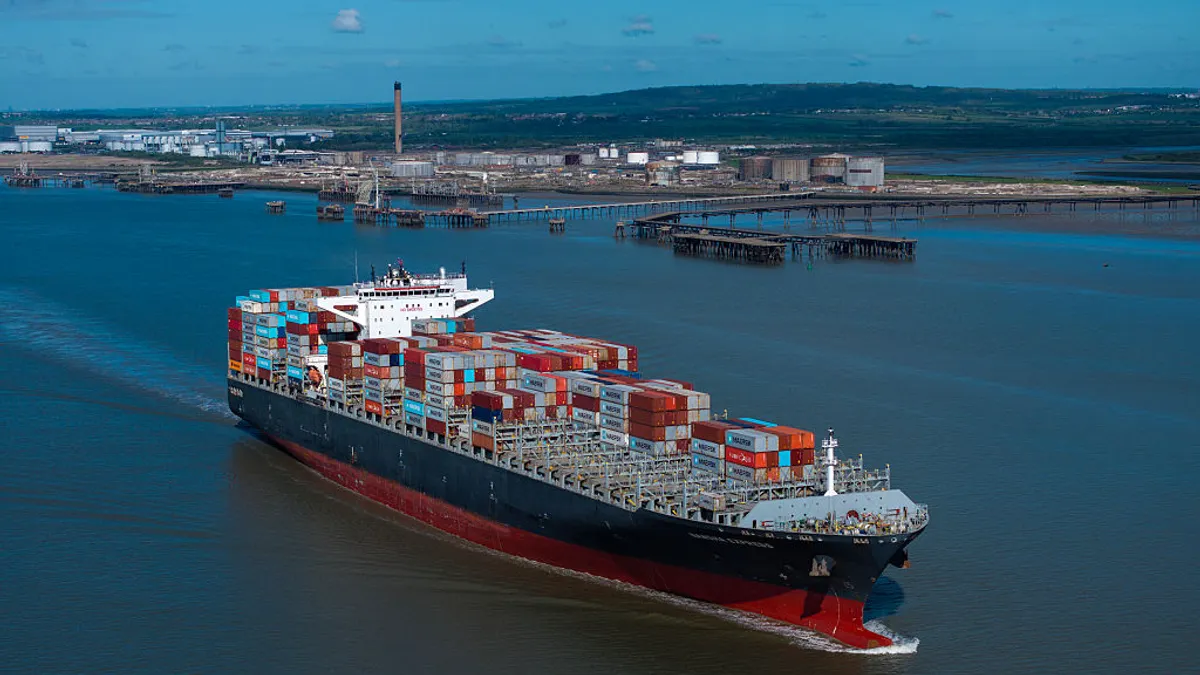
The share of non-alliance or small carrier capacity on the Transpacific trade lane has dropped to the lowest level in a decade, Sea-Intelligence reported in April.
Sea-Intelligence reported a 79% correlation between spot rates levels and the availability of capacity operated outside major alliance structures. Based on historical data, high spot rates typically lead to larger injections of new non-alliance capacity while low rates lead to rapid withdrawals. Even when there are historical spikes due to market turmoil, the barriers to entry for non‑alliance services are relatively low.
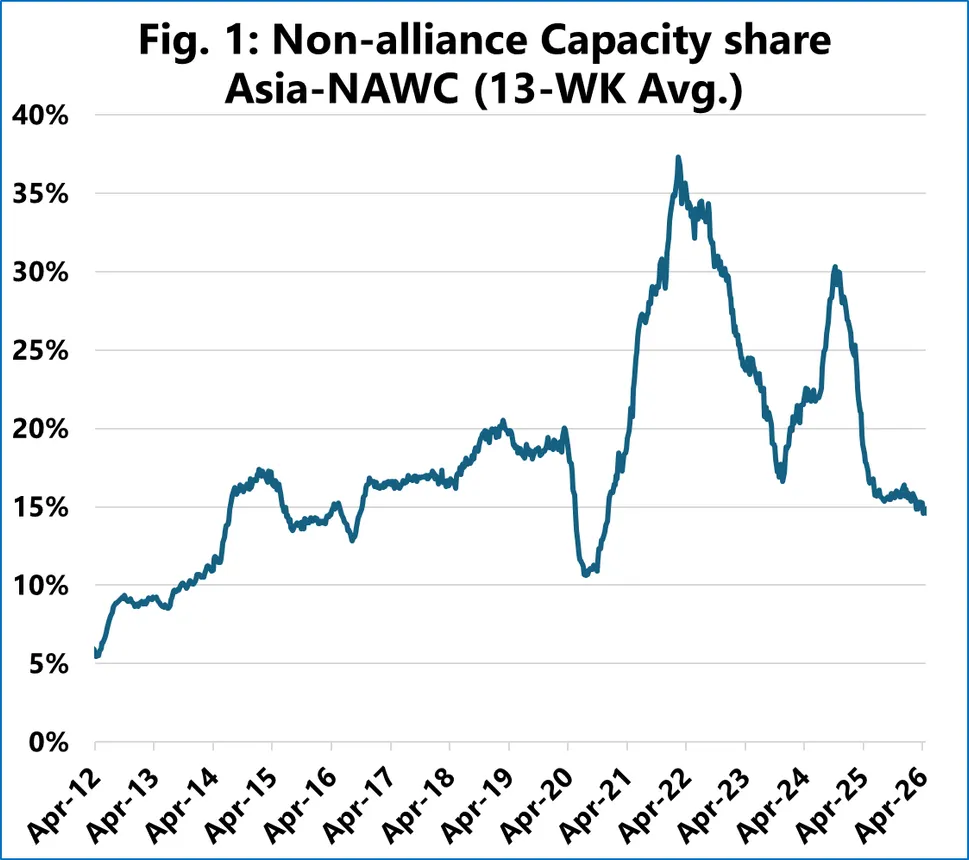
Continued reduction from smaller carriers is expected, per Sea-Intelligence, as non‑alliance services are slated to drop below 15% of the total capacity that is offered.
“Ultimately, this structural elasticity demonstrates that competition remains highly active on the Transpacific trade. Independent carriers are effectively using their agility to scale their presence dynamically, entering and exiting the market in direct response to the economic viability dictated by spot rate,” Sea-Intelligence CEO Alan Murphy said.
Round trip service routes on the Transpacific trade lanes usually require six vessels, Niels Madsen, VP of product and operations from Sea-Intelligence, told Supply Chain Dive in an email.
For instance, if an alliance composed of three carriers, each would deploy two vessels, Madsen said. Each vessel then has one-third of the space on each container ship.
“These carriers now have the choice to deploy [a] vessel of exactly the size they require [and] since they are 3 carriers, changing vessel(s) because you have higher or lower demand means changing only 2 vessels each,” Madsen said. The impact on the cost level is huge, he added.
In the same scenario, a non-alliance carrier would need to deploy all six vessels on its own and if there is any change in demand from a shipper, the smaller carrier would have to adjust all six vessels to comply with the changes, Madsen said. This becomes very costly.
“Hence, when rates go down, the non-alliance carrier will feel the heat before any alliance carrier,” he said.